

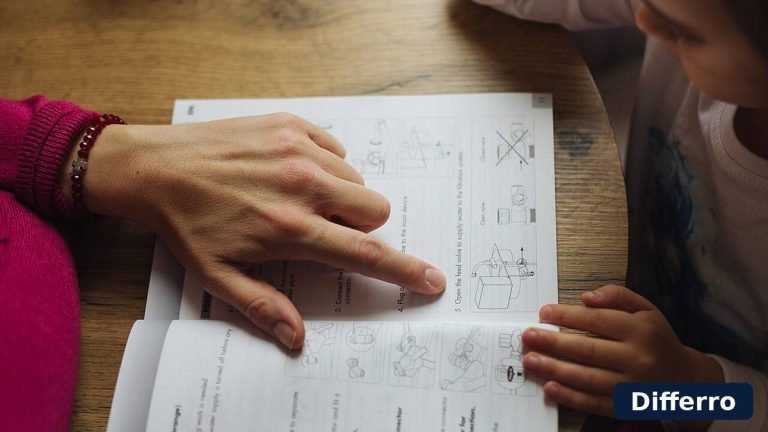
The real skill in how parents can support homework without doing it is knowing where your help ends and your child’s work begins. Cross that line and the homework gets finished, but the learning quietly goes missing.
Done well, your role is closer to a coach than a substitute player. You set the conditions, ask the questions that restart thinking, and leave the answers — including the imperfect ones — to your child.
This guide shows how that balance works in practice: the routines that prevent nightly battles, the questions that help without telling, and how the right help changes as your child grows.
Why Your Role Matters More Than Your Answers
The Education Endowment Foundation’s guidance report on working with parents found an established link between the home learning environment at all ages and children’s performance at school. What happens around homework matters, not just what happens in class.
The same report is honest about the limits of the evidence: which engagement strategies work best is still mixed. The safe conclusion is narrow — support the learning at home, and let the school see work your child produced.
That distinction protects two things at once. Your child keeps the practice the homework was set for, and the teacher gets an honest picture of what your child can and cannot yet do alone.
Homework Support at a Glance
The whole approach fits on one line: you manage the setting, your child manages the work. This table shows where the boundary sits in the moments that come up most often.
| Moment | Your job | Your child’s job |
|---|---|---|
| Getting started | Provide the time, place and kit | Sit down and begin |
| Stuck on a question | Ask a guiding question | Think, retry, or note the sticking point |
| A wrong answer | Leave it visible | Learn from the teacher’s feedback |
| Finishing up | Check it is attempted and complete | Pack it away for school |
Notice what is missing from your column: explaining the topic from scratch, checking every answer, and fixing mistakes. Those feel helpful, but each one quietly moves the learning from your child to you.
Build a Routine That Does the Nagging for You
A fixed routine removes the daily negotiation about when homework happens. Agree a regular time and place, keep it on school days, and let the routine — not your reminders — carry the start of each session.
Same Time, Same Place, Screens Away
Duke psychologist Harris Cooper’s research review notes that younger children are less able than older ones to tune out distractions in their environment. A quiet, consistent spot is therefore not a nicety; it removes the biggest obstacle young children face.
Keep the kit boring and ready: pencils, paper, ruler and the school planner in one place. Hunting for equipment is the oldest delaying tactic in the book, and a stocked corner quietly removes it.
Use the Clock as a Guide, Not a Threat
Cooper’s widely used “10-minute rule” suggests roughly ten minutes of homework per night for each school grade — about forty minutes for a nine-year-old. It is a guide for judging workload, not a timer to police.
If work regularly runs far beyond that guide with real effort behind it, that is information worth sharing with the teacher. First, though, check the session itself: focused work and distracted work look identical on the clock.
Ask Questions That Hand the Thinking Back
When your child is stuck, the instinct is to explain. A question does the same job more slowly but far better, because the thinking — and therefore the learning — stays with your child.
Five Questions That Restart Thinking
- What is the question actually asking you to do?
- What did your teacher show you in class today?
- Which part feels hard — the first step, or a later one?
- Can you show me a similar example from your book?
- What could you try first, even if it might be wrong?
Each question points your child back to something they already have: the task wording, the lesson, or an example. None of them requires you to know the topic yourself, which is precisely the point.
Work One Example Together, Then Step Back
If a question is not enough, work a similar example side by side — a different sum, a parallel sentence — talking through each step. Then hand the real question back and let your child do it alone.
Resist the final polish. A corrected-to-perfection page tells the teacher the lesson landed when it may not have, and it teaches your child that their own effort is only a draft for yours.
How Support Changes With Your Child’s Age
The Duke review of more than sixty homework studies found the link between homework and achievement much stronger in grades 7 to 12 than in primary school. Help should shrink as that link grows: more presence early, more independence later.
Primary Years: Presence and Reading
For younger children, sit nearby, keep sessions short, and read together daily — the EEF guidance singles out shared book reading as a foundation for young children. Looking up a symbol together, such as the less or equal to sign, models how to find answers rather than receive them.
Secondary Years: Space and Spot Checks
Older children need the opposite: privacy to work, spot checks rather than supervision, and help on request. If a science worksheet stalls, exploring a topic together — viruses vs prokaryotes vs eukaryotes is a typical example — beats summarising it for them.
Keep one habit from the early years: ask what was set and when it is due. A teenager who reports their own workload is practising the planning that homework at this age is meant to build.
Work With the Teacher, Not Around the Lesson
Homework is the teacher’s window into your child’s understanding. Work you have quietly completed or heavily corrected fogs that window, and the teacher then plans the next lessons from a false picture.
Cooper’s advice to parents starts at home: before raising a workload concern, watch how homework time is actually used, because distraction is often the real problem. If the concern survives that check, raise it as a team matter, not a complaint — the approach the National PTA’s family resources also encourage.
A short note in the planner — “worked on this for forty minutes, still unsure about step two” — is gold for a teacher. It reports effort honestly and flags the exact point where class teaching needs to help.
Common Mistakes That Turn Help Into Doing It
The first mistake is sitting down as a second teacher and re-teaching the topic your way. Different methods confuse children and clash with the class; prompt with questions instead, and leave methods to the teacher.
The second is checking every answer and sending work back for correction. Check that homework is attempted and complete; leave the marking to school, where errors guide the next lesson.
The third is rescuing at the first sign of struggle. A few minutes of being stuck is where learning happens; step in with a question, not a solution, and only when frustration replaces effort.
Frequently Asked Questions
Is it ever okay to give my child the answer?
Occasionally, after real effort — then ask them to explain it back or try a similar question alone. An answer given before any struggle teaches dependence, not the topic, so treat answers as the last resort, not the starting point.
How long should homework take each night?
Cooper’s 10-minute rule is the common guide: about ten minutes per school grade, rising to around two hours for the oldest students. The Duke research also found that beyond a sensible amount, extra homework stopped adding achievement.
What if I don’t understand my child’s homework myself?
That is fine, and often an advantage: you cannot be tempted to do it. Ask the guiding questions, use the textbook or class notes together, and send a note to the teacher if the gap is the school’s to close.
Should I check my child’s homework every night?
Check that it is done and attempted honestly, especially with younger children, but do not mark it. Teachers need to see unaided work; a quick completeness check plus a glance for obvious distress is the right level.
What if my child refuses to do homework at all?
Keep the routine calm and fixed, remove screens during the agreed time, and tell the teacher what is happening rather than escalating at home. Persistent refusal is information the school needs, and tackling it together works better than nightly battles.
Conclusion
Supporting homework without doing it comes down to one habit: build the conditions, ask the questions, and leave the work — and the learning — with your child.
Start tonight with the smallest change: a fixed time, a stocked corner, and one good question instead of one quick answer. The homework will still be theirs, and so will the progress.

