

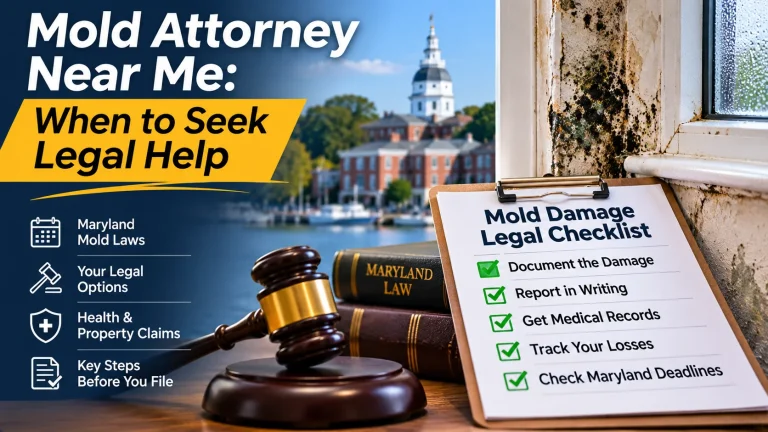
You spot dark staining along the baseboard after a heavy rain, or you notice a damp, earthy smell that refuses to leave your bedroom. At first, you treat it like a routine maintenance hiccup. You wipe down the wall, run a dehumidifier, and send a quick note to your landlord or insurance adjuster. Weeks pass, the spots creep back, and your sinuses stay congested every morning you wake up at home. That is the exact moment many Maryland residents start searching for a mold attorney near me to figure out whether they have a simple repair dispute or a serious legal claim.
Living near the Chesapeake Bay means dealing with high humidity, aging plumbing, and coastal storms that push moisture into crawlspaces and wall cavities. Waiting too long to escalate a moisture problem can hurt both your health and your legal options. Speaking with an Annapolis mold attorney near me early in the process helps you preserve physical proof before a landlord paints over the evidence or an insurer denies your claim on a technicality.
Clear Warning Signs You Need Legal Help
Not every speck of bathroom mildew calls for a lawsuit. Surface condensation from a steamy shower is a housekeeping issue. Hidden leaks, structural dampness, and ignored repair requests are something else entirely. You should look for legal representation as soon as your situation crosses into any of the following territory.
Your Landlord Misses Maryland Legal Deadlines
Maryland law no longer leaves tenants guessing about what counts as a reasonable repair timeline. Under the Maryland Tenant Mold Protection Act, which took effect on July 1, 2025, landlords face strict statutory deadlines once you report suspected mold in writing. A verbal hallway conversation does not start the clock. You need an email, a portal message, or a dated letter.
Once your landlord receives written notice, they have 15 days to conduct a mold assessment. If that inspection confirms mold, they have 45 days to complete remediation following industry standards, or a reasonable timeframe if full remediation cannot finish within that window. When a property manager blows past these deadlines, sends a handyman with a bucket of bleach and primer, or blames you without inspecting the plumbing, you have a documented compliance failure that warrants legal review.
Your Health Symptoms Track With Time Spent Indoors
Mold exposure rarely announces itself overnight. Instead, it shows up as a lingering cough, wheezing, headaches, skin irritation, or worsening asthma that eases up whenever you travel or spend a long weekend away from home. If you or your children are seeing a doctor for unexplained respiratory issues while living in a water-damaged unit, you need legal guidance alongside medical care. Proving a link between indoor mold and physical injury requires coordinated medical records and environmental testing. An experienced lawyer knows how to pair your clinical history with accredited lab results so your claim holds up under scrutiny.
An Insurer or Seller Pushes Back on Liability
Renters are not the only ones caught in mold disputes. If you own a home in Anne Arundel County and a sudden pipe burst caused widespread fungal growth, your insurance carrier might still try to cap your payout under a restrictive mold sublimit or argue the leak was long-term neglect. Similarly, if you just purchased a property and immediately discovered fresh drywall hiding saturated framing, you could be facing an undisclosed defect. Whenever an insurance adjuster denies coverage or a seller refuses to take responsibility for concealed water damage, bring in a mold attorney near me before you sign any release or accept a lowball check.
What Legal Options Are Actually on the Table
Understanding the difference between forcing a repair and recovering compensation saves you from taking the wrong step in court. Many people assume that filing a complaint with local housing inspectors solves everything, only to learn later that housing court does not pay medical bills.
- Rent Escrow Actions: Under Maryland Real Property Section 8-211, tenants living with serious threats to health or safety can ask the District Court to place their rent into an escrow account until the landlord fixes the defect. A judge can order repairs, reduce your rent for the months the unit was impaired, or terminate your lease.
- Personal Injury and Property Damage Lawsuits: If toxic mold made your family sick or ruined your furniture, clothing, and electronics, you must pursue a separate civil claim for damages. These claims seek compensation for medical expenses, lost wages, relocation costs, and ruined belongings.
- Breach of Warranty and Negligence Claims: Landlords owe an implied warranty of habitability on every residential lease in Maryland. Contractors, builders, and property sellers can also face negligence or failure-to-disclose claims when shoddy waterproofing or hidden leaks cause severe indoor contamination.
Keep in mind that Maryland enforces a three-year statute of limitations for most personal injury and property damage lawsuits under Courts and Judicial Proceedings Section 5-101. If your home is managed by a public housing authority or another government body, strict advance notice rules can shorten your window to as little as one year. Reviewing your Maryland filing deadlines and notice rules with counsel early protects your right to recover.
Smart Steps to Take Before Your Consultation
Walk into your first meeting with a lawyer prepared. Physical evidence disappears fast once a landlord realizes you are serious about enforcing your rights, so your paper trail matters just as much as the visible damage.
- Put every complaint in writing: Send dated emails or certified letters describing the leaks, odors, and visible staining, and save every reply you receive.
- Document the environment visually: Take clear, timestamped photos and videos of water intrusion, bubbling paint, warped flooring, and fungal growth before anyone cleans or repaints the area.
- Keep all medical and financial records: Save doctor visit summaries, prescription receipts, hotel bills, air purifier purchases, and an itemized list of damaged personal property.
- Hold off on signing waivers: Never sign a lease termination agreement, mold addendum, or insurance settlement release until a qualified attorney reviews what rights the document asks you to give up.
You do not have to live with a damp, unhealthy home while waiting for someone else to do the right thing. When repairs stall, symptoms linger, or a landlord tries to brush off your written notice, reaching out to a mold attorney near me gives you a clear plan and puts Maryland law back on your side.

