

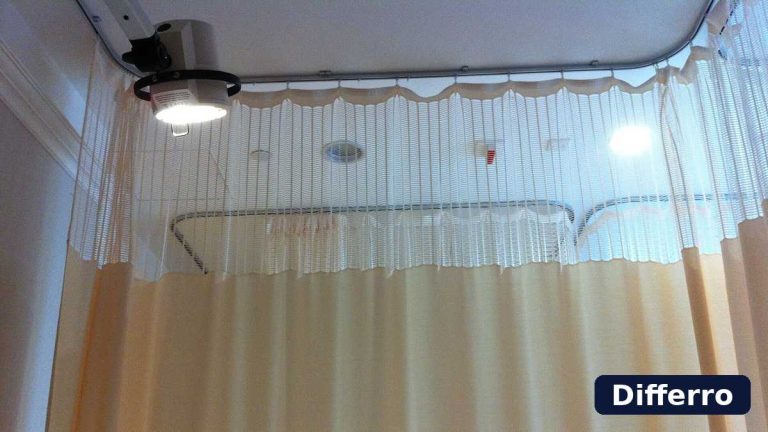
The short answer to how long does it take to install hospital curtains is that the curtain is the quick part. On a sound existing track, a change is measured in minutes; the track, the ceiling and the ward set the real schedule.
The spread is wide. A traditional hook-and-carrier change averages about 20 minutes per curtain, while a quick-change system can cut a swap to a minute or so. New track work is a different scale of job altogether.
This guide breaks the job into its real parts: the times worth planning around, the factors that stretch them, the fire rules that shape the hardware, and a simple plan any facilities team can follow.
Installation Times at a Glance
Most curtain jobs fall into one of four bands. The table below uses times published by curtain-system manufacturers and installers, stated as planning ranges rather than promises.
| Job | Typical time | What decides it |
|---|---|---|
| Change one curtain on an existing track, traditional hooks and carriers | About 10–20 minutes | Ladder work, number of hooks, curtain size |
| Change one curtain on a quick-change or hookless system | About 1–5 minutes | System design; usually no ladder needed |
| Fit new track in a single room or bay | Hours, quoted per project | Ceiling type, bends, obstructions, access |
| Curtains across a whole ward | Phased over days | Occupied rooms and agreed working windows |
Everything after this table explains where those bands come from, and the checks that keep a job inside them.
How Much Time Should I Plan For?
There is no fixed timeframe, because every project is different. Curtains for a few rooms in a small clinic can be finished quickly, while a large hospital working across several wards needs a programme, not an afternoon.
A working hospital cannot halt operations to make room for the work. Patient rooms stay in use and staff keep their routines, so installation time is set as much by the work process as by the hanging itself.
Plan room by room. The useful planning unit is one bay or one room: how long it is out of service, who moves patients, and when the team can work without clashing with rounds and cleaning.
What Affects Installation Time?
Several small factors combine to set the overall duration, and most of them are visible before anyone picks up a tool.
- Number of rooms
- Number of curtains
- Size of the curtains
- Condition of existing tracks
- Need for new tracks
- Whether rooms are occupied or vacant
- Availability of curtains and other materials
If the site is prepped and ready, work proceeds quickly. If the tracks have problems, those must be fixed first, which is why a site assessment before starting always pays for itself.
Replacing Old Curtains
Replacing curtains is a sequence, not a single step. The old curtains come down, the existing system is inspected to confirm it still works properly, and only then are the new curtains hung.
Where there are many curtains, the task is carried out in phases, and the handling of the old curtains is decided beforehand. Some hospitals launder and store them; others treat used curtains as waste from the start.
On a traditional system, that sequence averages about 20 minutes per curtain, ladder work included, according to Construction Specialties figures quoted in Healthcare Purchasing News. The curtain-change questions answered by quick-change maker ZipQuick put a zip-panel swap at 60 seconds to five minutes, with no ladder or tools.
What About the Curtain Track?
The track is a crucial part of the whole system. If it does not run correctly, problems persist even with a brand-new curtain, so its condition is assessed before installation day.
The check is simple: run the curtain along its full length and look for sticking points, bent sections, worn carriers and loose fixings. A serviceable track does not need replacing; a damaged or unsuitable one adds real work.
Three Ways a Track Is Fitted
Installers describe three standard fits. Flush mounting fixes the track directly to a solid ceiling. Grid ceilings take clips onto the T-bar frame. Suspended track hangs on tubes where ceilings are tall or services block the route.
The fitting sequence follows the same order either way: mark bed positions and obstructions such as lights, diffusers and sprinklers, set out the route, fit fixings and bends, then hang runners and curtains and check the glide.
Hookless track systems go further still. The hospital curtain FAQs from On The Right Track describe exchanges done from the floor in under a minute, with no individual hooks to unclip.
Installing in Patient Rooms
Extra caution is needed in patient rooms, because not every room is vacant. It is rarely possible to work on all rooms at once, so some are completed first and the rest follow as beds free up.
That phased approach protects patient privacy and keeps disruption to staff routines small. Curtain length and room layout are checked as each room is done, so the fabric reaches the right area and moves smoothly.
Disposable Curtains Can Change the Process
Disposable curtains simplify the replacement process in the areas that suit them. They hang on the existing track like any other curtain, but there is no laundry loop waiting at the end of their life.
Manufacturer EcoMed states that its disposable curtains can be changed in under 30 seconds, because the lightweight panels are designed for fast swaps on standard tracks. Treat that as a best case, but the direction is right.
They fit high-turnover areas best, where curtains change often. For rooms in continuous use, a washable curtain may still be the better choice, so the decision rests on usage patterns, cleaning protocols and the hospital’s requirements.
Can Installation Be Done Without Disrupting the Hospital?
Yes — the work can be planned to minimise disruption, and the whole hospital never has to shut at once. The usual approach is to divide the work into sections and complete a few rooms at a time.
Installers regularly phase track work bay by bay so a ward stays partly in use. Staff are told in advance where work will happen, and noisy drilling is kept to agreed windows where possible.
What If the Track Needs to Be Replaced?
If the existing track is old or damaged, installation time grows. New track means measuring the space, cutting sections to length — track is supplied in straight lengths and preformed bends — and fitting the hardware before any curtain is hung.
Sometimes only one section is at fault, and replacing the whole system is unnecessary. A site assessment is what clarifies exactly how much track work a project really contains.
A Simple Installation Plan
A solid plan makes the process much easier. The hospital gathers five pieces of information beforehand:
- Step 1: How many rooms require curtains?
- Step 2: How many new curtains are needed?
- Step 3: Is the existing track still usable?
- Step 4: Which rooms can be vacated first?
- Step 5: When should the work be scheduled to minimise disruption for patients and staff?
With those answers in hand, the schedule writes itself: rooms in order, times per room from the bands above, and a named person who signs off each finished bay.
The Benefits of Professional Installation
Hanging curtains looks minor, but in a hospital it carries real requirements. The curtains must fit correctly, the track must be properly aligned, and patient privacy has to be maintained throughout the process.
A professional crew brings the second benefit: rhythm. Installers who work in live wards know how to keep a bay out of service for the shortest possible time, and a systematic approach saves staff time across the whole job.
Fire and Sprinkler Rules That Shape the Job
One set of rules decides what may be hung at all. Under NFPA 13, a privacy curtain escapes being classed as a sprinkler obstruction only when three conditions are met, as the NFPA’s own guidance explains.
- The curtain is supported by fabric mesh on a ceiling track
- The mesh openings make up at least 70 percent of the mesh area
- The mesh extends at least 22 inches (550 mm) down from the ceiling
The reason is the spray pattern: it develops in the first 18 inches below the sprinkler head, so heat and water must pass through the mesh. The exception applies to light-hazard areas, which covers most patient rooms.
Fabric is regulated too: curtain textiles are tested against the NFPA 701 flame-propagation standard. Ordering a curtain without the right mesh or fabric means rework, so these checks belong in the plan, not the snagging list.
Common Mistakes That Slow Installation Down
The commonest mistake is skipping the site assessment and discovering bent track on installation day. Every hour of measuring saved beforehand is repaid in delays once a crew is standing in the ward.
The second is ordering curtains before measuring. A curtain needs roughly 10 percent more width than the track length to hang with proper fullness, and the mesh depth is fixed by the fire rules, not by taste.
The third is scheduling every room at once. A phased plan with a few spare curtain sets almost always finishes sooner than a big-bang attempt that collides with admissions.
Before Installation Begins
Before work commences, the hospital verifies a few details: the number of curtains and their sizes, the condition of the tracks, and that all materials are on site.
Two measurements settle most sizing questions — the track length, and the floor-to-ceiling height that sets the mesh header. It is also decided which rooms are serviced first, so there are no last-minute complications.
Frequently Asked Questions
How long does it take to change one hospital curtain?
On a traditional hook-and-carrier track, plan on about 10 to 20 minutes per curtain, including ladder work. On a quick-change or hookless system, the same swap typically takes between one and five minutes.
Can new curtains be hung on an old track?
Yes, provided the track is serviceable and the carriers match the curtain’s fittings. A glide test along the full length of the track shows whether it can stay or needs repair first.
Why do hospital curtains have a mesh top?
So sprinklers can work. NFPA 13 treats a curtain as a non-obstruction only when its mesh is at least 70 percent open and extends at least 22 inches from the ceiling.
Do patient rooms have to be emptied for installation?
Not as a rule. Work is usually phased a few rooms at a time, and occupied rooms are done when a bed is free, with privacy protected throughout the change.
Who should install hospital curtain track?
A contractor or installer experienced in healthcare work. Track fitting involves ceilings, sprinklers and live wards, and a specialist crew will already know the fire rules and the phasing routine.
Final Thoughts
The time needed to install hospital curtains runs from minutes to days depending on one distinction: whether the track is already there and sound, or part of the job itself.
Assess the site first, plan room by room, and respect the fire rules, and the work stays organised — with the hospital’s daily operations carrying on around it.

