
Flue Or Flu is a common spelling confusion in English. These two words sound the same, but they have very different meanings. Many people accidentally use “flue” when talking about sickness or write “flu” when discussing chimneys and smoke pipes.
This confusion happens because both words are homophones. Homophones are words that sound alike but have different meanings and spellings. Knowing the correct usage helps you avoid writing mistakes in school, work, and daily conversations.
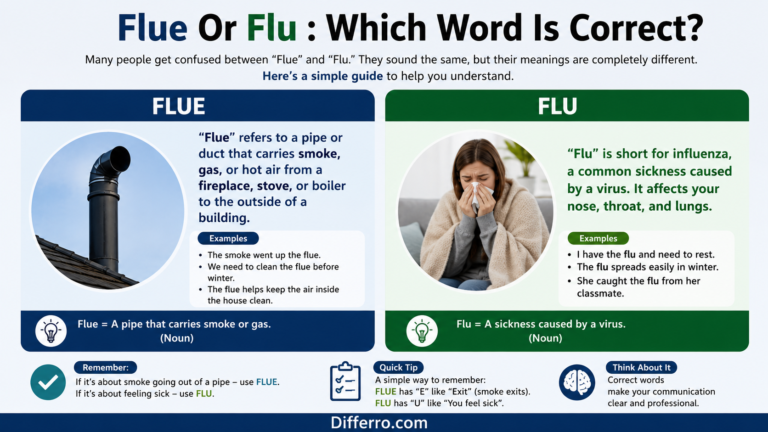
“Flu” relates to illness and health. “Flue” refers to a pipe or channel that carries smoke or gas. Learning the difference is simple once you understand their meanings and usage.
In this guide, you will learn the meaning, differences, history, examples, common mistakes, and easy memory tricks for “flue” and “flu.”
⭐ Quick Answer
“Flu” is the correct word when talking about influenza, a common viral illness. “Flue” refers to a pipe or passage that carries smoke or gases.
Example:
- I stayed home because I had the flu.
- Smoke escaped through the chimney flue.
📖 Meaning of Flue
“Flue” is a noun. It means a duct, pipe, or channel that carries smoke, heat, or gases from a fireplace, stove, or furnace.
Examples of Flue
- The chimney flue needed cleaning.
- Smoke traveled through the flue safely.
📖 Meaning of Flu
“Flu” is short for influenza. It is a contagious viral illness that affects the nose, throat, and lungs.
Examples of Flu
- She missed school because of the flu.
- Many people get the flu during winter.
📊 Key Differences Between Flue and Flu
| Feature | Flue | Flu |
|---|---|---|
| Meaning | A smoke or gas passage | Influenza illness |
| Word Type | Noun | Noun |
| Usage | Heating systems and chimneys | Health and sickness |
| Tone | Technical | Medical and casual |
| Popularity | Less common | Very common |
| Example | Clean the flue yearly | I caught the flu |
🕰️ Origin & History
The word “flu” comes from “influenza,” an Italian word used in the 1700s for epidemic illnesses.
The word “flue” comes from Old English and relates to flowing smoke or gases through a pipe.
Similar confusing words include:
- Brake vs Break
- Stationary vs Stationery
- Principal vs Principle
🇬🇧 British English vs American English Spelling
Both British and American English use the same spelling for “flu” and “flue.” There is no spelling difference between the two regions. However, “flu” appears much more often in everyday speech because health topics are common worldwide.
British vs American English Comparison
| Word | British English | American English |
|---|---|---|
| Flu | Flu | Flu |
| Flue | Flue | Flue |
✍️ When to Use Flue
Use “flue” when talking about chimneys, smoke ducts, fireplaces, boilers, or ventilation systems.
Examples
- The fireplace flue was blocked.
- Workers repaired the furnace flue.
- Birds built a nest near the chimney flue.
✍️ When to Use Flu
Use “flu” when discussing sickness, viruses, health, or influenza symptoms.
Examples
- He recovered from the flu quickly.
- Doctors advised people to get a flu shot.
- The flu spreads faster in cold weather.
❌ Common Mistakes
| Incorrect Usage | Correct Usage |
|---|---|
| I have the flue. | I have the flu. |
| Smoke came from the flu. | Smoke came from the flue. |
| She got a flue vaccine. | She got a flu vaccine. |
| The flu pipe is damaged. | The flue pipe is damaged. |
🧠 Easy Trick to Remember
Remember this simple tip:
- Flu = Illness
- Flue = Exhaust pipe
The extra “e” in “flue” can remind you of “exhaust.”

🏠 Everyday Life Examples
1. At Home
The chimney flue carried smoke outside safely.
2. During Winter
Many people catch the flu in cold weather.
3. At the Doctor’s Office
The doctor recommended a flu vaccine.
4. Fireplace Maintenance
The worker cleaned the blocked flue.
5. School Conversation
Several students missed class because of the flu.
🔍 Related Keywords
- Flu meaning
- Flue meaning
- Flu vs flue
- Difference between flu and flue
- Influenza spelling
- Chimney flue definition
- Flu or flue correct usage
📈 Google Trends & Usage Data
In the USA, “flu” receives far more searches because people often look for symptoms, vaccines, and treatments.
Meanwhile, the UK and Australia also show higher search interest in “flu,” especially during winter health seasons.
In India and Pakistan, many users search “flue or flu” to understand the spelling difference while learning English.
Overall, “flu” has much higher global search volume because it relates to common health concerns.
Comparison Table: Keyword Variations
| Keyword Variation | Search Intent |
|---|---|
| Flu or flue | Spelling confusion |
| What is flu | Health information |
| Flue meaning | Technical definition |
| Flu meaning | Medical meaning |
| Difference between flu and flue | Grammar learning |
| Chimney flue | Home maintenance |
⚖️ Final Verdict
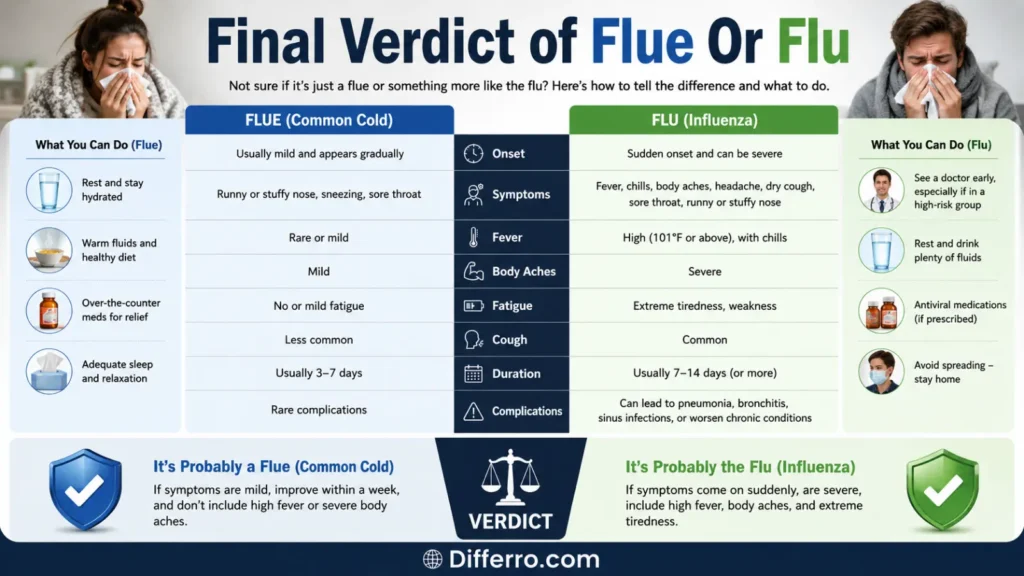
“Flu” and “flue” are both correct words, but they mean completely different things.
Use “flu” when talking about influenza or sickness.
Use “flue” when referring to a chimney pipe or smoke channel.
If you remember that “flu” relates to health and “flue” relates to exhaust systems, you will avoid mistakes easily.
FAQs ,
Is “flu” correct?
Yes, “flu” is correct when referring to influenza.
What is the difference between flue and flu?
“Flue” is a smoke passage, while “flu” is a viral illness.
Which word is more common?
“Flu” is much more common in everyday language and online searches.
Is “flue” used in formal writing?
Yes, “flue” is commonly used in technical and construction writing.
Why does the confusion exist?
The confusion exists because both words sound exactly alike.
📝 Conclusion
The confusion between “flue” and “flu” is common because both words are pronounced the same way. However, their meanings are very different. “Flu” refers to influenza, a viral illness that affects millions of people each year. “Flue” describes a pipe or passage that carries smoke or gases from fireplaces or heating systems.
Using the correct spelling improves your grammar and communication skills. It also helps readers understand your message clearly. A simple memory trick can make the difference easy to remember. Think of “flu” for illness and “flue” for exhaust systems.
Now you can confidently choose the correct word in writing and conversation without confusion.
Discover More Post ,
Wellcome Or Welcome : Which Spelling Is Correct?
Loath Or Loathe : Which Word Is Correct ?
Peeking Or Peaking : Which Word Should You Use?

Sara Taylor is a passionate writer and language enthusiast. She specializes in creating simple and easy-to-understand articles about English grammar, spelling differences, and commonly confused words. Her writing style focuses on helping students, writers, and English learners improve their language skills with confidence. Through informative guides and practical examples, Sara makes complex grammar topics easier for everyday readers.