

Black or White is a common phrase used in English conversations, writing, and decision-making. Many people use these words daily, but confusion still happens because both terms can carry literal and symbolic meanings.
“Black” often represents darkness, color, mystery, or seriousness. “White” usually represents light, purity, simplicity, or clarity. Together, the phrase “black or white” also describes situations that seem completely clear with no middle ground.
People search for both these colours to understand grammar usage, meanings, comparisons, and expressions. This article explains everything in simple language. You will learn the meanings, differences, history, usage tips, common mistakes, and examples. You will also discover how these words are used in American and British English.
By the end, you will know exactly when and how to use these two words correctly in everyday writing and speaking.
⭐ Quick Answer
These two words refer to opposite colors or ideas. “Black” usually means dark or serious, while “white” often means light or pure.
Example:
“The answer is not simply black or white because the problem is complicated.”
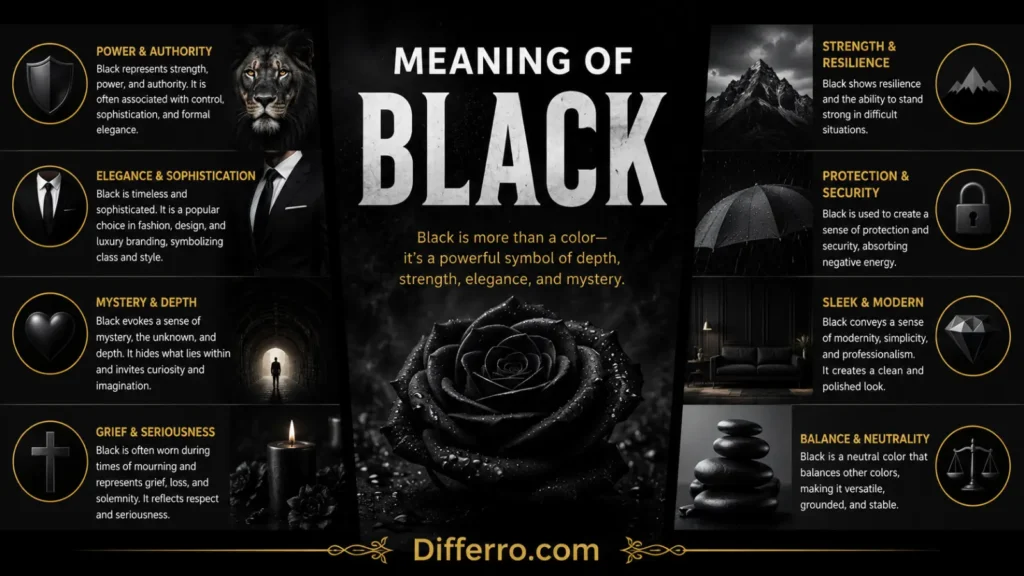
Meaning of Black
“Black” is a dark color created by the absence of light. It can also describe something serious, formal, mysterious, or negative depending on context.
Examples of Black
- She wore a black dress to the party.
- The sky turned black before the storm.
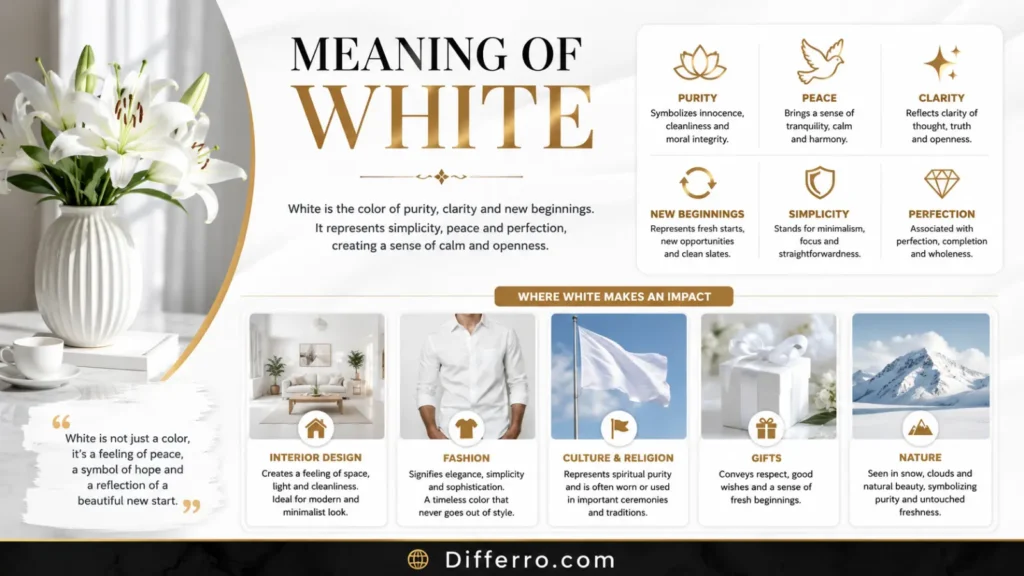
Meaning of White
“White” is a light color that reflects all visible light. It often symbolizes cleanliness, peace, simplicity, or innocence.
Examples of White
- He painted the wall white.
- The doctor wore a white coat.
📊 Key Differences
| Feature | Black | White |
|---|---|---|
| Meaning | Dark color | Light color |
| Tone | Serious, bold, mysterious | Clean, calm, pure |
| Usage | Fashion, design, symbolism | Cleanliness, peace, simplicity |
| Popularity | Common in fashion and expressions | Common in design and symbolism |
🕰️ Origin & History
These words come from Old English. “Black” came from the word blæc, meaning dark or burned. “White” came from hwīt, meaning bright or shining.
These words became important in literature, art, and culture because they describe opposite ideas. Over time, the phrase started meaning something clear and absolute.
Similar Word Examples
- Hot and Cold
- Right and Wrong
- Light and Dark
- Good and Evil
British English vs American English Spelling
The spellings of both words remain the same in both British and American English. However, usage and expressions may slightly differ based on culture and writing style.
Americans often use “black and white” in legal or direct discussions. British English may use it more in descriptive or literary writing.
British vs American English Comparison Table
| British English | American English |
|---|---|
| Black and white issue | Black and white issue |
| White colour themes | White color themes |
| Black humour | Black humor |
✍️ When to Use Black
Use “black” when describing:
- Dark colors
- Formal clothing
- Serious moods
- Mystery or elegance
Examples
- He bought a black car.
- The movie had a black theme.
- She prefers black shoes for work.
✍️ When to Use White
Use “white” when describing:
- Bright colors
- Clean objects
- Peaceful themes
- Simplicity
Examples
- The room has white curtains.
- They carried a white flag.
- She likes white flowers.
❌ Common Mistakes
| Incorrect Usage | Correct Usage |
|---|---|
| The answer is black in white. | The answer is black and white. |
| She wore white black shoes. | She wore black and white shoes. |
| Black means always bad. | Black can have many meanings. |
| White always means pure. | White can have different meanings. |
🧠 Easy Trick to Remember
- Black = Darkness
- White = Brightness
Think of night and day:
- Night looks black.
- Daylight looks white or bright.
🏡 write 5 examples
1. Fashion Example
She wore a black jacket with white sneakers.
2. Home Design Example
The kitchen uses black cabinets and white walls.
3. School Example
Students wrote answers on the white board using black markers.
4. Photography Example
The artist loves black and white photography.
5. Decision-Making Example
Life is not always black or white.
🔍 Related Keywords
- meaning of black
- black vs white
- black or white difference
- opposite color phrase
- meaning of white
- dark vs light meaning
- color comparison expression
📈 Google Trends & Usage Data
In the USA, searches for these two colours are high because of music, culture, and expressions.
In the UK, the phrase is common in literature and education searches.
Australia shows balanced searches related to design and fashion topics.
In India and Pakistan, many users search the phrase for grammar learning and English understanding.
Keyword Variations Comparison Table
| Keyword Variation | Search Intent |
|---|---|
| Black or White | Comparison |
| Black and White meaning | Phrase meaning |
| Black vs White | Difference |
| Meaning of Black | Definition |
| Meaning of White | Definition |
🧾 Final Verdict
Both are correct words with different meanings and uses. Neither word is better than the other. The correct choice depends on context.
Use “black” for dark, bold, or serious ideas. Use “white” for light, clean, or peaceful ideas. The phrase is best used when talking about clear opposites or simple choices.
FAQs ,
Is this phrase correct?
Yes. It is a correct phrase used to compare opposites or describe clear choices.
What is the difference between in these two colours?
The first one is a dark color, while the other is a light color.
Which is more common?
Both are extremely common in English writing and speaking.
Is this phrase formal?
Yes. It can be used in both formal and informal English.
Why does confusion exist?
Confusion happens because both words have literal and symbolic meanings.
Conclusion
“Black or White” is more than just a color comparison. These words carry strong meanings in language, culture, fashion, art, and everyday speech.The first one often represents darkness, seriousness, or elegance, while white usually symbolizes brightness, peace, or simplicity.
The phrase also describes situations that seem very clear with no middle option. Understanding the difference helps improve both writing and communication.
By learning the meanings, history, examples, and common mistakes, you can now use these words correctly in any situation. Whether you are writing formally or speaking casually, knowing when to use this phrase will make your English clearer and more natural.
Discover More Post ,
Aid or Aide Explained in Easy English
Payed Or Paid : Which Spelling Is Correct?
Lable Or Label : Which Spelling Is Correct?

Sara Taylor is a passionate writer and language enthusiast. She specializes in creating simple and easy-to-understand articles about English grammar, spelling differences, and commonly confused words. Her writing style focuses on helping students, writers, and English learners improve their language skills with confidence. Through informative guides and practical examples, Sara makes complex grammar topics easier for everyday readers.