
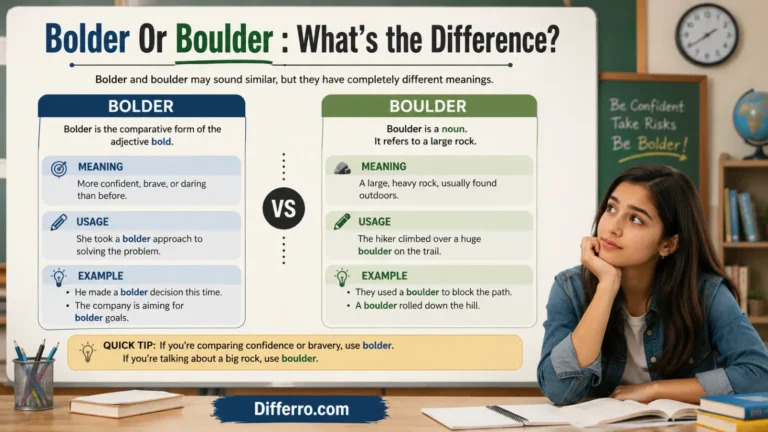
Bolder or Boulder is a common word confusion in English. These two words look similar, but they have very different meanings. Many people accidentally use one instead of the other while writing emails, essays, captions, or blog posts.
The word bolder relates to being brave or more noticeable. The word boulder means a large rock or stone. Because they differ by only one letter, writers often mix them up.
Understanding the difference helps improve grammar and writing accuracy. It also makes your content look more professional. In this guide, you will learn the meanings, differences, history, usage examples, and simple tricks to remember these words correctly.
⭐ Quick Answer
Bolder is the comparative form of “bold” and means more brave or more noticeable.
Boulder means a large rock or stone.
Example:
- She became bolder during the meeting.
- A huge boulder blocked the road.
📘 Meaning of Bolder
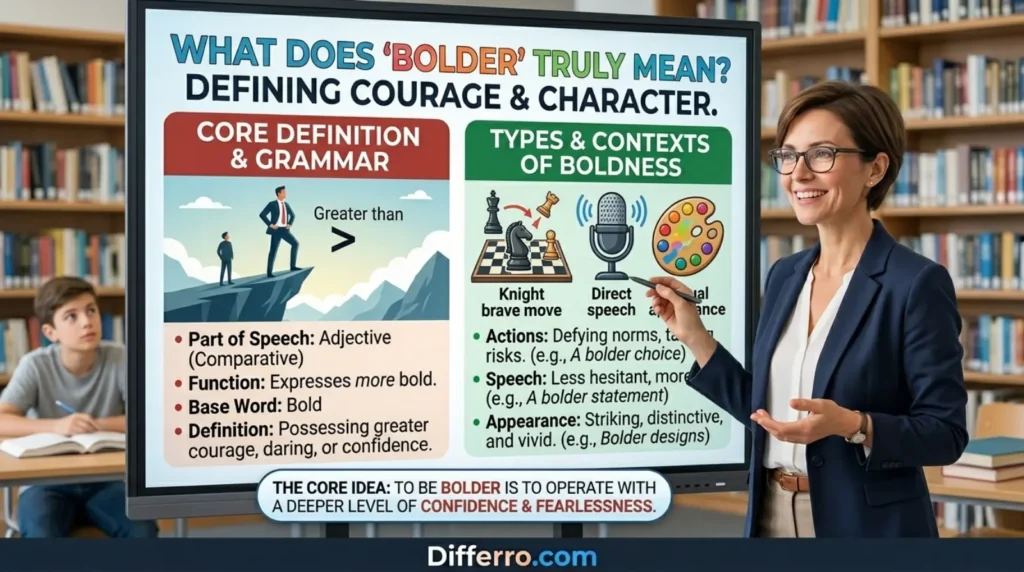
Bolder means more confident, brave, daring, or visually stronger.
It comes from the adjective bold.
Examples:
- Her writing style became bolder over time.
- He made a bolder decision than expected.
🪨 Meaning of Boulder
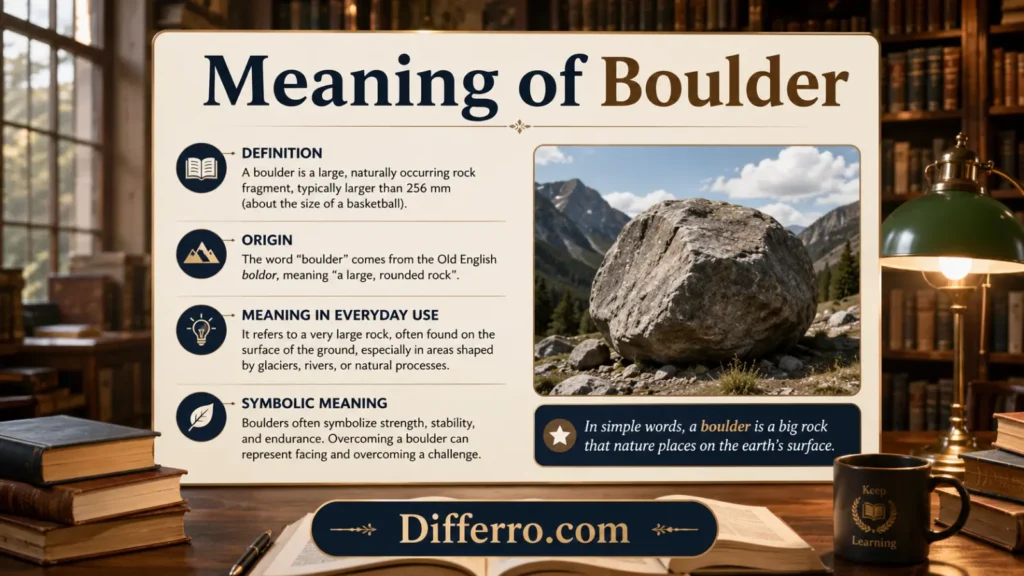
Boulder means a large, rounded rock.
It is commonly used in nature, hiking, and geology.
Examples:
- The hikers climbed over a massive boulder.
- A falling boulder damaged the road.
🔍 Key Differences Between Bolder and Boulder
| Feature | Bolder | Boulder |
|---|---|---|
| Meaning | More brave or noticeable | A large rock |
| Word Type | Adjective | Noun |
| Tone | Descriptive | Physical object |
| Usage | Personality, design, choices | Nature, geography |
| Popularity | Common in writing | Common in outdoor topics |
🕰️ Origin & History
The word bold comes from Old English beald, meaning brave or confident. Over time, bolder became its comparative form.
The word boulder comes from Middle English and Scandinavian roots related to large stones.
Similar Word Confusions:
- Desert vs Dessert
- Affect vs Effect
- Stationary vs Stationery
- Principal vs Principle
🇬🇧 British English vs American English Spelling
Both bolder and boulder have the same spelling in British and American English. There is no regional spelling difference.
However, usage frequency may vary based on writing style and topic.
Comparison Table: British vs American English
| Word | British English | American English |
|---|---|---|
| Bolder | Bolder | Bolder |
| Boulder | Boulder | Boulder |
✍️ When to Use Bolder
Use bolder when comparing bravery, confidence, style, or appearance.
Examples:
- The company used a bolder marketing strategy.
- She wore a bolder color this year.
- His speech became bolder after the applause.
🪨 When to Use Boulder
Use boulder when talking about rocks, mountains, or natural landscapes.
Examples:
- A giant boulder rolled down the hill.
- Children played near the boulder.
- The river moved the boulder slowly.
❌ Common Mistakes
| Incorrect | Correct |
|---|---|
| She became more boulder in meetings. | She became more bolder in meetings. |
| The hikers climbed a huge bolder. | The hikers climbed a huge boulder. |
| His design looks boulder now. | His design looks bolder now. |
| A bolder blocked the street. | A boulder blocked the street. |
🧠 Easy Trick to Remember
- Bolder = Bold person or style
- Boulder = Big rock
Memory Tip:
“Boulders belong outdoors.”
📝 Write 5 Examples
1. Office Presentation
Her new slides looked bolder than before.
2. Mountain Hiking
A giant boulder stood near the waterfall.
3. Fashion Design
The designer used bolder colors this season.
4. Road Safety
A falling boulder blocked traffic for hours.
5. Public Speaking
He sounded bolder during the interview.
Related Keywords
- Bolder meaning
- Boulder meaning
- Bolder vs Boulder
- Boulder definition
- Bold comparative form
- Common English word confusion
- English spelling differences
Google Trends & Usage Data
IIn the USA, people often search for boulder because of tourism, geography, and outdoor sports.
Across the UK and Australia, both terms show similar interest in education and writing-related topics.
In India and Pakistan, many users look up these words due to spelling confusion and grammar learning.
Globally, boulder receives higher search volume since the term is strongly connected with nature, travel destinations, and rock formations.
Comparison Table: Keyword Variations
| Keyword Variation | Search Intent |
|---|---|
| Bolder vs Boulder | Word comparison |
| Boulder meaning | Definition |
| Bolder meaning | Grammar |
| Boulder examples | Vocabulary |
| How to spell boulder | Spelling help |
| Bolder in a sentence | Usage examples |
FAQs
1. Is “bolder” a correct word?
Yes. It is the comparative form of “bold.”
2. What is the difference between bolder and boulder?
Bolder means more brave or noticeable. Boulder means a large rock.
3. Which word is more common?
Boulder is searched more often worldwide.
4. Is bolder formal English?
Yes. It is commonly used in both formal and informal writing.
5. Why does this confusion exist?
The words sound similar and differ by only one letter.
✅ Final Verdict
Choose bolder when discussing confidence, style, or stronger appearance.
Choose boulder when talking about rocks or natural objects.
The words are unrelated in meaning, even though they look similar. Using the correct one improves clarity and professionalism in writing.
📝 Conclusion
Bolder or Boulder is a simple but important English word confusion. Bolder relates to bravery, confidence, and stronger appearance. Boulder refers to a large rock found in nature. Because the spellings are very close, many writers accidentally mix them up.
Learning the meanings and usage examples helps avoid grammar mistakes. A simple memory trick can also make the difference easier to remember. Whether you are writing an essay, blog post, or social media caption, choosing the correct word improves your communication.
Always think about the context. If the sentence talks about courage or style, use bolder. If it talks about rocks or mountains, use boulder.
Discover More Post ,
Crawfish Or Crayfish : Which Word Is Correct?
Cancelation vs Cancellations Explained Simply
Sherbet or Sherbert : Common English Mistake

Sara Taylor is a passionate writer and language enthusiast. She specializes in creating simple and easy-to-understand articles about English grammar, spelling differences, and commonly confused words. Her writing style focuses on helping students, writers, and English learners improve their language skills with confidence. Through informative guides and practical examples, Sara makes complex grammar topics easier for everyday readers.