
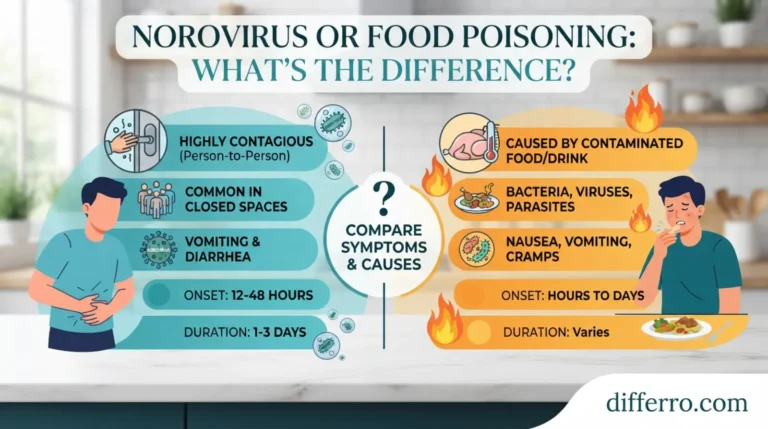
Norovirus or food poisoning can cause very similar symptoms, including vomiting, diarrhea, nausea, and stomach cramps. That makes the two conditions easy to confuse.
The main difference involves what causes the illness. Norovirus is a specific virus that causes acute gastroenteritis. Food poisoning describes illness caused by contaminated food or drinks.
Norovirus can actually cause foodborne illness when contaminated food carries the virus. It can also spread through infected people and contaminated surfaces. Food poisoning has many other causes, including bacteria, parasites, viruses, and toxins. (CDC)
Knowing these differences can help you understand what your symptoms may mean. However, symptoms alone cannot always identify the exact cause.
⭐ Quick Answer
Norovirus or food poisoning are not the same thing. Norovirus is a specific virus, while food poisoning is a broad term for illness caused by contaminated food or drinks.
Example: Norovirus can spread between people, while Salmonella food poisoning usually comes from contaminated food.
🦠 Meaning of Norovirus
Norovirus is a highly contagious virus that causes inflammation of the stomach and intestines. It commonly causes sudden vomiting, watery diarrhea, nausea, and stomach cramps.
Symptoms usually begin 12 to 48 hours after exposure. Most people recover within one to three days. (CDC)
Examples
- Several students become sick after one child brings norovirus to school.
- A family member develops vomiting after caring for someone with norovirus.
Norovirus can spread through contaminated food and water. It can also spread through people and contaminated surfaces. (CDC)
🍽️ Meaning of Food Poisoning
Food poisoning describes an illness caused by eating or drinking something contaminated.
Different germs and toxins can cause food poisoning. Common causes include Salmonella, Campylobacter, E. coli, norovirus, and certain bacterial toxins. (CDC)
Examples
- Someone develops diarrhea after eating undercooked chicken contaminated with Salmonella.
- Several people become sick after eating contaminated food at a gathering.
Food poisoning does not have one fixed symptom pattern. The symptoms depend on the specific cause.
🔎 Norovirus or Food Poisoning: Key Differences
| Feature | Norovirus | Food Poisoning |
|---|---|---|
| Meaning | A specific virus | A broad illness category |
| Cause | Norovirus infection | Bacteria, viruses, parasites, or toxins |
| Main route | Person-to-person, surfaces, food, or water | Usually contaminated food or drinks |
| Symptoms | Vomiting, diarrhea, nausea, cramps | Depends on the cause |
| Onset | Often 12–48 hours | Can range from hours to several days |
| Contagious | Highly contagious | Depends on the cause |
| Popularity of term | More specific | More commonly used as a general term |
The timing varies widely with food poisoning. Some toxins can cause symptoms within hours, while some infections take several days. (CDC)
📚 Origin and History
The word norovirus comes from the virus family now known as noroviruses. The name became associated with the Norwalk virus, which caused a gastroenteritis outbreak in Norwalk, Ohio.
The term food poisoning is much broader. It describes illness that results from contaminated food or drinks.
Related terms include:
- Foodborne illness
- Gastroenteritis
- Stomach bug
- Foodborne infection
- Foodborne toxin illness
- Viral gastroenteritis
Norovirus belongs to the larger group of causes that can produce foodborne illness.
🇬🇧 British English vs American English Spelling
Norovirus and food poisoning have the same spelling in British and American English.
The main spelling difference often appears with related terms.
| British English | American English |
|---|---|
| diarrhoea | diarrhea |
| gastroenteritis | gastroenteritis |
| norovirus | norovirus |
| food poisoning | food poisoning |
For a US-focused SEO article, diarrhea is the preferred spelling. For UK readers, diarrhoea is standard.
🦠 When to Use “Norovirus”
Use norovirus when you mean the specific viral infection.
Examples
- “Norovirus can cause sudden vomiting and diarrhea.”
- “The doctor suspected norovirus after several people became sick.”
- “Norovirus spreads easily in crowded places.”
- “The symptoms started about 24 hours after exposure.”
Use this word when discussing the actual virus or infection.
🍽️ When to Use “Food Poisoning”
Use food poisoning when you mean illness linked to contaminated food or drinks.
Examples
- “The restaurant reported several suspected food poisoning cases.”
- “Food poisoning can have many different causes.”
- “Some types of food poisoning begin within hours.”
- “Contaminated food can cause food poisoning.”
Remember that norovirus can also cause foodborne illness.
⚠️ Common Mistakes
Mistake 1: Treating Norovirus as Another Name for Food Poisoning
Incorrect: Norovirus means food poisoning.
Correct: Norovirus is a virus that can cause foodborne illness.
Mistake 2: Assuming Food Poisoning Always Starts Quickly
Incorrect: Food poisoning always starts within a few hours.
Correct: Food poisoning can begin within hours or several days, depending on the cause. (CDC)
Mistake 3: Assuming Norovirus Only Comes From Food
Incorrect: You only get norovirus from contaminated food.
Correct: Norovirus can spread through people, surfaces, food, and water. (CDC)
Mistake 4: Assuming Similar Symptoms Mean the Same Illness
Incorrect: Vomiting and diarrhea always mean food poisoning.
Correct: Several infections can cause vomiting and diarrhea, including norovirus.
Mistake 5: Calling Norovirus “Stomach Flu”
Incorrect: Norovirus is the influenza flu.
Correct: Norovirus causes gastroenteritis and is unrelated to influenza. (CDC)
🧠 Easy Trick to Remember
Use this simple memory trick:
Norovirus = Name of a virus.
Food poisoning = Name for illness from contaminated food or drinks.
Think of it this way:
Specific cause → Norovirus
Broad category → Food poisoning
This distinction makes the norovirus or food poisoning question much easier.
🌎 5 Everyday-Life Examples
1. A Sick Family Member
Your brother has vomiting and diarrhea. Two days later, you develop similar symptoms.
This pattern can fit norovirus, because it spreads easily between people.
2. Several People Eat the Same Meal
Four people become sick after eating the same contaminated meal.
That situation can suggest food poisoning, although norovirus can also spread through contaminated food.
3. A School Outbreak
Several students develop sudden vomiting and diarrhea within a short period.
A contagious virus such as norovirus may spread quickly in a school setting. (CDC)
4. Symptoms Start Soon After a Meal
Someone develops severe nausea and vomiting shortly after eating contaminated food.
Some foodborne toxins can cause symptoms within a few hours. (CDC)
5. Contaminated Food Carries Norovirus
A sick food handler contaminates ready-to-eat food.
People who eat that food can develop norovirus, making the illness both viral and foodborne.
📊 Google Trends & Usage Data
Google Trends uses relative search interest rather than direct illness counts. Its data can also change by date and location. (Google Trends)
For USA, UK, Australia, India, and Pakistan, exact current comparison values should be checked using the same date range and search category. The available public Trends pages do not provide a reliable indexed five-country dataset for these exact terms, so exact scores would be misleading to invent.
For SEO, “food poisoning” has broader search intent, while “norovirus” targets users looking for a specific illness. Both keywords serve different search needs.
Comparison Table: Keyword Variations
| Keyword | Search Intent | Main Focus |
|---|---|---|
| norovirus or food poisoning | Comparison | Difference between conditions |
| norovirus vs food poisoning | Comparison | Symptoms and causes |
| norovirus symptoms | Informational | Symptoms of norovirus |
| food poisoning symptoms | Informational | Symptoms of food poisoning |
| norovirus or stomach bug | Confusion | Viral stomach illness |
| food poisoning vs stomach bug | Comparison | Causes and timing |
| how to tell norovirus from food poisoning | Problem-solving | Practical symptom clues |
💧 What Should You Do With Vomiting or Diarrhea?
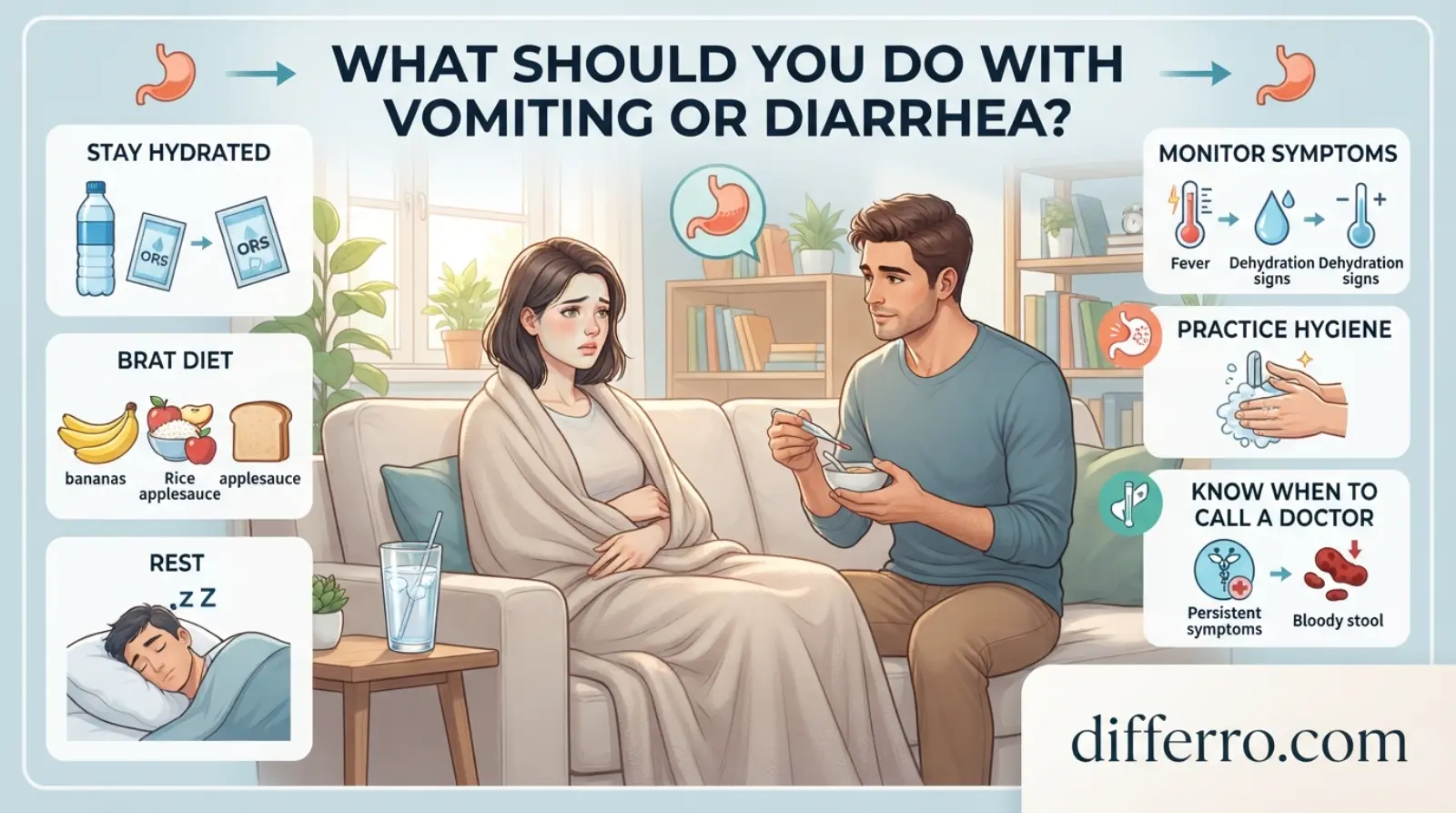
The most important concern with either illness is dehydration.
Drink fluids regularly if you can keep them down. Watch for signs such as:
- Very little urination
- Dry mouth or throat
- Dizziness
- Unusual sleepiness
- Repeated vomiting
- Difficulty keeping fluids down
CDC guidance says severe food poisoning can involve bloody diarrhea, diarrhea lasting more than three days, high fever, frequent vomiting, or dehydration. (CDC)
Norovirus can also cause serious dehydration, especially in young children, older adults, and people with certain medical conditions. (CDC)
Seek medical care when symptoms are severe, persistent, or accompanied by concerning warning signs.
🩺 Can You Tell the Difference From Symptoms Alone?
Not always.
Norovirus commonly causes sudden vomiting, watery diarrhea, nausea, and stomach cramps. Symptoms often begin 12 to 48 hours after exposure. (Mayo Clinic)
Food poisoning has a much wider range of symptoms and timing. The specific germ or toxin determines the illness pattern. (CDC)
Doctors may consider several clues, including:
- When symptoms started
- What foods you recently ate
- Whether other people became sick
- Whether someone nearby was ill
- The type and severity of symptoms
- Whether testing is needed
Therefore, symptom timing can provide clues, but it cannot always confirm the cause.
🧾 Final Verdict
The answer to norovirus or food poisoning depends on what you mean.
Norovirus identifies a specific virus.
Food poisoning describes a broad group of illnesses caused by contaminated food or drinks.
Norovirus can cause foodborne illness, but not every case of food poisoning involves norovirus. Other causes include bacteria, parasites, viruses, and toxins. (CDC)
So, neither term replaces the other. Use norovirus for the specific infection and food poisoning for the broader food-related illness category.
❓ FAQ
Is “norovirus or food poisoning” a correct phrase?
Yes. People commonly use this phrase when comparing two possible causes of vomiting and diarrhea.
However, the terms describe different things. Norovirus is a specific virus, while food poisoning is a broad illness category.
What is the main difference between norovirus and food poisoning?
Norovirus is a specific viral infection. Food poisoning refers to illness caused by contaminated food or drinks.
Food poisoning can involve bacteria, viruses, parasites, or toxins.
Which term is more common?
Food poisoning is the broader everyday term. Norovirus is more specific.
Search interest can vary by country, season, news coverage, and health outbreaks. Google Trends reports relative search interest rather than absolute search volume.
Is norovirus formal medical usage?
Yes. Norovirus is the standard medical name for this group of viruses.
“Stomach bug” is a more casual expression. “Stomach flu” can cause confusion because norovirus is not influenza.
Why does the confusion exist?
The symptoms overlap heavily.
Both conditions can cause vomiting, diarrhea, nausea, and stomach cramps. Norovirus can also spread through contaminated food, which further blurs the distinction. (CDC)
📝 Conclusion
The norovirus or food poisoning question is common because both can cause similar stomach symptoms.
Norovirus is a highly contagious virus that usually causes sudden vomiting and diarrhea. Food poisoning is a broader term for illness caused by contaminated food or drinks.
Norovirus can spread through infected people, surfaces, food, and water. Food poisoning can result from many different germs or toxins.
Timing can provide useful clues, but it cannot always identify the cause. Severe vomiting, dehydration, bloody diarrhea, or persistent symptoms require medical attention.
Understanding the difference helps you use the right term. Norovirus describes a specific virus, while food poisoning describes a broader category of illness.

Imran Lodhra is a comparison-focused content writer at Differro.com.
He specializes in creating clear, simple, and informative comparison articles.
His work helps readers understand key differences, pros and cons, and important details.
Imran focuses on accurate, practical, and easy-to-read content for everyday readers.