
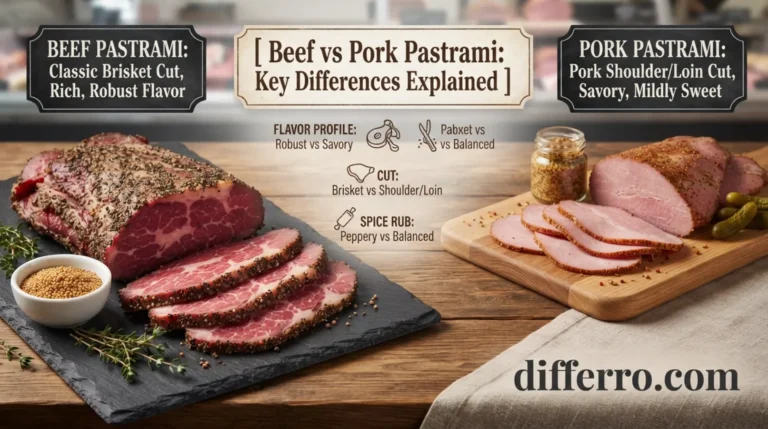
Beef vs Pork Pastrami? Many people ask this question when ordering deli sandwiches or buying smoked meat. Pastrami usually comes from beef, especially beef brisket. However, some producers make pastrami from other meats, including turkey and pork.
The confusion often comes from pastrami’s dark color, smoky flavor, and deli-style preparation. People may also confuse pastrami with bacon, ham, or corned beef. These meats differ in their cuts, seasonings, and preparation methods.
Traditional beef pastrami uses cured meat coated with spices, then smoked and cooked until tender. Its rich flavor makes it popular in sandwiches and deli meals. Still, you should check the label before buying pastrami if you avoid certain meats. The word pastrami alone does not guarantee that a product contains only beef. Understanding the ingredients helps you choose the right option for your diet and preferences.
⭐ Quick Answer
Pastrami is usually made from beef, especially beef brisket, but some varieties use turkey or pork. Producers cure, season, smoke, and cook the meat to create pastrami’s distinctive flavor.
Example: A traditional deli pastrami sandwich usually contains sliced beef pastrami, while a turkey pastrami sandwich uses turkey.
🥩 Meaning of Pastrami
Pastrami is a seasoned, cured meat that producers typically smoke and cook before slicing. Traditional American deli pastrami commonly uses beef brisket or another suitable beef cut.
The preparation gives pastrami its distinctive peppery crust, smoky flavor, and tender texture. People often serve it in sandwiches with mustard, pickles, and rye bread.
Examples of Pastrami
Example 1: A New York-style deli serves thin slices of peppery beef pastrami on rye bread.
Example 2: A grocery store sells turkey pastrami for customers who prefer poultry instead of red meat.
🐖 Meaning of Pork
Pork is meat that comes from a domestic pig. Producers use different pork cuts to make bacon, ham, sausages, and other meat products.
Pork can also serve as the base for some pastrami-style products. However, pork is not the usual meat in traditional American beef pastrami.
Examples of Pork
Example 1: A breakfast restaurant serves crispy pork bacon with eggs and toast.
Example 2: A deli sells a cured pork product prepared with pastrami-style spices and smoking techniques.
🥩 Meaning of Beef
Beef vs Pork Pastrami that comes from cattle. Producers use many beef cuts for steaks, roasts, burgers, corned beef, and pastrami.
Beef brisket is a traditional choice for American deli pastrami. Its texture and fat content help create flavorful, tender slices after curing and cooking.
Examples of Beef
Example 1: A deli prepares beef brisket with salt, pepper, coriander, and other spices to make pastrami.
Example 2: A restaurant serves a beef pastrami sandwich with mustard and pickles.
🔎 Is Pastrami Pork or Beef? Key Differences
Pastrami describes a style of meat preparation, while pork and beef describe the animal sources. Traditional deli pastrami usually contains beef.
| Feature | Beef Pastrami | Pork Pastrami |
|---|---|---|
| Meaning | Pastrami made from cattle meat | Pastrami made from pig meat |
| Main ingredient | Beef, often brisket | Pork |
| Flavor | Rich, savory, smoky, and peppery | Varies by cut, seasoning, and preparation |
| Common usage | Deli sandwiches and meat platters | Specialty meat products and sandwiches |
| Popularity | Traditional American deli choice | Less typical than beef pastrami |
| Texture | Often tender with a firm, seasoned crust | Depends on the pork cut and cooking method |
| Dietary suitability | Not suitable for people avoiding beef | Not suitable for people avoiding pork |
Important: Turkey pastrami is also available. Always read the ingredients instead of assuming every pastrami product contains the same meat.
📜 Origin and History of Pastrami
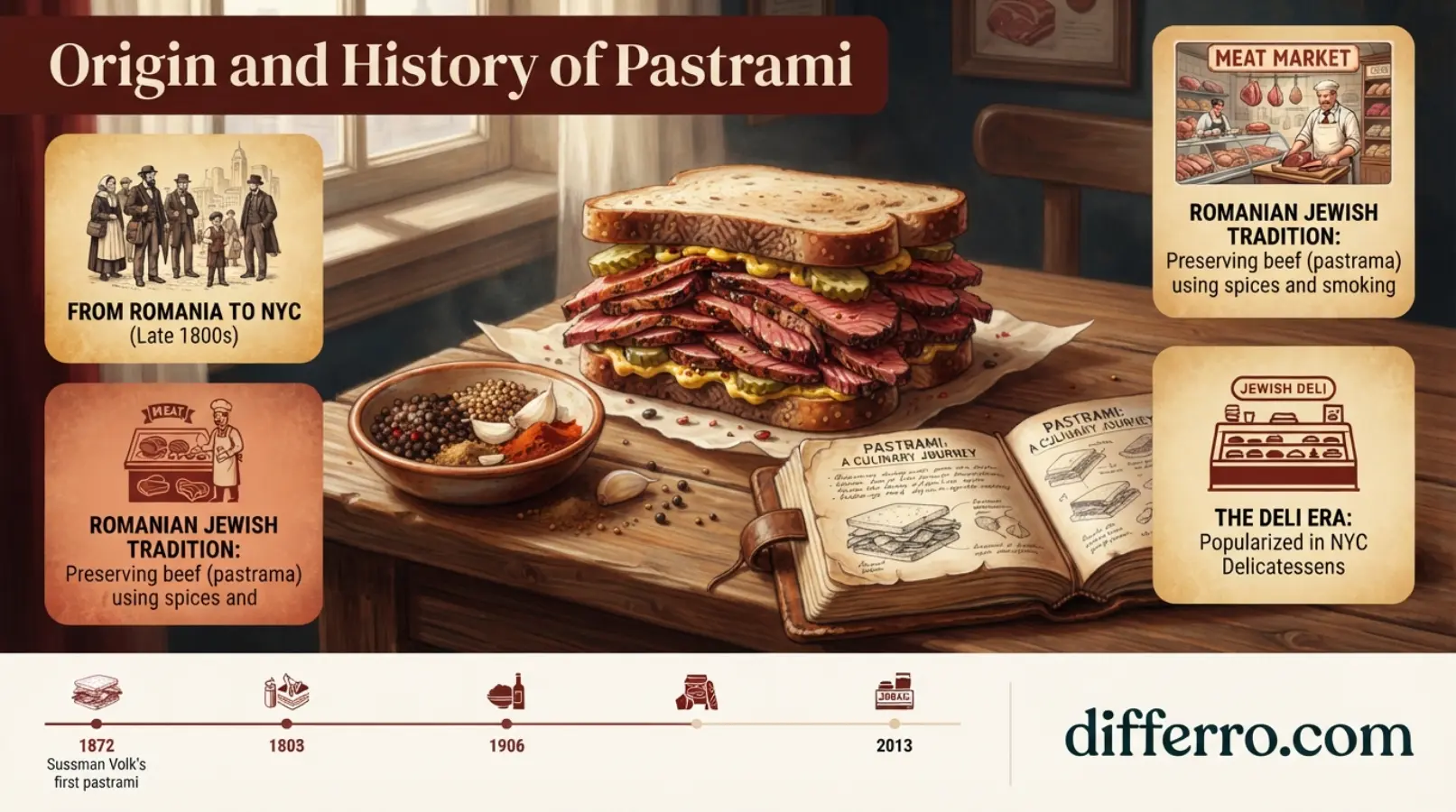
Beef vs Pork Pastrami has roots in meat-preservation traditions associated with Eastern Europe and Jewish cuisine. Immigrants brought related preparations to the United States, where pastrami became a popular deli food.
American-style pastrami became especially associated with beef and New York delis. Curing, seasoning, smoking, and cooking helped develop its recognizable taste and texture.
The word pastrami refers to the preparation and resulting product, not exclusively to one animal species.
Similar Meat Products
- Corned beef: Beef cured in seasoned brine and commonly boiled or simmered.
- Roast beef: Beef roasted and sliced, usually without pastrami’s traditional curing and smoking process.
- Bacon: Usually cured pork, although producers also make beef and turkey bacon.
- Ham: Meat from a pig’s hind leg, usually cured and sometimes smoked.
- Turkey pastrami: Turkey prepared with pastrami-style seasonings and processing.
These products may share flavors or uses, but their ingredients and preparation methods differ.
🇬🇧 British English vs American English Spelling
The word pastrami has the same spelling in British and American English. The words pork and beef also remain unchanged.
Some related food terms may vary by region, but these differences do not change the meaning of pastrami.
British vs American English Comparison
| Feature | British English | American English |
|---|---|---|
| Pastrami | Pastrami | Pastrami |
| Pork | Pork | Pork |
| Beef | Beef | Beef |
| Common context | Sandwiches and delicatessens | Deli sandwiches and Jewish delis |
| Main spelling difference | No difference in these terms | No difference in these terms |
🍽️ When to Choose Beef Pastrami
Beef vs Pork Pastrami is the traditional choice for many American deli sandwiches. It offers a savory flavor with a peppery crust and a smoky aroma.
Choose beef pastrami when:
- You want a traditional deli-style pastrami sandwich.
- You enjoy rich, savory beef with bold spices.
- You want to prepare a classic New York-style sandwich.
- You prefer beef over pork or poultry.
Example: Order a beef pastrami sandwich with rye bread, mustard, and pickles for a classic deli meal.
🐖 When to Choose Pork Pastrami
Pork pastrami is a less common variation that uses pork instead of beef. Its flavor and texture depend on the cut, seasoning, curing process, and cooking method.
Choose a pork pastrami-style product when:
- You specifically want a pork-based version.
- The product label clearly identifies pork as the main ingredient.
- You enjoy experimenting with different cured and smoked meats.
- Your dietary requirements allow pork.
Example: A specialty butcher may sell seasoned, smoked pork prepared in a pastrami style.
🦃 When to Choose Turkey Pastrami
Turkey pastrami provides another option for people who prefer poultry. Producers season and process turkey to create a deli meat with pastrami-style flavor.
Choose turkey pastrami when:
- You prefer poultry over beef or pork.
- You want another option for sandwiches and wraps.
- You like peppery, smoky deli flavors.
- The product fits your dietary and nutritional needs.
Example: Make a turkey pastrami sandwich with whole-grain bread, lettuce, tomato, and mustard.
Check the nutrition label because sodium, fat, and protein levels vary by product.
⚠️ Common Mistakes About Pastrami
Mistake 1: Assuming All Pastrami Is Beef
Incorrect: Every product labeled pastrami contains beef.
Correct: Traditional American deli pastrami usually uses beef, but turkey and pork versions also exist.
Mistake 2: Assuming Pastrami Is Always Pork
Incorrect: Pastrami is another name for pork bacon.
Correct: Traditional deli pastrami usually contains beef. Bacon commonly contains pork, although other versions exist.
Mistake 3: Confusing Pastrami With Corned Beef
Incorrect: Pastrami and corned beef are exactly the same product.
Correct: Both Beef vs Pork Pastrami often use beef and curing, but pastrami typically receives a spice coating and smoking before cooking.
Mistake 4: Ignoring the Ingredient Label
Incorrect: The product’s dark color proves it contains beef.
Correct: Color and appearance cannot reliably identify the meat. Check the ingredient list and packaging.
Mistake 5: Assuming Turkey Pastrami Is Fresh Turkey
Incorrect: Turkey pastrami is simply plain roasted turkey.
Correct: Turkey pastrami uses seasonings and processing designed to create a pastrami-style deli meat.
Mistake 6: Assuming Every Deli Uses the Same Recipe
Incorrect: Every pastrami sandwich contains identical ingredients.
Correct: Delis may use different meats, spices, cuts, and preparation methods. Ask staff if you need certainty.
🧠 Easy Trick to Remember
Use this simple rule:
- Pastrami tells you how the meat is prepared.
- Beef tells you the meat comes from cattle.
- Pork tells you the meat comes from a pig.
- Turkey tells you the meat comes from poultry.
Traditional deli pastrami usually means beef pastrami, but the label provides the clearest answer.
🍴 Five Everyday Examples
1. Ordering a Classic Deli Sandwich
You visit a deli and order pastrami on rye bread with mustard.
Likely choice: Traditional beef pastrami, although you should confirm if the meat source matters.
Primary keyword: Beef vs Pork Pastrami
Secondary keyword: Traditional beef pastrami.
2. Buying Packaged Pastrami
You find sliced pastrami in a supermarket refrigerator.
Best approach: Read the ingredient list to identify beef, pork, turkey, or a mixture.
Primary keyword: Beef vs Pork Pastrami
Secondary keyword: Pastrami ingredients.
3. Preparing Lunch at Home
You make a sandwich with pastrami, cheese, mustard, and pickles.
Best approach: Choose the meat variety that matches your taste and dietary needs.
Primary keyword: Beef vs Pork Pastrami
Secondary keyword: Beef pastrami sandwich.
4. Choosing Meat for a Family Meal
Your family has different food preferences and dietary restrictions.
Best approach: Check the meat source and ask about preparation methods before serving pastrami.
Primary keyword: Beef vs Pork Pastrami
Secondary keyword: Types of pastrami.
5. Comparing Deli Meats
You compare pastrami, corned beef, ham, and bacon at a deli counter.
Best approach: Remember that pastrami usually uses beef, ham usually comes from pork, and bacon is commonly pork.
Primary keyword: Beef vs Pork Pastrami
Secondary keyword: Pastrami vs corned beef.
🌍 Google Trends and Search Interest in Five Countries
Google Trends measures relative search interest rather than exact search counts. The following country notes describe possible search intent, not verified rankings.
- USA: Searchers may want to identify pastrami meat and compare deli products.
- UK: Users may look for pastrami ingredients, sandwich fillings, and differences between cured meats.
- Australia: Searchers may compare pastrami varieties and check packaged meat ingredients.
- India: Users may seek clear explanations of pastrami’s animal source and preparation.
- Pakistan: Searchers may want to know whether pastrami contains beef, pork, or another meat.
SEO insight: These are informed topic suggestions, not live Google Trends findings. Compare the exact keyword with related phrases for each country before making claims about search popularity. Local dietary preferences may also affect the questions people ask.
Comparison Table: Keyword Variations
| Keyword variation | Search intent | Suggested content placement |
|---|---|---|
| Is pastrami pork or beef | Identify the meat source | Title and introduction |
| What meat is pastrami | General food information | Meaning section |
| Is pastrami made from beef | Beef-specific question | Quick Answer |
| Is pastrami made from pork | Pork-specific question | Pork section |
| Beef pastrami vs pork pastrami | Compare meat varieties | Differences table |
| Pastrami vs corned beef | Compare deli meats | Similar products section |
| Is turkey pastrami real pastrami | Explore alternative varieties | Turkey pastrami section |
❓ Frequently Asked Questions
1. Is it correct to say pastrami is beef?
Yes. Traditional American deli pastrami usually uses beef, especially brisket. However, some products use turkey, pork, or other meats.
2. What is the difference between beef pastrami and pork pastrami?
Beef pastrami uses meat from cattle, while pork pastrami uses meat from pigs. Seasoning, smoking, and cooking can vary between products.
3. Which type of pastrami is more common?
Beef pastrami is the traditional and widely recognized American deli variety. Turkey pastrami also appears in many stores, while pork pastrami is less typical.
4. Is pastrami formally considered beef or pork?
Pastrami is a prepared meat product, not an animal species. Traditional American pastrami commonly uses beef, but the product’s ingredients determine its actual meat source.
5. Why do people confuse pastrami with pork?
Pastrami’s smoky flavor, dark color, and cured texture resemble some other deli meats. People may also confuse it with bacon or ham, which commonly contain pork.
🏆 Final Verdict: Is Pastrami Pork or Beef?
Pastrami is usually beef, especially in traditional American delis. Producers commonly use beef brisket, cure it with seasonings, smoke it, and cook it until tender.
However, pastrami can also come from turkey, pork, and other meats. The name describes a preparation style rather than guaranteeing one specific animal source.
If you want traditional deli pastrami, beef is the usual choice. If you avoid pork or follow specific dietary requirements, check the ingredient label and ask about preparation methods. Never rely on appearance alone to identify the meat.
The simplest answer is this: traditional pastrami is usually beef, but not every pastrami product contains beef.
Conclusion
The question “is Pastrami pork or beef” has a simple answer: traditional American deli pastrami usually comes from beef, particularly brisket. Producers cure, season, smoke, and cook the meat to create its distinctive flavor.
However, manufacturers also produce turkey pastrami and less common pork-based varieties. Therefore, the word pastrami does not always identify the animal source. Check the ingredient label whenever the meat type matters.
Pastrami also differs from corned beef, bacon, and ham because these products use different preparation methods or traditional meat sources. Understanding these differences helps you choose the right food for your preferences and dietary needs.
Remember: Beef is the traditional choice, but checking the label gives you the most reliable answer.

Imran Lodhra is a comparison-focused content writer at Differro.com.
He specializes in creating clear, simple, and informative comparison articles.
His work helps readers understand key differences, pros and cons, and important details.
Imran focuses on accurate, practical, and easy-to-read content for everyday readers.
1 thought on “Beef vs Pork Pastrami: Key Differences Explained”