
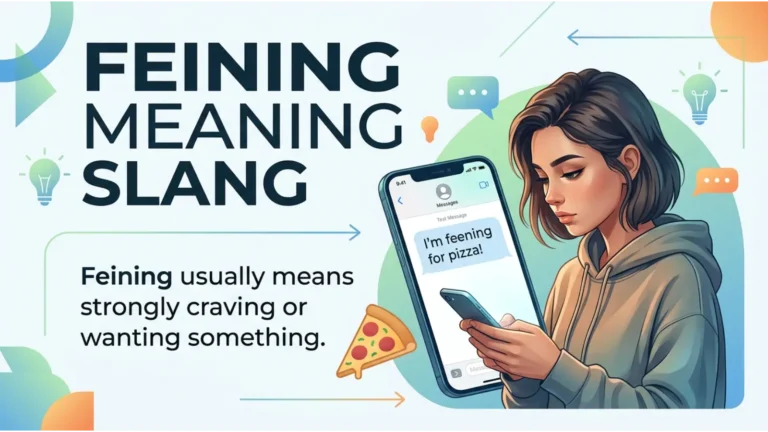
Feining meaning slang is a common search for people who have seen “feining” or “feening” in texts, comments, TikTok posts, or social media conversations. The spelling can be confusing because people often use feining when they actually mean feening.
In slang, feening/feining usually describes strongly craving or desperately wanting something. For example, someone might say, “I’m feening for pizza,” meaning they really want pizza.
The word can also describe being eager for attention, affection, entertainment, or another desired thing.
The exact meaning depends on the sentence and context. It is informal and is much more common in texting, social media, and casual conversations than in formal English.
Quick Answer:
Feining is usually a misspelling or alternate spelling of feening, slang for strongly craving or desperately wanting something. “I’m feening for coffee” means “I really want coffee.”
What Does Feining Mean in Text?
When someone writes “feining” in a text, they generally mean wanting something very badly.
For example:
“I’m feining for some fries.”
This means:
“I’m really craving some fries.”
The spelling feening is generally the more recognized slang spelling, while feining appears as a variation or misspelling in online communication.
Depending on context, the word can describe a strong desire for:
- Food or drinks
- Attention
- Affection
- Entertainment
- A particular person
- Something someone enjoys
- An activity or experience
Feining Full Form
Feining does not have a standard full form like a texting abbreviation such as “LOL” or “BRB.”
It is slang related to feening, which means craving or strongly desiring something.
Feining Meaning Slang in Different Contexts
The meaning can change slightly depending on what the person is talking about.
Food and Drinks
This is one of the easiest uses to understand.
Example:
“I’m feening for tacos right now.”
Meaning: The person is craving tacos.
Attention or Affection
Someone can also use the expression when they strongly want another person’s attention.
Example:
“She’s feening for his attention.”
Meaning: She really wants his attention.
Entertainment
It can describe wanting something enjoyable.
Example:
“I’m feening for a good movie tonight.”
Meaning: The person really wants to watch a good movie.
A Person
In some informal conversations, someone may say they are “feening” for a person when they strongly desire their company or affection.
The exact implication depends on the relationship and surrounding conversation.
Is Feining Rude, Offensive, or Neutral?
Feining is generally informal rather than inherently offensive.
However, context matters. In a casual conversation with friends, saying “I’m feening for pizza” is usually harmless.
The expression can sound more intense when it describes a strong desire for a person or something sensitive. Because slang can carry different meanings in different communities, it is better to consider the audience before using it.
For formal emails, academic writing, business communication, or professional documents, use clearer words such as:
- Craving
- Wanting
- Desiring
- Really looking forward to
- Strongly wanting
Where Is Feining Commonly Used?
You may encounter feining or feening in:
- Text messages
- TikTok comments
- Instagram captions
- X posts
- Snapchat
- Online forums
- Casual conversations
- Memes
- Music and entertainment discussions
It is much less appropriate in formal writing.
Real-Life Conversation Examples
Friendly Example
Person A: “What do you want for dinner?”
Person B: “I’m feening for pizza.”
Here, the speaker simply means they really want pizza.
Casual Example
“I’m feening for some coffee this morning.”
Meaning: The person strongly wants or craves coffee.
Argumentative Example
“Why are you feening for his attention so much?”
Here, the word suggests that someone seems overly eager for another person’s attention.
Social Media Example
“Been thinking about this burger all day. I’m feening!”
The speaker is expressing a strong craving.
Emotional and Psychological Meaning
In everyday slang, feening emphasizes the intensity of a desire.
It does not necessarily describe a clinical psychological condition. Someone can casually say they are “feening” for chocolate without suggesting anything serious.
The word can make a simple desire sound stronger:
Want:
“I want ice cream.”
Feening:
“I’m feening for ice cream.”
The second sentence communicates a stronger craving.
Origin and Background of Feening
The slang feening is associated with the word fiend, which historically refers to a person with an intense or obsessive desire for something.
Over time, informal English developed expressions such as “fiending for” or “feening for” something to describe strongly craving it.
The spelling has become flexible in online communication. This is why you may see feening, feining, or other informal spellings.
For modern internet users, the intended meaning is usually clear from context.
Feining vs. Feening vs. Fiending
These forms can look similar, but they are not identical in spelling.
| Term | Common meaning | Typical use |
|---|---|---|
| Feining | Usually a variation/misspelling of feening | Texting and social media |
| Feening | Strongly craving or wanting something | Informal slang |
| Fiending | Strongly craving or being intensely eager for something | Informal English/slang |
If you are writing for a formal audience, craving or strongly wanting is clearer.
When Should You Avoid Using Feining?
Avoid slang like feining when communicating in situations where standard English is expected.
For example, avoid it in:
- Job applications
- Formal emails
- Academic assignments
- Business reports
- Professional presentations
- Official documents
Instead of:
“I’m feening for a response.”
You could write:
“I’m really looking forward to your response.”
Instead of:
“I’m feening for coffee.”
You could simply say:
“I’m craving coffee.”
Polite Alternatives to Feining
Depending on the context, you can replace the slang with:
- Craving
- Really wanting
- Desiring
- Eager for
- Looking forward to
- Really interested in
- Wanting badly
These alternatives are easier to understand and work better in formal communication.
Why Do People Use Feining?
People use slang because it can make communication feel more relaxed, expressive, and natural.
Feening can communicate more emotion than simply saying “want.”
Compare:
“I want pizza.”
with:
“I’m feening for pizza.”
The second version emphasizes the strength of the craving.
Online, slang also helps people communicate in a way that feels conversational and familiar.
Impact of Using Feining in Communication
Using slang can make a message sound:
- Casual
- Emotional
- Playful
- Conversational
- More expressive
However, slang can also create confusion when the reader does not know the expression.
This is especially important when communicating with people from different age groups, regions, or language backgrounds.
Is Feining Safe for Social Media?
Generally, feining itself is not an offensive word. It can be used casually on social media when the context is appropriate.
However, the meaning can become more sensitive when the object of the desire is a person or something related to adult topics. Always consider the audience and surrounding language.
For general posts, phrases such as “I’m feening for pizza” are relatively straightforward.
Common Misunderstandings About Feining
1. Is feining a formal English word?
No. In this slang sense, feining is informal. It is often used as a spelling variation of feening.
2. Does feining mean lying?
Not usually. Some people may confuse it with feigning, which is a different word.
Feigning means pretending or falsely presenting something.
For example:
“He was feigning illness.”
This means he was pretending to be sick.
3. Does feining mean craving?
Usually, yes, when it is being used as a slang spelling of feening.
4. Does it always describe food?
No. Someone can be “feening” for food, attention, affection, entertainment, or another desired thing.
Feining and Feigning: An Important Difference
This is one of the most important spelling distinctions.
Feening/feining: informal slang associated with strongly craving or wanting something.
Feigning: pretending or giving a false appearance.
For example:
“I’m feening for pizza.”
means:
“I really want pizza.”
But:
“She was feigning happiness.”
means:
“She was pretending to be happy.”
The two expressions should not be confused.
How to Respond When Someone Uses Feining
Your response depends on what they mean.
If someone says:
“I’m feening for pizza.”
You could reply:
- “Same!”
- “Let’s get some.”
- “What kind do you want?”
- “I could go for pizza too.”
If someone says:
“I’m feening for some attention.”
A suitable response might be:
- “Haha, what happened?”
- “Need someone to talk to?”
- “I’m here.”
Understanding the context helps you choose the right response.
Regional and Cultural Usage
Slang develops differently across communities and regions. Feening/feening is particularly associated with informal American English and online communication, but people elsewhere may encounter and use it through social media, music, television, and internet culture.
Because slang changes over time, spelling and usage can vary. Someone who writes “feining” may simply be using a familiar spelling without realizing that “feening” is another common form.
FAQs About Feining Meaning Slang
What does feining mean in text?
Feining usually means strongly craving or wanting something. It is commonly used as a variation of feening.
What does feining stand for?
It does not stand for a phrase or acronym. It is slang rather than an abbreviation.
Is feining the same as craving?
In many informal contexts, yes. “I’m feening for food” can mean “I’m really craving food.”
Is feining a bad word?
Generally, no. It is informal slang, although the tone can become inappropriate depending on what someone says they are “feening” for.
Is feining or feening correct?
For the slang meaning of strongly craving something, feening is the more common spelling. Feining is often used as a variant or misspelling.
Is feigning the same as feining?
No. Feigning means pretending, while feening is slang for strongly craving or wanting something.
Conclusion
The feining meaning slang is generally connected to feening, an informal expression for strongly craving or wanting something. You may see it in texts, social media posts, comments, and casual conversations.
Remember that feining and feigning are different. Feening relates to craving or strong desire, while feigning means pretending. Because slang depends heavily on context, always look at the complete sentence before deciding what someone means.
For formal communication, words such as craving, wanting, eager, or looking forward to are safer and clearer choices.

Ali Raza is an M.Phil. scholar and English language expert specializing in English grammar, slang meanings, vocabulary, and everyday expressions. He writes clear, practical, and easy-to-understand content that helps readers master confusing English words, phrases, spelling, and modern slang. His goal is to make English learning simple, useful, and accessible for students, beginners, and everyday readers.
2 thoughts on “Feining Meaning Slang: What Does “Feining” Mean in Text?”