
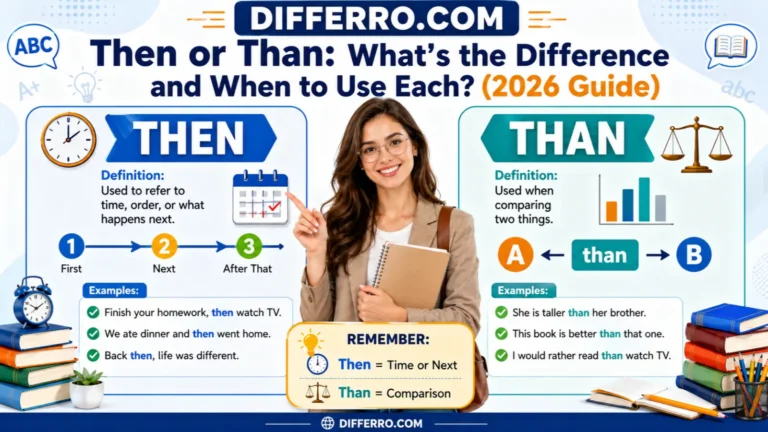
Then or Than is one of the most common grammar confusions in English. Many people use these words incorrectly because they sound similar. However, their meanings are completely different.
Using the wrong word can change the meaning of a sentence. That is why understanding the difference between then and than is important for students, writers, professionals, and English learners.
The good news is that the distinction is simple once you know the rules. In this guide, you will learn the meaning of each word, how to use them correctly, common mistakes to avoid, memory tricks, examples, FAQs, and usage insights.
By the end, you’ll never confuse then and than again.
⭐ Quick Answer
Then relates to time, sequence, or what happens next.
Than is used when making comparisons between two or more things.
Example:
- I finished my homework, then I watched TV.
- She is taller than her brother.
📖 Meaning of Then
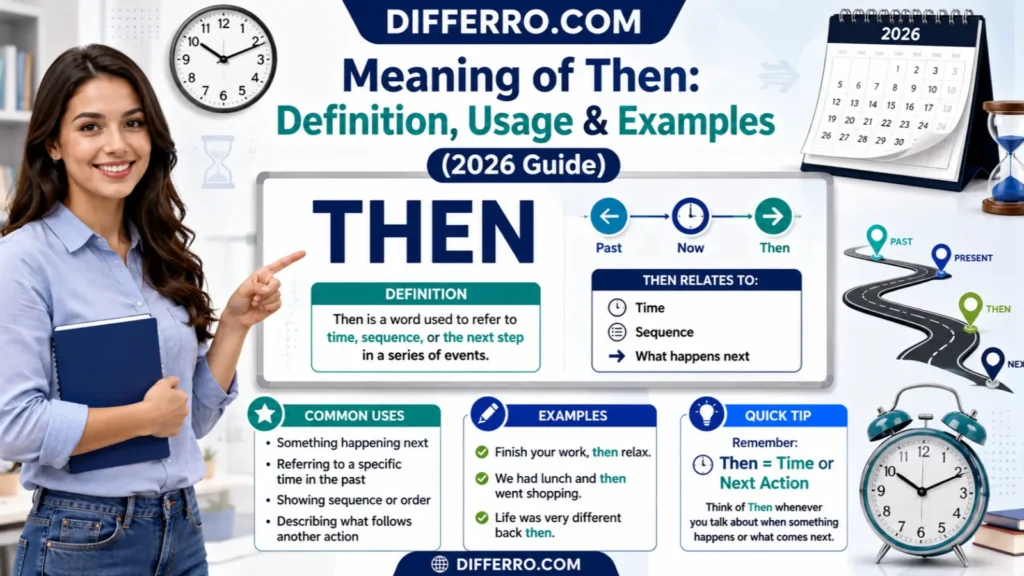
Then is an adverb that refers to time, sequence, or the next step in a process.
Examples
- We ate dinner and then went for a walk.
- Finish your work, then take a break.
📖 Meaning of Than
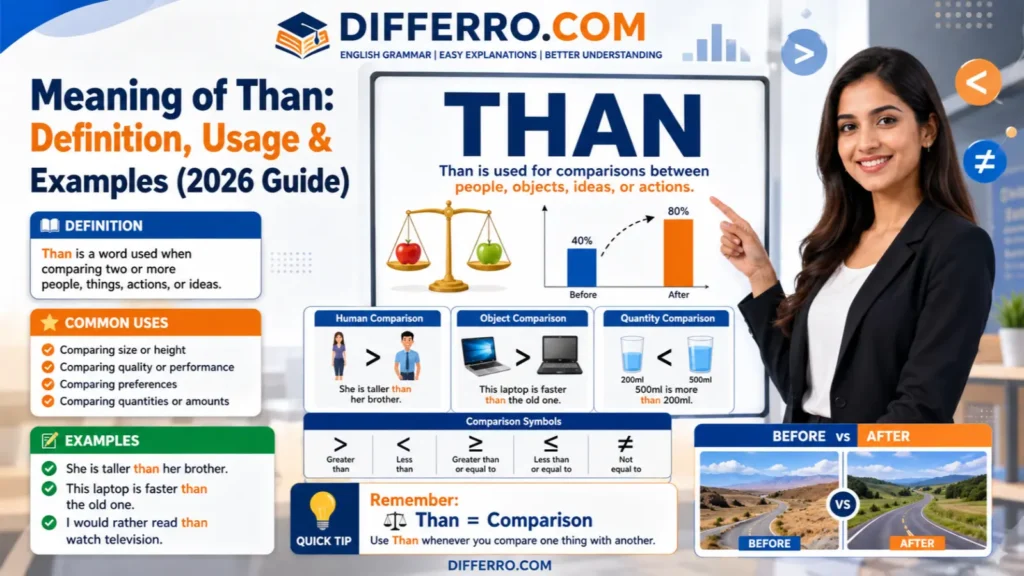
Than is a conjunction or preposition used for comparisons.
Examples
- This book is better than the previous one.
- He runs faster than his friend.
📊 Key Differences Between Then and Than
| Feature | Then | Than |
|---|---|---|
| Meaning | Refers to time or sequence | Used for comparison |
| Tone | Chronological | Comparative |
| Usage | Indicates what happens next | Compares people, things, or ideas |
| Popularity | Common in instructions and storytelling | Common in comparisons |
🏛️ Origin & History
The words then and than come from Old English. Historically, they shared similar roots, which explains why people often confuse them today.
Over time, English grammar evolved and gave each word a separate purpose.
Similar Word Examples
- Affect vs Effect
- Your vs You’re
- Their vs There
- To vs Too
🇬🇧 British English vs American English Spelling
There is no spelling difference between then and than in British English and American English. Both forms are identical across major English-speaking countries. The difference lies only in grammar and usage, not spelling.
British vs American English Comparison
| Feature | British English | American English |
|---|---|---|
| Then | Then | Then |
| Than | Than | Than |
| Meaning | Same | Same |
| Usage Rules | Same | Same |
✍️ When to Use Then
Use then when talking about:
- Time
- Sequence
- Next steps
- Results
Examples
- First wash the vegetables, then cut them.
- Back then, life was different.
- If it rains, then we will stay inside.
✍️ When to Use Than
Use than when making comparisons.
Examples
- This car is faster than that one.
- I would rather read than watch TV.
- She is younger than her sister.
❌ Common Mistakes
Mistake 1
Incorrect: She is taller then me.
Correct: She is taller than me.
Mistake 2
Incorrect: Finish your homework than go outside.
Correct: Finish your homework then go outside.
Mistake 3
Incorrect: This phone is cheaper then that one.
Correct: This phone is cheaper than that one.
Mistake 4
Incorrect: We ate lunch and than went shopping.
Correct: We ate lunch and then went shopping.
🧠 Easy Trick to Remember
A simple memory tip:
- Than has the letter A for Comparison.
- Then has the letter E for Time Events.
Think:
Comparison = Than
Next Event = Then
📝 Write 5 Examples
1. School Example
Sarah scored higher than her classmates.
She celebrated her success then went home.
2. Shopping Example
This shirt is cheaper than the other one.
I bought it and then paid at the counter.
3. Workplace Example
John works harder than most employees.
He completed the report and then submitted it.
4. Travel Example
The train is faster than the bus.
We arrived and then checked into the hotel.
5. Fitness Example
Running burns more calories than walking.
I exercised and then drank water.
🔍 Related Keywords
- Then vs Than
- Difference between Then and Than
- Than meaning
- Then meaning
- Grammar mistakes then than
- Then or Than examples
- How to use Then and Than
📈 Google Trends & Usage Data
The keyword “Then or Than” receives consistent search interest because it is a common grammar confusion. Users frequently search for explanations, examples, and usage rules.
Country Insights
🇺🇸 United States
High search volume from students, professionals, and content writers.
🇬🇧 United Kingdom
Strong interest from English learners and academic users.
🇦🇺 Australia
Frequently searched in educational and grammar-related topics.
🇮🇳 India
Very popular among students preparing for exams and improving English skills.
🇵🇰 Pakistan
Regular searches from learners, bloggers, and academic users seeking grammar clarity.
Usage Insight
Search demand remains steady because both words sound alike but serve different purposes. Educational content targeting this keyword often performs well due to evergreen search interest.
📊 Comparison Table: Keyword Variations
| Keyword Variation | Search Intent |
|---|---|
| Then vs Than | Comparison |
| Then or Than | Grammar confusion |
| Difference between Then and Than | Educational |
| Than meaning | Definition |
| Then meaning | Definition |
| How to use Then and Than | Learning |
| Then and Than examples | Informational |
🏆 Final Verdict
Neither then nor than is better. They serve different purposes.
- Use then when discussing time, sequence, or what happens next.
- Use than when comparing two or more things.
Choosing the correct word depends entirely on the sentence.
❓ Frequently Asked Questions
1. Is it correct to say “better then”?
No. The correct phrase is better than because it compares two things.
2. What is the difference between then and than?
Then refers to time or sequence, while than is used for comparisons.
3. Which is more common, then or than?
Both are common. Their frequency depends on the context.
4. Can then and than be used in formal writing?
Yes. Both words are accepted in formal and informal English when used correctly.
5. Why does confusion exist between then and than?
They sound very similar, which causes many writers and speakers to mix them up.
Conclusion
Understanding the difference between then or than is easier than many people think. The key rule is simple: then relates to time, sequence, or the next action, while than is used for comparisons. Once you remember this distinction, your writing becomes clearer and more professional. Whether you are writing emails, essays, blog posts, or everyday messages, using the correct word helps avoid confusion.
A simple memory trick is to connect than with comparison and then with time. Practice using both words in sentences, and the difference will soon become natural. With these examples, rules, and tips, you can confidently choose the correct word every time.

Sara Taylor is a passionate writer and language enthusiast. She specializes in creating simple and easy-to-understand articles about English grammar, spelling differences, and commonly confused words. Her writing style focuses on helping students, writers, and English learners improve their language skills with confidence. Through informative guides and practical examples, Sara makes complex grammar topics easier for everyday readers.