
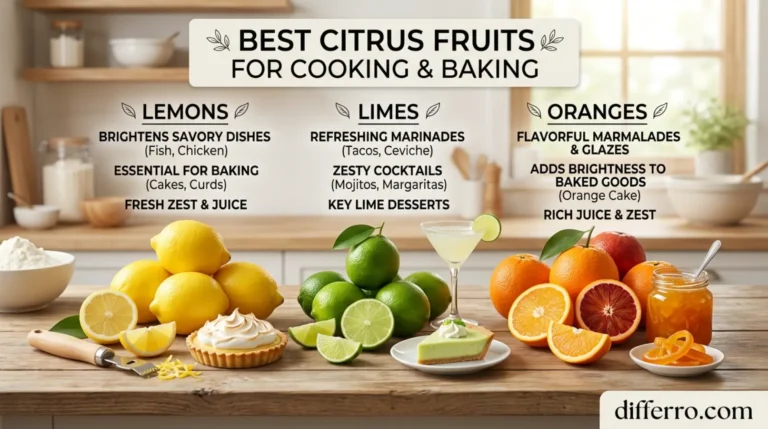
Best Citrus Fruits for Cooking and Baking depend on the flavor, acidity, sweetness, and recipe you choose. Lemon, lime, orange, grapefruit, and other citrus fruits can serve different kitchen purposes. Choosing the right fruit can improve sauces, cakes, cookies, marinades, salads, and desserts.
Many cooks wonder if they can replace one citrus fruit with another. Sometimes they can, but the result may taste different. Lemon gives sharp acidity, while orange adds sweetness and fragrance. Lime offers a fresh, bold flavor, while grapefruit brings bitterness. (Kitchn)
This guide explains the best citrus fruits for cooking and baking. It also compares their flavor, texture, acidity, and common uses. You will learn when to use each fruit and how to avoid common mistakes.
⭐ Quick Answer
The best citrus fruits for cooking and baking include lemon, lime, orange, grapefruit, mandarin, and blood orange. Lemon works best for acidity, while orange adds sweetness and aromatic zest.
Example: Use lemon juice for seafood and sauces. Use orange zest for cakes, cookies, and muffins.
🍋 Meaning of Lemon
A lemon is a yellow citrus fruit with a bright, sharp, and acidic flavor. Cooks commonly use its juice, zest, and peel.
Lemon works well in both sweet and savory recipes. Its zest adds fragrance without adding much liquid. Its juice provides acidity and freshness. (Kitchn)
Examples:
- Add lemon juice to a fish marinade.
- Add lemon zest to a pound cake.
🍊 Meaning of Orange
An orange is a sweet citrus fruit with juicy flesh and fragrant peel. It usually tastes sweeter and less acidic than lemon or lime.
Cooks use orange juice, zest, segments, and peel. Orange works especially well in cakes, sauces, salads, marinades, and desserts. (Kitchn)
Examples:
- Add orange zest to chocolate cake.
- Use orange juice in a chicken glaze.
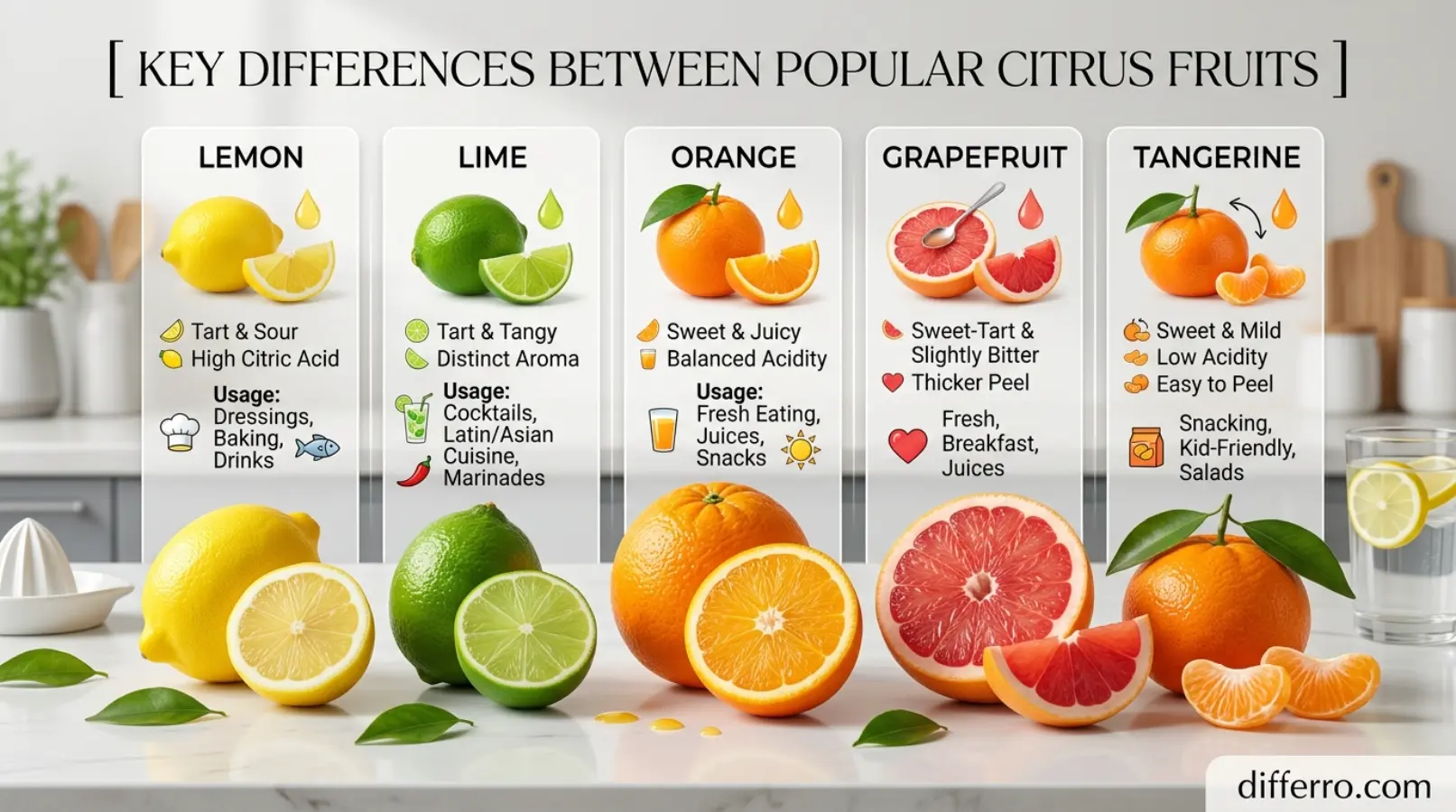
🍋 Key Differences Between Popular Citrus Fruits
| Citrus Fruit | Meaning | Flavor | Main Cooking Use | Baking Use | Popularity |
|---|---|---|---|---|---|
| Lemon | Sharp yellow citrus | Tart and bright | Sauces, seafood, marinades | Cakes, pies, cookies | Very high |
| Lime | Small green citrus | Tart and aromatic | Curries, tacos, sauces | Key lime pie | Very high |
| Orange | Sweet citrus fruit | Sweet and tangy | Glazes, salads, marinades | Cakes, muffins, cookies | Very high |
| Grapefruit | Large citrus fruit | Tart and bitter | Salads, sauces, dressings | Cakes and desserts | High |
| Mandarin | Small sweet citrus | Sweet and mild | Salads and sauces | Cakes and fillings | High |
| Blood Orange | Red-fleshed orange | Sweet with berry notes | Salads and sauces | Cakes and desserts | Medium |
| Key Lime | Small aromatic lime | Tart and intense | Desserts and sauces | Key lime pie | Medium |
Lemon, lime, and orange remain especially versatile because cooks can use their juice and zest. (Kitchn)
🌿 Origin & History of Citrus Fruits
Citrus fruits have a long history across Asia and other warm regions. Different citrus varieties developed through cultivation and natural hybridization.
Lemons likely originated in regions around the Himalayan area before spreading to other parts of the world. Oranges have roots connected with the Malay Archipelago and later became widely cultivated. (Kitchn)
Today, cooks use citrus fruits across many cuisines.
Similar citrus examples include:
- Lemon
- Lime
- Orange
- Mandarin
- Tangerine
- Grapefruit
- Pomelo
- Kumquat
- Blood orange
- Key lime
Citrus also provides several useful ingredients. These include juice, zest, peel, pulp, and whole fruit.
British English vs American English Spelling
Most citrus fruit names have the same spelling in British and American English. There is usually no major spelling difference for lemon, lime, orange, or grapefruit.
Some related food terms may differ by region, but citrus names generally remain unchanged.
British vs American English Comparison
| Fruit | British English | American English |
|---|---|---|
| Lemon | Lemon | Lemon |
| Lime | Lime | Lime |
| Orange | Orange | Orange |
| Grapefruit | Grapefruit | Grapefruit |
| Mandarin | Mandarin | Mandarin |
| Tangerine | Tangerine | Tangerine |
| Blood orange | Blood orange | Blood orange |
🍋 When to Use Lemon
Use lemon when your recipe needs strong acidity and a clean citrus flavor.
➤Lemon for Cooking
Lemon works well with:
- Fish
- Chicken
- Seafood
- Vegetables
- Rice
- Pasta
- Cream sauces
- Salad dressings
Lemon juice can brighten rich foods. Its acidity also works well in marinades. (DOI)
Lemon for Baking
Lemon works especially well in:
- Lemon cake
- Lemon pie
- Lemon cookies
- Cheesecake
- Muffins
- Pound cake
- Lemon bars
Use zest when you want strong lemon aroma without adding extra liquid.
🍈 When to Use Lime
Use lime when you want a sharper, more aromatic citrus flavor.
➤Lime for Cooking
Lime works well with:
- Mexican dishes
- Thai dishes
- Seafood
- Chicken
- Curries
- Spicy sauces
- Salads
- Rice dishes
➤Lime juice can add freshness to rich or spicy foods. Research also identifies lemon and lime as common culinary ingredients across several cuisines. (DOI)
Lime for Baking
Lime works well in:
- Key lime pie
- Lime cheesecake
- Lime cookies
- Lime bars
- Citrus cakes
- Frostings
Key lime has a strong connection with Key lime pie and other desserts. (Kitchn)
🍊 When to Use Orange
Choose orange when you want sweetness, fragrance, and mild acidity.
➤Orange for Cooking
Orange works well in:
- Chicken glazes
- Pork dishes
- Duck recipes
- Salads
- Marinades
- Sauces
- Vinaigrettes
➤Orange can balance spicy and rich ingredients. Its natural sweetness also works well with roasted foods. (Kitchn)
Orange for Baking
Orange is excellent for:
- Orange cake
- Orange muffins
- Chocolate orange desserts
- Orange cookies
- Sweet breads
- Marmalade
- Frosting
➤Orange zest can add a strong aroma without making baked goods too wet.
🍊 When to Use Grapefruit
Use grapefruit when you want a tart flavor with noticeable bitterness.
Grapefruit works well in:
- Salads
- Dressings
- Fruit desserts
- Sauces
- Marmalades
- Citrus cakes
Its bitterness makes it different from sweeter oranges and mandarins.
Use grapefruit carefully in desserts. Too much can overpower delicate ingredients.
🍊 When to Use Mandarin and Tangerine
Mandarins and tangerines offer a sweeter and gentler citrus flavor.
They work well in:
- Fruit salads
- Cakes
- Muffins
- Sauces
- Desserts
- Jams
- Glazes
They can add citrus flavor when lemon or lime would taste too sharp.
❤️ When to Use Blood Orange
Blood orange offers a distinctive color and slightly berry-like flavor.
It works especially well in:
- Cakes
- Tarts
- Sorbets
- Salads
- Sauces
- Desserts
- Decorative toppings
Blood orange can make a dessert visually striking. Its color also adds interest to drinks and fruit-based recipes.
⚠️ Common Mistakes When Cooking With Citrus
1. Using Too Much Citrus Juice
Incorrect: Adding large amounts of lemon juice without adjusting the recipe.
Correct: Add lemon juice gradually and taste as you go.
Too much acidity can overpower other flavors.
2. Confusing Zest With Peel
Incorrect: Grating the entire thick citrus peel.
Correct: Grate only the colorful outer layer.
The white pith underneath can taste bitter. Culinary guidance recommends removing only the outer zest for most recipes. (Government of India)
3. Using Lemon Instead of Lime Without Adjusting Flavor
Incorrect: Replacing lime with lemon in every recipe.
Correct: Use lemon as a substitute when suitable, but expect a different aroma.
Lemon and lime have similar acidic qualities, but their flavors differ. (India Today)
4. Adding Citrus Juice Too Early
Incorrect: Cooking fresh citrus juice for a long time when fresh flavor matters.
Correct: Add some juice near the end when appropriate.
Fresh citrus can provide brighter flavor when added closer to serving. (Your Site Title)
5. Ignoring Citrus Zest
Incorrect: Using only the juice when the recipe needs strong citrus aroma.
Correct: Add zest when you want concentrated citrus fragrance.
Zest adds aroma without adding much extra liquid. (Kitchn)
🧠 Easy Trick to Remember the Best Citrus Uses
Use this simple memory trick:
Lemon = Sharp
Lime = Bold
Orange = Sweet
Grapefruit = Bitter
Mandarin = Mild
Blood Orange = Colorful
This quick guide helps you choose citrus based on the flavor you want.
For baking, remember another simple rule:
Zest gives aroma. Juice gives acidity and liquid.
This distinction can help you adjust recipes more accurately.
🍰 5 Everyday Life Examples
1. Baking a Lemon Cake
Use lemon zest for a strong citrus aroma. Add lemon juice for a bright, tart flavor.
Primary keyword: Best Citrus Fruits for Cooking and Baking
Secondary keyword: best citrus for baking
2. Making Orange Muffins
Orange zest adds fragrance to muffins. Orange juice adds gentle sweetness and citrus flavor.
Primary keyword: Best Citrus Fruits for Cooking and Baking
Secondary keyword: best citrus fruits for baking
3. Cooking Fish With Lemon
Lemon juice works well with fish. Its acidity adds freshness and balances rich flavors.
Primary keyword: Best Citrus Fruits for Cooking and Baking
Secondary keyword: best citrus for cooking
4. Making Key Lime Pie
Key lime provides the classic tart and aromatic flavor associated with this dessert.
Primary keyword: Best Citrus Fruits for Cooking and Baking
Secondary keyword: best citrus for desserts
5. Making an Orange Chicken Glaze
Orange juice creates a sweet citrus base. Orange zest can add extra fragrance.
Primary keyword: Best Citrus Fruits for Cooking and Baking
Secondary keyword: citrus fruits for cooking
📊 Google Trends & Usage Data
Google Trends lets users compare search interest by country and region. Its Explore tool supports comparisons and geographic analysis. (Google Help)
For USA, UK, Australia, India, and Pakistan, citrus-related searches can vary by local food habits, availability, and recipe culture.
Search interest often centers on familiar fruits such as lemon, lime, and orange. More specialized searches tend to focus on recipes such as Key lime pie or blood orange desserts.
Exact Google Trends scores change by date and search settings. Therefore, fixed scores should not be presented as permanent popularity figures.
Google Trends Country Comparison
| Country | Common Citrus Search Themes | Usage Insight |
|---|---|---|
| USA | Lemon, lime, orange, Key lime | Strong recipe and baking interest |
| UK | Lemon, orange, lime | Common baking and dessert use |
| Australia | Lemon, lime, orange | Strong cooking and fresh-food use |
| India | Lemon, lime, orange | Strong savory and beverage use |
| Pakistan | Lemon, lime, orange | Common cooking, drinks, and desserts |
These are usage themes rather than fixed Google Trends scores. Google Trends uses relative search interest, so scores depend on the selected period, location, category, and search terms. (Google Help)
Comparison Table: Keyword Variations
| Keyword Variation | Search Intent | Main Topic |
|---|---|---|
| Best citrus fruits for cooking | Informational | Savory recipes |
| Best citrus fruits for baking | Informational | Cakes and desserts |
| Best citrus for desserts | Informational | Sweet recipes |
| Best citrus for cooking | Informational | Meals and sauces |
| Citrus fruits for baking | Informational | Baking ingredients |
| Citrus fruits for recipes | Informational | General cooking |
| Best citrus fruit for cake | Recipe-focused | Cakes |
| Best citrus for marinades | Recipe-focused | Meat and seafood |
🏆 Final Verdict
There is no single best citrus fruit for every cooking or baking task.
➤Choose lemon when you need strong acidity and fresh flavor.
Choose lime for bold, aromatic acidity and spicy dishes.
➤Choose orange when you want sweetness, fragrance, and gentle citrus flavor.
Choose grapefruit when you want tartness with bitterness.
Choose mandarin or tangerine for a sweeter, milder citrus note.
➤Choose blood orange when you want distinctive color and a berry-like citrus character.
For an everyday kitchen, lemon and orange offer especially broad uses. Lemon works across savory dishes and baking. Orange adds both sweetness and aromatic zest. (Kitchn)
❓ FAQ
Is lemon the best citrus fruit for cooking?
Lemon is one of the most versatile citrus fruits for cooking. It works with seafood, vegetables, sauces, marinades, and salads.
What is the difference between lemon and lime?
Lemon and lime both provide acidity, but their aromas and flavors differ. Lemon usually tastes bright and clean. Lime often tastes sharper and more aromatic.
Which citrus fruit is most common for baking?
Lemon and orange are popular choices for baking. Lemon gives strong tartness, while orange adds sweetness and fragrance.
Which citrus fruit is best for cakes?
Lemon, orange, lime, and blood orange can all work well in cakes. Your choice depends on the flavor and appearance you want.
Can I substitute lime for lemon?
You can substitute lime for lemon in many recipes. However, lime can create a stronger and more aromatic flavor.
Which citrus fruit is best for marinades?
Lemon and lime work especially well in marinades. Their acidity can brighten flavor and interact with ingredients such as meat and fish. (DOI)
Is citrus zest useful in cooking?
Yes. Citrus zest provides concentrated aroma without adding much liquid. Use only the colorful outer layer for most recipes. (Government of India)
Can orange replace lemon in baking?
Orange can replace lemon in some baked recipes. The finished product will taste sweeter and less acidic.
🍋 Conclusion
The Best Citrus Fruits for Cooking and Baking depend on the recipe and desired flavor. Lemon provides sharp acidity and works across sweet and savory dishes. Lime gives bold freshness and suits spicy foods and desserts. Orange adds sweetness, fragrance, and versatile citrus flavor. Grapefruit brings a distinctive bitter edge, while mandarin offers gentle sweetness. Blood orange adds color and a subtle berry-like character.
Learning the difference between juice and zest also improves citrus recipes. Juice adds acidity and liquid, while zest adds concentrated aroma. Choose your citrus based on the result you want. With the right fruit, simple dishes can taste brighter, fresher, and more balanced.

Imran Lodhra is a comparison-focused content writer at Differro.com.
He specializes in creating clear, simple, and informative comparison articles.
His work helps readers understand key differences, pros and cons, and important details.
Imran focuses on accurate, practical, and easy-to-read content for everyday readers.