

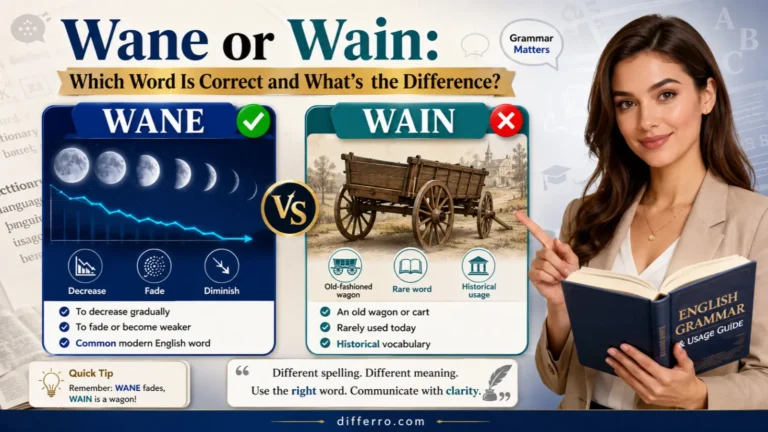
Wane or Wain is a common word confusion that many English learners and writers face. At first glance, these two words look similar, but they have very different meanings. One word is still widely used in modern English, while the other is rare and mostly appears in historical or literary contexts.
Understanding the difference between wane and wain helps improve your writing accuracy and prevents spelling mistakes. If you have seen these words in books, articles, or conversations and wondered which one to use, this guide will make everything clear.
In this article, you’ll learn the meanings, origins, usage differences, examples, common mistakes, and SEO-friendly explanations of wane vs wain.
⭐ Quick Answer
Wane means to decrease, fade, or become weaker over time. Wain is an old-fashioned word that means a wagon or cart.
Example:
Interest in the trend began to wane.
The farmer loaded hay onto the wain.

Meaning of Wane
Wane is a verb that means to decrease gradually in strength, size, importance, or intensity.
Examples
- Her enthusiasm began to wane after several delays.
- The moon started to wane after reaching its full phase.

Meaning of Wain
Wain is a noun that refers to a wagon, cart, or farm vehicle. It is considered an old or literary word.
Examples
- The farmer drove a wain across the field.
- The old story mentioned a horse-drawn wain.
Key Differences Between Wane and Wain
| Feature | Wane | Wain |
|---|---|---|
| Meaning | To decrease or fade | A wagon or cart |
| Part of Speech | Verb | Noun |
| Tone | Modern and common | Old-fashioned and literary |
| Usage | Everyday English | Historical writing |
| Popularity | Very common | Rare |
Origin & History
The word wane comes from Old English and has been used for centuries to describe something becoming smaller or weaker.
The word wain also comes from Old English but originally referred to a wagon or cart used for transportation.
Similar Word Examples
- Fade
- Decline
- Diminish
- Wagon
- Cart
- Carriage
British English vs American English Spelling
There is no spelling difference between wane and wain in British English and American English. Both countries use the same spellings and meanings.
The main difference is frequency of use. Wane remains common in both varieties of English, while wain appears mostly in historical or literary texts.
British vs American English Comparison
| Feature | British English | American English |
|---|---|---|
| Wane | Common | Common |
| Wain | Rare | Rare |
| Meaning Changes | None | None |
| Spelling Changes | None | None |
When to Use Wane
Use wane when something gradually decreases.
Examples
- Public interest began to wane.
- His energy started to wane during the race.
- The excitement continued to wane after the event.
When to Use Wain
Use wain when referring to a wagon or cart, especially in historical or literary writing.
Examples
- The merchant traveled by wain.
- A wooden wain stood beside the barn.
- The poem described a golden wain.
Common Mistakes
Mistake 1
❌ My motivation is starting to wain.
✅ My motivation is starting to wane.
Mistake 2
❌ The farmer drove a wane.
✅ The farmer drove a wain.
Mistake 3
❌ Interest in the topic continued to wain.
✅ Interest in the topic continued to wane.
Mistake 4
❌ The old wane carried supplies.
✅ The old wain carried supplies.
Easy Trick to Remember
Remember:
Wane = Weaken
Both words start with W and relate to becoming weaker.
Wain = Wagon
Both words start with Wa and refer to transportation.
Write 5 Examples
Example 1: School Interest
Student excitement began to wane after the exams ended.
Example 2: Historical Story
The farmer loaded crops onto a wain before sunrise.
Example 3: Business Trend
Customer demand started to wane during the off-season.
Example 4: Literature Example
The knight traveled across the countryside in a decorated wain.
Example 5: Social Media Popularity
The viral challenge continued to wane after a few weeks.
Related Keywords
- wane meaning
- wain meaning
- wane vs wain
- difference between wane and wain
- how to use wane
- how to use wain
- wane or wain correct spelling
Google Trends & Usage Data
USA, wane is searched far more often than wain because it appears in modern writing and speech.
In the UK, wane remains the dominant term, while wain appears mostly in literature and history.
Australia, people commonly search for wane meaning, with very little interest in wain.
India, searches often focus on understanding the difference between wane and wain.
Pakistan, users frequently search for spelling and vocabulary comparisons, making wane vs wain a common educational query.
Insight
The word wane is significantly more popular worldwide because it remains relevant in modern English. Wain survives mainly in historical, poetic, and literary contexts.
Keyword Variations Comparison Table
| Keyword Variation | Usage Level |
|---|---|
| Wane | Very High |
| Wain | Low |
| Wane Meaning | High |
| Wane vs Wain | Medium |
| Difference Between Wane and Wain | Medium |
| How to Use Wane | Medium |
| Wain Meaning | Low |
FAQ
Is it correct to use wane?
Yes. Wane is a correct and commonly used English word.
What is the difference between wane and wain?
Wane means to decrease, while wain means a wagon or cart.
Which word is more common?
Wane is much more common in modern English.
Is wain formal English?
It is considered an old-fashioned or literary word rather than formal modern English.
Why does the confusion exist?
The confusion exists because the words look similar and differ by only one letter.
Final Verdict
If you are talking about something decreasing, fading, or becoming weaker, use wane.
If you are referring to an old wagon or cart, use wain.
For modern writing, wane is usually the correct choice. Wain is mainly used in historical, literary, or poetic contexts.
Conclusion
Understanding the difference between wane or wain is simple once you know their meanings. Wane means to decrease, fade, or become weaker over time. It is a common word used in everyday English.
Wain, on the other hand, is an old-fashioned noun that refers to a wagon or cart. While both words share similar spelling and historical roots, they serve completely different purposes. Most modern writers will use wane far more often than wain.
Remember the easy memory trick: wane equals weaken, while wain equals wagon. Knowing this distinction will help you write more accurately and confidently in both academic and everyday communication.

