

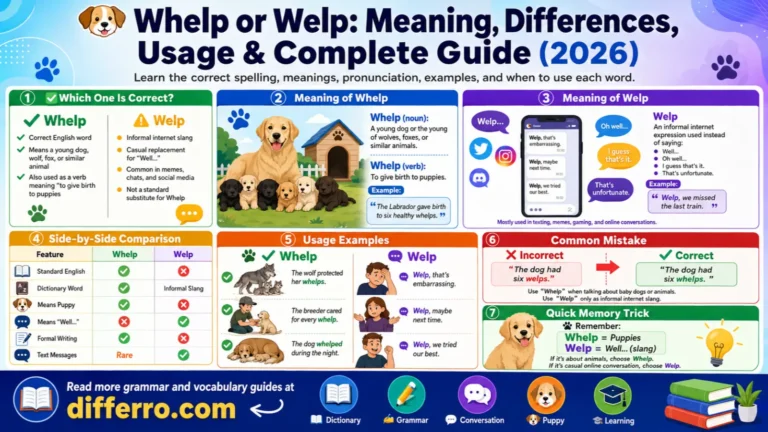
Whelp or welp is a common English confusion for learners and writers. Many people think both words have the same meaning, but they are completely different. These words look similar, but their usage and meaning are not the same.
“Whelp” is a real English word with formal usage and animal-related meaning. “Welp” is informal slang used in texting and social media. This confusion often happens because both words sound similar and appear in casual writing.
In this guide, you will clearly understand the meaning, difference, usage, examples, and common mistakes of both words in simple English.
Quick Answer
Whelp is a formal word meaning a young animal or to give birth. Welp is slang for “well” used in casual texting. Example: The dog whelped puppies. Welp, that failed.
Meaning of Whelp
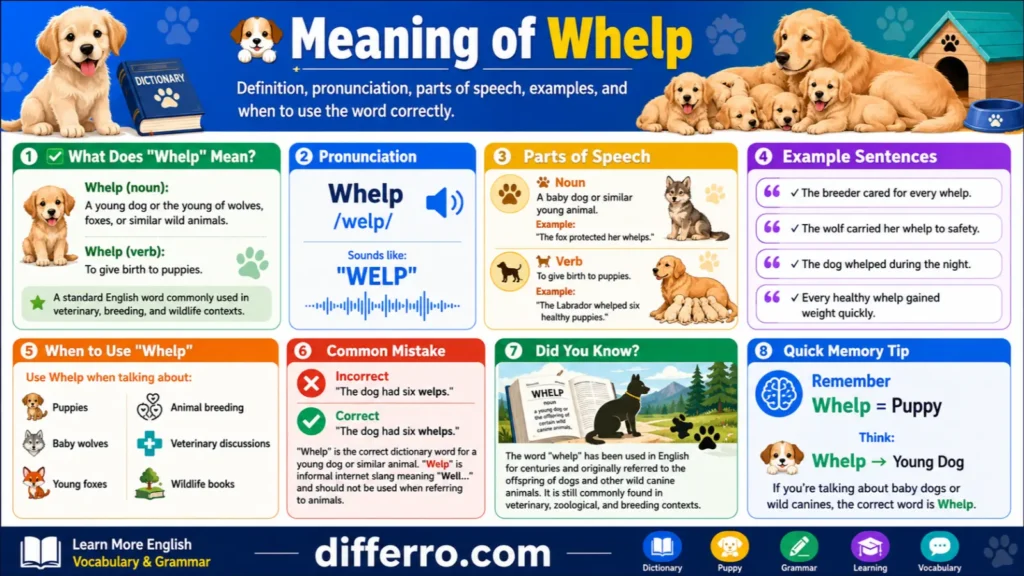
Whelp has two meanings. It refers to a young dog or wolf. It can also mean the act of giving birth in animals.
Examples:
The dog gave birth to three whelps.
The lioness whelped in the den.
Meaning of Welp
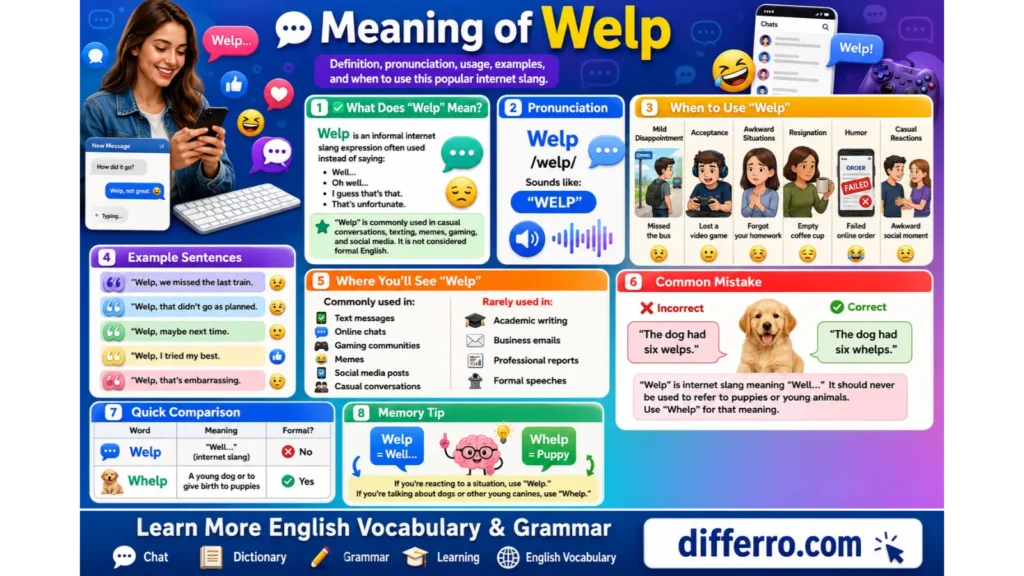
Welp is informal internet slang. It is a casual form of “well” used when someone feels disappointed or accepts a situation.
Examples:
Welp, I missed the train again.
Welp, that didn’t go as planned.
Key Differences Table
| Feature | Whelp | Welp |
|---|---|---|
| Meaning | Baby animal or birth | Slang for “well” |
| Tone | Formal | Informal |
| Usage | Biology, literature | Social media, texting |
| Popularity | Less common | Very common |
Origin & History
Whelp comes from Old English word “hwelp,” meaning young animal. It was used in historical and biological writing.
Welp developed from internet slang. It is a relaxed spelling of “well,” used to express reactions online.
Similar slang examples include “gonna,” “kinda,” and “yep.”
British vs American English
Both British and American English use “whelp” in the same way. There is no spelling difference. “Welp” is slang in both regions and not considered formal English.
| Word | British English | American English |
|---|---|---|
| Whelp | Same meaning | Same meaning |
| Welp | Informal slang | Informal slang |
When to Use Each Word
When to Use Whelp
Use whelp in formal or biological context. It is mostly used for animals and scientific writing.
Example: The wolf whelped four pups.
When to Use Welp
Use welp in casual conversations, texting, and social media posts.
Example: Welp, I forgot my assignment.
Common Mistakes
Incorrect: I will welp the puppy.
Correct: The dog will whelp the puppy.
Incorrect: That baby dog is a welp.
Correct: That baby dog is a whelp.
Incorrect: The lion welped in the cave.
Correct: The lion whelped in the cave.
Incorrect: Whelp, I am late.
Correct: Welp, I am late.
Easy Trick to Remember
Whelp is for wildlife and animals. Welp is for “whatever” casual reactions.
Everyday Life Examples
The dog whelped in the kennel.
Welp, I failed the test again.
The wolf whelp survived in the wild.
Welp, my phone battery died.
Welp, I missed the meeting.
Related Keywords
whelp meaning
welp slang meaning
difference between whelp and welp
whelp vs welp examples
english slang welp
animal whelp definition
Final Verdict
Whelp is a formal English word used for animals and birth. Welp is slang used in casual conversations. Neither is wrong, but both are used in different contexts. Use whelp in formal writing and welp in informal texting.
Google Trends Insight
In the USA and UK, “welp” is more common in social media. In India and Pakistan, users mostly search “whelp meaning” for learning. Australia shows balanced usage of both terms. Overall, welp is trending in online casual communication.
FAQs
Is welp correct English?
Yes, but only in informal writing.
What is the difference between whelp and welp?
Whelp is formal and animal-related, welp is slang.
Which is more common?
Welp is more common online.
Is whelp formal?
Yes, it is used in biology and literature.
Why is there confusion?
Because both words look and sound similar.
Conclusion
Whelp or welp confusion is very common in English learning. Whelp is a formal word used for animals, while welp is informal slang used in texting. Understanding the difference helps improve grammar and writing clarity. Always choose the correct word based on context and tone. This improves both academic and casual communication.

