
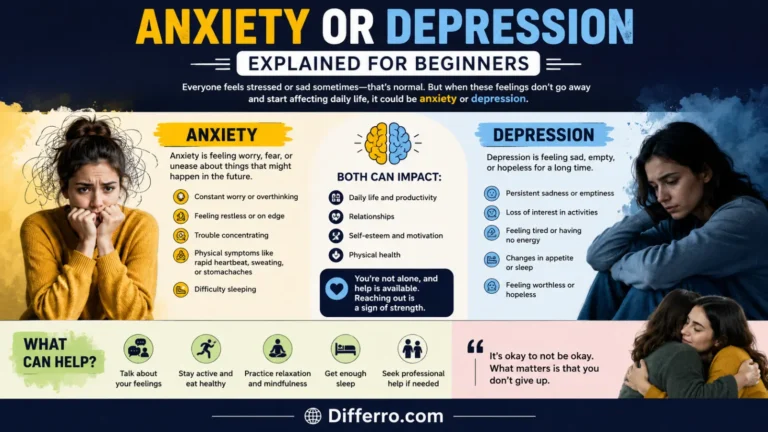
Anxiety or depression is a common topic people search online when they feel emotionally overwhelmed. Many people confuse these mental health conditions because they can happen together. However, they are not the same.
Anxiety usually causes fear, worry, and nervousness. Depression often causes sadness, hopelessness, and low energy. Both conditions affect daily life, relationships, sleep, and work.
Understanding the difference helps people recognize symptoms early. It also supports better treatment and emotional health. Some people experience only anxiety. Others struggle with depression. Many people experience both at the same time.
This guide explains anxiety and depression in simple words. You will learn their meanings, differences, examples, causes, and correct usage in everyday conversations.
⭐ Quick Answer
Anxiety causes excessive worry, fear, and nervousness. Depression causes sadness, hopelessness, and loss of interest in life.
Example:
- Anxiety: “She worries about everything.”
- Depression: “He feels sad and tired every day.”
📘 Meaning of Anxiety
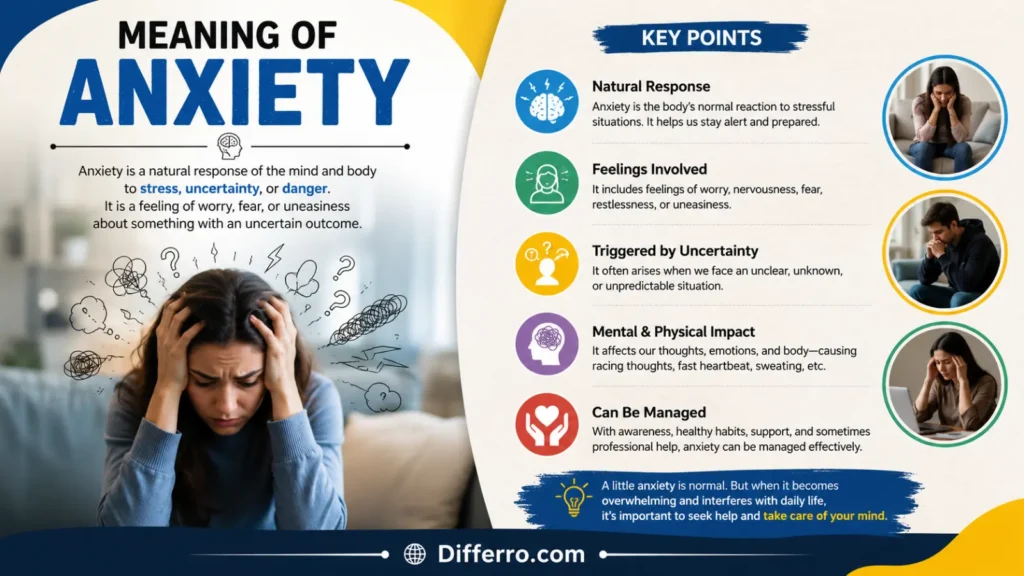
Anxiety is a mental health condition that causes fear, stress, or nervous thoughts. People with anxiety often expect bad things to happen.
Examples
- “His anxiety increases before exams.”
- “She feels anxious in crowded places.”
📘 Meaning of Depression
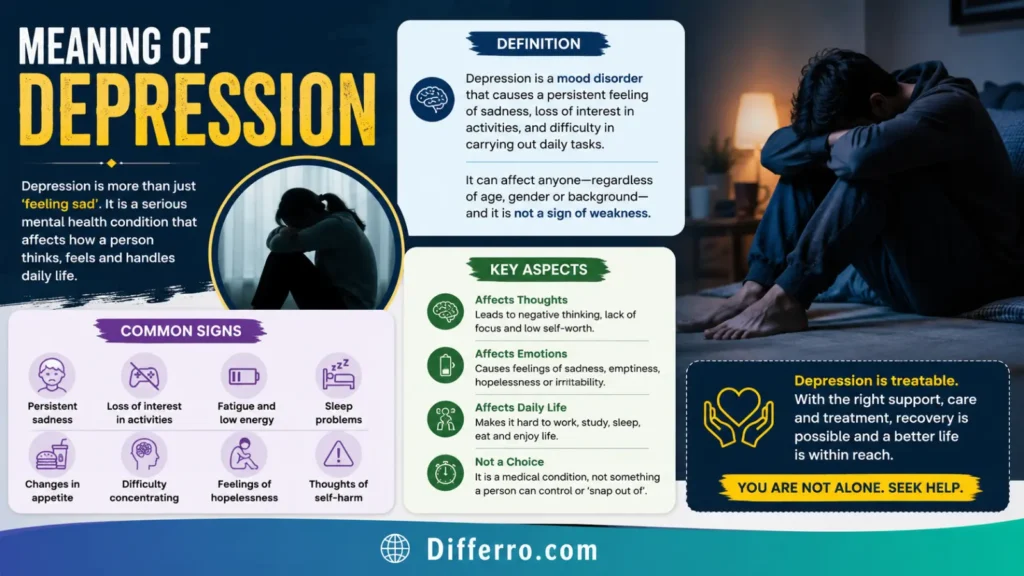
Depression is a mental health disorder that causes deep sadness and emotional emptiness. It can reduce motivation and interest in life.
Examples
- “Depression made him avoid social events.”
- “She lost interest in her favorite hobbies.”
📊 Key Differences Table
| Feature | Anxiety | Depression |
|---|---|---|
| Meaning | Fear and worry | Sadness and hopelessness |
| Emotional Tone | Nervous and stressed | Empty and low |
| Common Feelings | Panic, tension | Sadness, fatigue |
| Usage | Mental stress situations | Emotional suffering |
| Popularity | Common in stressful lives | Common in emotional struggles |
📜 Origin & History
The word “anxiety” comes from the Latin word anxietas, meaning distress or worry.
The word “depression” comes from the Latin word deprimere, meaning to press down.
Both terms became popular in medical psychology during the 19th and 20th centuries.
Similar Word Examples
- Stress
- Panic
- Sadness
- Mood disorder
- Fear
🇬🇧 British English vs American English Spelling
The words “anxiety” and “depression” have the same spelling in both British and American English. However, people may describe symptoms differently depending on culture and region.
British English often uses softer emotional expressions. American English tends to use more direct mental health language.
Comparison Table: British vs American English
| British English | American English |
|---|---|
| Anxiety | Anxiety |
| Depression | Depression |
| Feeling low | Feeling depressed |
| Nervousness | Anxiety symptoms |
✍️ When to Use Anxiety
Use “anxiety” when talking about:
- Fear
- Overthinking
- Nervousness
- Panic
- Stress reactions
Examples
- “My anxiety worsens before interviews.”
- “Travel anxiety affects many people.”
✍️ When to Use Depression
Use “depression” when discussing:
- Sadness
- Emotional pain
- Hopelessness
- Loss of motivation
- Mental exhaustion
Examples
- “Depression can affect sleep quality.”
- “He stayed home because of depression.”
❌ Common Mistakes
1. Using anxiety and depression as the same condition
❌ “Anxiety and depression are identical.”
✅ “Anxiety and depression are different conditions.”
2. Thinking sadness always means depression
❌ “She feels sad today, so she has depression.”
✅ “Temporary sadness is not always depression.”
3. Ignoring anxiety symptoms
❌ “Worrying all day is normal.”
✅ “Constant worry may be anxiety.”
4. Using depression casually
❌ “I failed a game, so I’m depressed.”
✅ “I feel disappointed after losing the game.”
🧠 Easy Trick to Remember
- Anxiety = Fear about the future
- Depression = Sadness about life
Simple memory tip:
“Anxiety races the mind. Depression slows it down.”
🏡 Write 5 Examples
1. School Life
“Exam anxiety affects many students, while depression may reduce study motivation.”
2. Workplace Stress
“Job pressure can increase anxiety or depression in employees.”
3. Social Situations
“Social anxiety makes public speaking difficult.”
4. Family Problems
“Long-term family conflict may lead to depression.”
5. Daily Routine
“Both anxiety and depression can disturb sleep and eating habits.”
🔍 Related Keywords
- anxiety vs depression
- anxiety symptoms
- depression symptoms
- mental health disorders
- stress vs anxiety
- signs of depression
- anxiety treatment
🌍 Google Trends & Usage Data
Search interest for “anxiety or depression” remains high worldwide. Mental health awareness has increased after global health crises and work stress changes.
The USA and UK show strong search volumes for therapy and treatment topics. Australia focuses more on stress management searches. India and Pakistan show growing awareness about mental health education.
Young adults search these keywords most often. Mobile searches continue rising across all five countries.
Comparison Table: Keyword Variations
| Country | Popular Search Variation |
|---|---|
| USA | anxiety vs depression |
| UK | anxiety and depression symptoms |
| AUS | depression or anxiety disorder |
| IND | anxiety symptoms |
| PAK | depression treatment |
FAQs ,
Is it correct to say anxiety or depression?
Yes. The phrase is correct when comparing or discussing both conditions.
What is the difference between anxiety and depression?
Anxiety causes fear and worry. Depression causes sadness and hopelessness.
Which is more common?
Both are very common worldwide. Anxiety disorders are slightly more common.
Which term is more formal?
Both terms are medically formal and widely accepted.
Why does confusion exist?
Many symptoms overlap, including sleep problems, fatigue, and concentration issues.
⚖️ Final Verdict
Anxiety and depression are different mental health conditions. Anxiety focuses on fear and worry. Depression focuses on sadness and emotional emptiness.
Neither condition is “better” or “worse.” Both can seriously affect daily life. The correct term depends on symptoms and emotional experiences.
Understanding the difference helps people seek the right support and treatment.
📝 Conclusion
Anxiety or depression affects millions of people around the world. Although these conditions share some symptoms, they are not the same. Anxiety creates fear, nervousness, and overthinking. Depression causes sadness, hopelessness, and low motivation.
Learning the difference improves mental health awareness and communication. It also helps people identify symptoms earlier. Many individuals experience both conditions together, which can make daily life harder.
Simple education can reduce confusion and stigma. If symptoms continue for weeks, professional support may help. Understanding mental health is an important step toward emotional well-being and healthier living.
Discover More Post ,
Tryed Or Tried : Which One Is Correct?
Masters or Master’s : What’s the Correct Usage?
Bingeing or Binging : Which Spelling Is Correct?

Sara Taylor is a passionate writer and language enthusiast. She specializes in creating simple and easy-to-understand articles about English grammar, spelling differences, and commonly confused words. Her writing style focuses on helping students, writers, and English learners improve their language skills with confidence. Through informative guides and practical examples, Sara makes complex grammar topics easier for everyday readers.