

Vs. or vs is a common writing confusion in English. Both forms represent the word “versus,” which means against or in comparison with. However, writers often wonder whether they should include a period after “vs.” or leave it out.
The answer depends mainly on writing style, regional conventions, and editorial preferences. American English traditionally uses “vs.” with a period. British English commonly accepts “vs” without one. Both forms appear in newspapers, websites, sports coverage, legal writing, and everyday communication.
Understanding this small punctuation difference can improve your writing. It also helps you maintain consistency across articles, documents, and professional content. This guide explains the meaning, history, correct usage, common mistakes, and differences between “vs.” and “vs” with simple examples.
⭐ Quick Answer (for Google Snippet)
Both “vs.” and “vs” are correct abbreviations of “versus.” American English generally prefers “vs.” with a period, while British English often uses “vs” without one.
Example: USA vs. Canada (American style) and USA vs Canada (British style).
📖 Meaning of Vs.
“Vs.” is an abbreviation of “versus.” It means against, opposing, or in comparison with something.
Writers commonly use it in American English, especially in sports, legal writing, headlines, and product comparisons.
The period indicates that the abbreviation has shortened the original word.
Examples of Vs.
- Football: Barcelona vs. Real Madrid is a popular football matchup.
- Technology: iPhone vs. Samsung is a common smartphone comparison.
📖 Meaning of Vs
“Vs” also abbreviates “versus.” It carries exactly the same meaning as “vs.”
Writers often use this form in British English and publications that follow styles without periods in abbreviations.
The missing period does not change the word’s meaning or pronunciation.
Examples of Vs
- Sports: England vs Australia is an exciting cricket rivalry.
- Comparison: Online shopping vs traditional shopping offers different experiences.
🔍 Vs. or Vs: Key Differences
The main difference between “vs.” and “vs” involves punctuation, not meaning.
| Feature | Vs. | Vs |
|---|---|---|
| Full form | Versus | Versus |
| Meaning | Against or in comparison | Against or in comparison |
| Punctuation | Includes a period | No period |
| American English | Traditionally preferred | Also used in some styles |
| British English | Also understood | Commonly preferred |
| Tone | Neutral | Neutral |
| Usage | Sports, comparisons, legal writing | Sports, comparisons, headlines |
| Pronunciation | Versus | Versus |
| Popularity | Common in American publications | Common in British publications |
Important: Neither form is universally better. Follow the spelling and punctuation style of your publication.
🕰️ Origin and History of Vs. and Vs
Both forms come from the Latin word versus, meaning against or turned toward.
English adopted “versus” for describing opposition, competition, and comparisons. Writers later shortened it to “vs.” and “vs” to save space.
The period reflects a traditional abbreviation style. Some modern editorial styles omit periods from abbreviations, especially when the shortened form ends with the original word’s final letter.
Similar Abbreviations
- Mr. / Mr — Mister
- Dr. / Dr — Doctor
- St. / St — Saint or Street, depending on context
- etc. — Et cetera
- vs. / vs — Versus
These examples show how punctuation conventions can vary across English-speaking regions and style guides.
🇬🇧 British English vs American English
British English commonly uses “vs” without a period in many publications. American English traditionally prefers “vs.” with a period.
However, both countries recognize both forms. Individual newspapers, publishers, and style guides may follow different rules.
The most important rule is to maintain consistency throughout your writing.
British vs American English Comparison
| Feature | British English | American English |
|---|---|---|
| Common form | vs | vs. |
| Alternative form | vs. | vs |
| Meaning | Versus | Versus |
| Period usage | Often omitted | Traditionally included |
| Sports writing | England vs Australia | USA vs. Canada |
| Comparison writing | Tea vs coffee | Tea vs. coffee |
| Correctness | Both forms accepted | Both forms accepted |
✍️ When to Use Vs.
Use “vs.” when your writing follows American punctuation conventions or a style guide that requires periods.
1. American Sports Writing
American sports publications commonly use “vs.” when describing competing teams.
Example: Lakers vs. Celtics is a famous basketball rivalry.
2. Product Comparisons
Use “vs.” when comparing products, services, or technologies.
Example: Android vs. iPhone: Which smartphone offers better value?
3. Legal Writing
Legal documents often use “v.” rather than “vs.” when naming opposing parties in case titles.
Example: Brown v. Board of Education is a landmark American legal case.
Remember that legal citation conventions differ from ordinary comparison writing.
4. American Blog Headlines
Use “vs.” when following an American editorial style.
Example: Coffee vs. Tea: Which Drink Is Better for Your Morning?
✍️ When to Use Vs
Use “vs” when your publication follows British punctuation conventions or a style guide that omits periods from abbreviations.
1. British Sports Writing
British publications often omit the period in sports matchups.
Example: England vs Australia is a major cricket contest.
2. Website Comparisons
Many websites use “vs” in comparison headlines because it looks clean and simple.
Example: WordPress vs Shopify: Which Platform Should You Choose?
3. Informal Writing
You can use “vs” in casual messages, social media posts, and short comparisons.
Example: Tea vs coffee? Which one do you prefer?
4. British Editorial Content
Use “vs” when your publication follows a British house style.
Example: Online Learning vs Classroom Learning: Which Works Better?
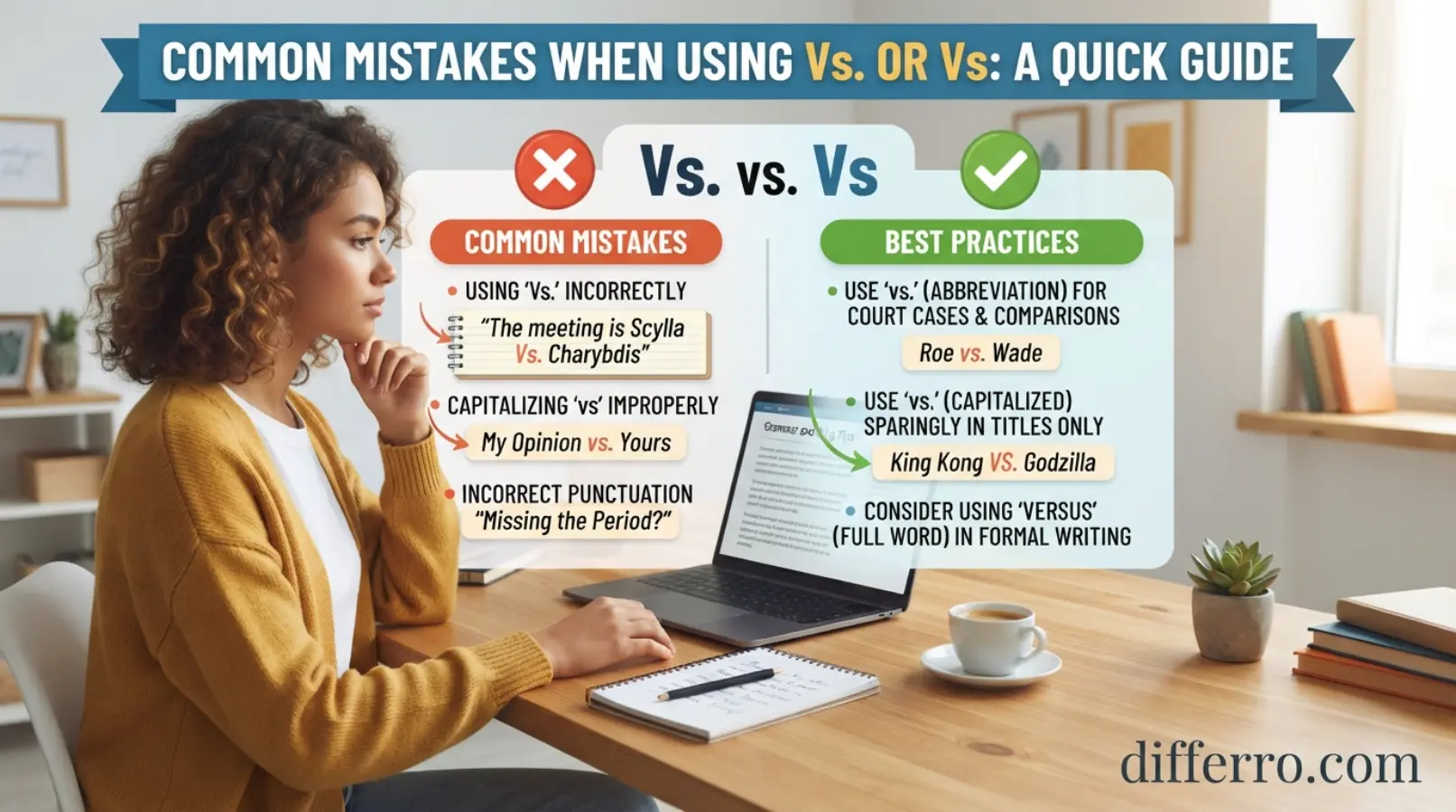
⚠️ Common Mistakes When Using Vs. or Vs
Mistake 1: Thinking Both Forms Have Different Meanings
Incorrect: “Vs.” means against, but “vs” means comparison.
Correct: Both forms mean “versus.” The only difference is punctuation.
Mistake 2: Mixing Both Forms in One Article
Incorrect: Use “iPhone vs. Samsung” in one heading and “Android vs iPhone” in another without a style reason.
Correct: Choose one punctuation style and use it consistently.
Mistake 3: Adding an Unnecessary Extra Period
Incorrect: iPhone vs.. Samsung
Correct: iPhone vs. Samsung
Use only one period after the abbreviation.
Mistake 4: Writing the Abbreviation in Formal Legal Case Names
Incorrect: Brown vs. Board of Education (when reproducing the formal case name).
Correct: Brown v. Board of Education
Legal case titles commonly use “v.” rather than “vs.” Follow the relevant legal citation style.
Mistake 5: Assuming Vs Is Always Informal
Incorrect: “Vs” is unsuitable for professional writing.
Correct: Both forms work in professional writing when they match the publication’s style guide.
Mistake 6: Confusing Versus With Verses
Incorrect: Football verses cricket.
Correct: Football vs cricket.
“Versus” expresses opposition or comparison. “Verses” refers to lines of poetry, songs, or religious texts.
🧠 Easy Trick to Remember
Use this simple trick:
- Vs. = American preference: Remember the traditional American period.
- Vs = British preference: Remember the common British no-period style.
Both forms mean “versus.”
If you are unsure, check your publication’s style guide. Consistency matters more than choosing one universal form.
🌍 Everyday-Life Examples: Vs. or Vs
1. Sports Match Comparisons
Sports writers use both forms when describing competing teams.
- American style: Pakistan vs. India
- British style: Pakistan vs India
Both examples communicate the same matchup.
2. Technology Comparisons
Technology websites compare devices, operating systems, and software.
- American style: Windows vs. macOS
- British style: Windows vs macOS
Both versions are correct.
3. Food Comparisons
Food bloggers often compare different meals and ingredients.
- American style: Pizza vs. Burger
- British style: Pizza vs Burger
The punctuation depends on the chosen editorial style.
4. Education Comparisons
Students and teachers compare learning methods, qualifications, and subjects.
- American style: Online Classes vs. Traditional Classes
- British style: Online Classes vs Traditional Classes
Both formats are acceptable.
5. Business Comparisons
Business writers compare brands, services, and investment options.
- American style: Freelancing vs. Full-Time Employment
- British style: Freelancing vs Full-Time Employment
Choose the form that matches your website’s writing conventions.
🌎 Google Trends and Usage Insights: USA, UK, Australia, India, and Pakistan
Google Trends measures relative search interest rather than exact search volume. The following observations are general language-use expectations, not verified live rankings.
- USA: Writers commonly encounter “vs.” in sports, legal discussions, and product comparisons.
- UK: “vs” is a familiar form in sports coverage and editorial writing.
- Australia: Both forms appear, with punctuation depending on publication style.
- India: Both abbreviations appear in English-language news, sports, and online comparisons.
- Pakistan: Both forms appear in sports reporting, blogs, and educational content.
SEO insight: Compare “vs or vs.” and “vs. vs vs” separately in Google Trends. Use the same date range and country settings. Search interest may remain low because people often search for the full word “versus” instead.
Comparison Table: Keyword Variations
| Keyword variation | Search intent | Suggested content section |
|---|---|---|
| Vs. or vs | Spelling and punctuation confusion | Title and introduction |
| Vs vs vs. difference | Direct comparison | Key differences |
| Is vs correct without a period | Grammar question | Meaning and FAQ |
| Vs. meaning | Definition search | Meaning section |
| Vs meaning in English | Educational search | Quick Answer |
| Versus abbreviation | Grammar and usage | Origin and history |
| How to write versus correctly | Practical writing guidance | Common mistakes |
❓ Frequently Asked Questions
1. Is “vs.” or “vs” correct?
Both are correct abbreviations of “versus.” American English traditionally prefers “vs.” while British English commonly uses “vs.”
2. What is the difference between vs. and vs?
The difference is punctuation. “Vs.” includes a period, while “vs” does not. Both forms have the same meaning.
3. Which form is more common?
“Vs.” is traditionally common in American English, while “vs” is common in British English. Usage varies among publishers and style guides.
4. Should I use vs. or vs in formal writing?
Use the form required by your organization’s style guide. American publications often prefer “vs.”, while many British publications prefer “vs”. Legal case names may require “v.” instead.
5. Why do people confuse vs. and vs?
People confuse these forms because different English conventions handle abbreviation periods differently. Both forms are correct, which makes the choice seem uncertain.
🏆 Final Verdict: Which Is Better?
Both “vs.” and “vs” are correct. Neither form changes the meaning or pronunciation of “versus.”
Choose “vs.” when writing for an American audience or following a style guide that includes abbreviation periods. Choose “vs” when following British conventions or a publication style that omits them.
For websites and SEO articles, consistency matters more than the punctuation choice. Select one version and use it throughout your headings, paragraphs, and comparison tables.
Remember that legal case names often use “v.” instead. Always follow the relevant legal citation rules when discussing court cases.
Conclusion
The choice between vs. or vs depends on punctuation style rather than meaning. Both forms abbreviate the Latin word “versus,” which means against or in comparison with. American English traditionally prefers “vs.” with a period. British English commonly uses “vs” without one.
Neither version is universally better or more correct. Your publication’s style guide should determine which form you choose. Use the same format throughout your articles, headings, and professional documents. Also, remember that legal case names often use “v.” instead of “vs.” or “vs.” Understanding these small differences helps you write clearly and professionally. When comparing two things, choose the appropriate abbreviation and maintain consistency.

