

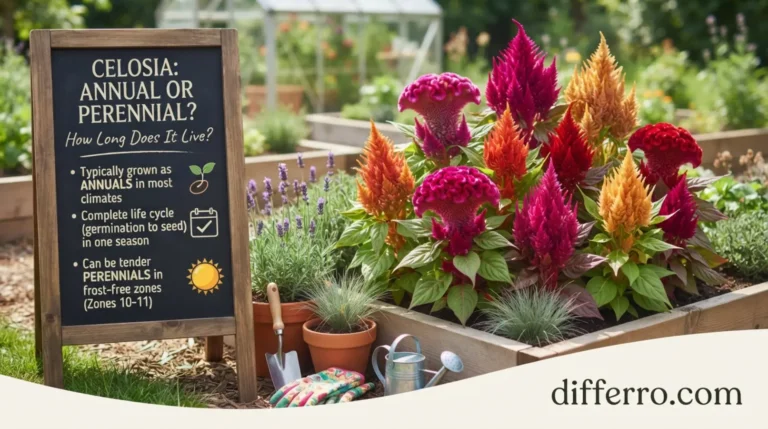
Celosia annual or perennial is a common question among gardeners who want colorful flowers year after year. Celosia produces beautiful, bright blooms that add beauty to Gardens, borders, and containers. However, its lifespan depends on the climate and growing conditions.
Most gardeners grow celosia as an annual plant because it cannot tolerate frost. In warm, frost-free climates, some celosia varieties can survive as short-lived perennials. This difference often confuses people when choosing plants for their gardens.
Understanding the celosia life cycle helps you plan your garden and care for your flowers properly. You can also learn whether celosia returns after winter or needs replanting each season. This guide explains its lifespan, varieties, growing conditions, and seasonal care. It also shares practical examples to help you enjoy healthy celosia flowers.
⭐ Quick Answer
Celosia is usually grown as an annual, but some varieties can behave as short-lived perennials in warm, frost-free climates. Cold temperatures and frost usually kill celosia plants.
Example: A celosia plant may bloom throughout summer and die after autumn frost. In a warm tropical garden, it may survive for another growing season.
🌱 What Does Annual Mean?
An annual plant completes its entire life cycle within one growing season. It grows from a seed, produces leaves and flowers, develops seeds, and then dies.
Gardeners usually replant annual flowers every year. These plants often provide colorful blooms throughout spring, summer, or autumn.
Examples of Annual Plants
Example 1: Marigold
Marigolds grow, flower, produce seeds, and complete their life cycle within one growing season in climates with cold winters.
Example 2: Zinnia
Zinnias produce colorful flowers during warm weather. Frost usually ends their growing season.
Common Features of Annual Plants
- Complete their life cycle within one growing season.
- Grow quickly from seeds.
- Produce flowers during their growing period.
- Usually die after completing their life cycle or facing frost.
- Often require replanting each year.
🌺 What Does Perennial Mean?
A perennial plant lives for more than two years. It can survive unfavorable seasons and grow again when suitable conditions return.
Many perennials become dormant during winter. Their roots or underground structures survive and produce new growth when temperatures improve.
Examples of Perennial Plants
Example 1: Lavender
Lavender can survive for several years in suitable climates. It produces fragrant flowers during its growing season.
Example 2: Coneflower
Coneflowers return each year in suitable growing conditions. Their established roots help them survive seasonal changes.
Common Features of Perennial Plants
- Live for multiple years.
- Often return after winter dormancy.
- Develop established root systems.
- May flower repeatedly over several growing seasons.
- Usually need less frequent replanting.
🔍 Celosia Annual or Perennial: Key Differences
Celosia is botanically a tender perennial, but gardeners usually grow it as an annual. Its ability to survive depends mainly on temperature and climate.
| Feature | Celosia as an Annual | Celosia as a Perennial |
|---|---|---|
| Meaning | Completes its growing cycle in one season | Survives and grows for multiple years |
| Lifespan | Usually one growing season | Potentially several growing seasons |
| Climate | Suitable for seasonal gardens | Requires warm, frost-free conditions |
| Winter survival | Usually dies after frost | May survive mild winters |
| Flowering | Blooms during its growing season | May bloom across multiple seasons |
| Maintenance | Often replanted yearly | Needs ongoing care |
| Usage | Common in cooler climates | Possible in tropical and subtropical climates |
| Popularity | More common in garden cultivation | Less common in areas with cold winters |
Important: Celosia does not reliably survive freezing temperatures. Even in warm climates, its lifespan depends on the variety and growing conditions.
🕰️ Origin and History of Celosia
Celosia belongs to the amaranth family, Amaranthaceae. The genus includes several ornamental flowering plants known for their unusual flower shapes and bright colors.
Celosia originates from tropical and subtropical regions of Africa and Asia. Gardeners now grow it worldwide because of its colorful flowers and warm-weather performance.
Its name comes from the Greek word keleos, meaning burning. This name describes the flame-like appearance of some celosia flowers.
Popular Celosia Types
- Celosia argentea: A species that includes several popular ornamental forms.
- Celosia cristata: Also called cockscomb because of its crested flower heads.
- Celosia plumosa: Known for its feathery, plume-shaped flowers.
- Celosia spicata: Produces narrow, upright flower spikes.
These varieties may differ in appearance and growth habits. However, gardeners generally grow them as warm-season annuals.
🇬🇧 British English vs American English Spelling
The word celosia has the same spelling in British and American English.
Both countries use the same botanical name and describe the plant as an annual or tender perennial.
There is no regional spelling difference between these gardening terms.
British vs American English Comparison
| Feature | British English | American English |
|---|---|---|
| Plant name | Celosia | Celosia |
| Annual | Annual | Annual |
| Perennial | Perennial | Perennial |
| Botanical spelling | Celosia argentea | Celosia argentea |
| Meaning | Same | Same |
| Gardening usage | Ornamental garden plant | Ornamental garden plant |
🌿 When to Grow Celosia as an Annual
Growing celosia as an annual is the most practical choice in regions with cold winters. The plant thrives during warm weather but struggles with frost.
1. Choose Annual Growing in Cold Climates
If your region experiences freezing winter temperatures, grow celosia as a seasonal flower.
Example: A gardener in a cold region plants celosia in spring and enjoys its blooms throughout summer.
2. Grow Celosia for Seasonal Color
Celosia produces vibrant flowers in red, orange, yellow, pink, and purple. It adds attractive color to seasonal flower beds.
Example: Plant several celosia varieties together for a colorful summer garden.
3. Replant Celosia Every Year
Gardeners can collect seeds from mature flowers or purchase fresh seeds each spring.
Example: A gardener collects celosia seeds in autumn and plants them after the final spring frost.
Tips for Growing Annual Celosia
- Plant after the danger of frost passes.
- Choose a sunny location.
- Use well-draining soil.
- Water regularly without waterlogging the roots.
- Remove damaged flowers and leaves.
- Protect young plants from cold temperatures.
🌞 When Can Celosia Grow as a Perennial?
Celosia can behave as a short-lived perennial in warm climates where frost rarely occurs. Its tropical origins make it better suited to consistently warm conditions.
1. Choose a Warm, Frost-Free Climate
Celosia has a better chance of surviving multiple years in tropical and subtropical regions.
Example: A gardener in a warm coastal region may keep celosia growing through several seasons.
2. Protect Celosia During Cooler Weather
Even mild cold can slow growth and damage the plant. Protect celosia from cold winds and unexpected temperature drops.
Example: A gardener moves a container-grown celosia into a sheltered, warm location during cooler weather.
3. Maintain Healthy Growing Conditions
Warm temperatures, sufficient sunlight, and well-draining soil support healthy growth.
Example: A gardener grows celosia in a sunny container and monitors soil moisture throughout the year.
Tips for Longer Celosia Growth
- Maintain warm growing conditions.
- Provide plenty of sunlight.
- Avoid overwatering.
- Protect plants from frost.
- Remove dead leaves and flowers.
- Check regularly for pests and diseases.
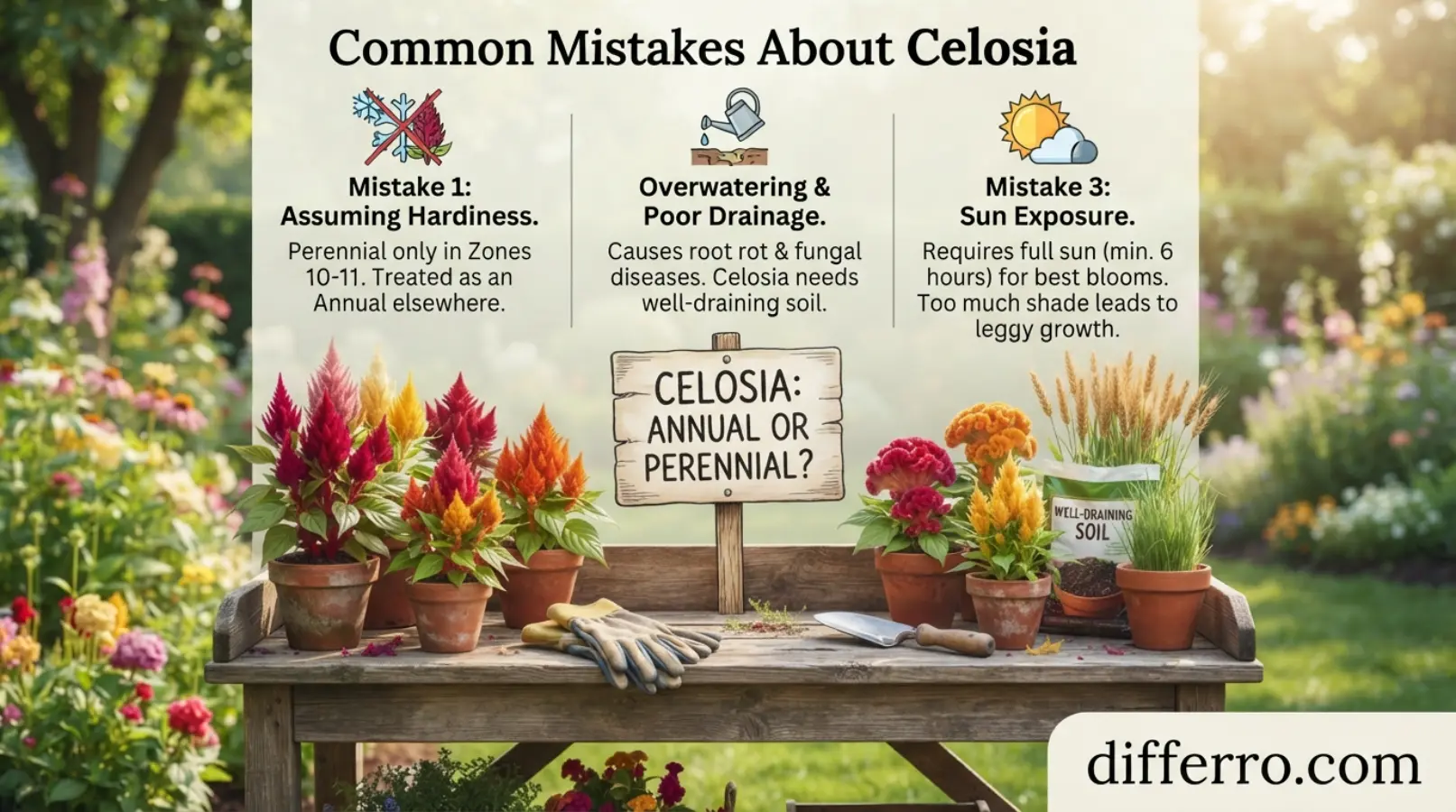
⚠️ Common Mistakes About Celosia Annual or Perennial
Mistake 1: Assuming Celosia Always Returns Every Year
Incorrect: Celosia always grows back after winter.
Correct: Celosia usually dies after frost. It may survive multiple years in warm, frost-free climates.
Mistake 2: Confusing Self-Seeding With Perennial Growth
Incorrect: New celosia plants always come from the original plant.
Correct: Celosia can produce seeds that grow into new plants. These seedlings are new plants, not regrowth from the original roots.
Mistake 3: Growing Celosia in Freezing Temperatures
Incorrect: Celosia can survive freezing weather without protection.
Correct: Celosia prefers warm temperatures. Frost can damage or kill the plant.
Mistake 4: Overwatering Celosia
Incorrect: Celosia needs constantly wet soil to produce flowers.
Correct: Celosia prefers moist, well-draining soil. Excess water can cause root problems.
Mistake 5: Assuming Every Celosia Variety Has the Same Lifespan
Incorrect: Every celosia variety survives winter in the same way.
Correct: Climate, variety, and growing conditions influence survival. Most gardeners grow celosia as an annual.
Mistake 6: Removing Every Mature Flower Immediately
Incorrect: Every mature celosia flower must be removed before producing seeds.
Correct: Allow some flowers to mature if you want to collect seeds for future planting.
🧠 Easy Trick to Remember
Use this simple gardening trick:
- Annual = One growing season. Celosia usually completes its garden life cycle within one season.
- Perennial = Multiple years. Celosia may survive multiple seasons in warm, frost-free conditions.
Remember: Celosia is technically a tender perennial, but gardeners commonly treat it as an annual.
🌸 Everyday-Life Examples: Celosia Annual or Perennial
1. Growing Celosia in a Summer Garden
A gardener plants celosia in a sunny flower bed during spring. The flowers bloom throughout summer and autumn.
After the first frost, the plants die.
Best description: Celosia grows as an annual in this garden.
2. Growing Celosia in a Tropical Garden
A gardener lives in a warm region without regular winter frost. The celosia plant continues growing through different seasons.
Best description: Celosia may behave as a short-lived perennial in this climate.
3. Growing Celosia in Containers
A homeowner grows celosia in decorative pots on a sunny balcony. The plants produce colorful flowers during warm months.
The homeowner protects the pots from cold weather.
Best description: Container-grown celosia may survive longer with suitable protection.
4. Collecting Celosia Seeds
A gardener allows several celosia flowers to mature. The flowers produce seeds that fall into nearby garden soil.
New seedlings appear during the next warm season.
Best description: Celosia can self-seed, even when the original plant dies.
5. Growing Celosia in a Flower Bed
A gardener plants red, yellow, and orange celosia varieties together. The plants create a colorful display throughout summer.
The gardener removes the old plants after winter frost.
Best description: Celosia works well as an annual bedding flower.
🌍 Google Trends and Usage Insights: Five Countries
Google Trends measures relative search interest rather than exact monthly search volume. The following observations are general gardening insights, not verified live rankings.
- USA: Gardeners may search for celosia annual or perennial when planning seasonal flower beds.
- UK: Interest may focus on growing celosia during summer and protecting it from cold weather.
- Australia: Warm-region gardeners may explore whether celosia survives across multiple growing seasons.
- India: Gardeners may search for celosia growing conditions, flowering seasons, and plant care.
- Pakistan: Searches may focus on celosia planting seasons, sunlight requirements, and summer garden care.
SEO insight: Compare the exact keyword with related searches such as “does celosia come back every year” and “celosia winter care.” Use the same date range for all five countries. Check live Google Trends data before making claims about search popularity or country rankings.
Comparison Table: Keyword Variations
| Keyword variation | Search intent | Suggested content section |
|---|---|---|
| Celosia annual or perennial | Direct comparison | Title and introduction |
| Is celosia an annual or perennial? | Informational | Quick Answer |
| Does celosia come back every year? | Gardening question | Lifespan |
| Is celosia a perennial flower? | Plant identification | Meaning section |
| Celosia plant lifespan | Informational | Key differences |
| Celosia winter care | Practical gardening | Growing tips |
| Can celosia survive winter? | Problem-solving | Perennial growing section |
❓ Frequently Asked Questions
1. Is celosia an annual or perennial plant?
Celosia is technically a tender perennial, but gardeners usually grow it as an annual. It may survive multiple years in warm, frost-free climates.
2. What is the difference between annual and perennial celosia?
Annual celosia completes its growing cycle within one season. Perennial celosia survives multiple growing seasons in suitable warm conditions.
3. Which is more common, annual or perennial celosia?
Annual cultivation is more common. Gardeners in colder climates usually replant celosia every year because frost damages the plant.
4. Is celosia formally classified as an annual or perennial?
Celosia includes tropical plants that can behave as tender perennials. However, many gardening references describe popular ornamental varieties as annuals because gardeners grow them seasonally.
5. Why do people confuse annual and perennial celosia?
People confuse these classifications because celosia behaves differently across climates. It usually dies in freezing weather but may survive multiple seasons in tropical regions.
🏆 Final Verdict: Is Celosia Annual or Perennial?
Celosia is generally grown as an annual, but it can behave as a tender perennial in warm climates. Its survival depends on temperature, variety, and growing conditions.
In regions with cold winters, celosia usually completes its life cycle within one growing season. Gardeners must replant it after winter.
In tropical and frost-free regions, celosia may continue growing for multiple seasons. It can also produce seeds that create new plants.
The best answer is that celosia is a tender perennial commonly grown as an annual. Choose annual cultivation in colder climates and protect plants from frost wherever possible.
Conclusion
Celosia annual or perennial depends mainly on your local climate and growing conditions. Botanically, celosia is considered a tender perennial, but gardeners commonly grow it as an annual. Its colorful flowers brighten gardens, containers, and flower beds throughout warm seasons.
In colder regions, frost usually kills celosia plants after their growing season. In tropical and frost-free climates, some varieties may survive for multiple years. Celosia can also produce seeds that grow into new plants during the next season.
Provide plenty of sunlight, warm temperatures, and well-draining soil for healthy growth. Protect your plants from frost and avoid excessive watering. Understanding the celosia life cycle helps you plan a beautiful garden and enjoy its colorful flowers.


1 thought on “Celosia Annual or Perennial: How Long Does It Live?”