
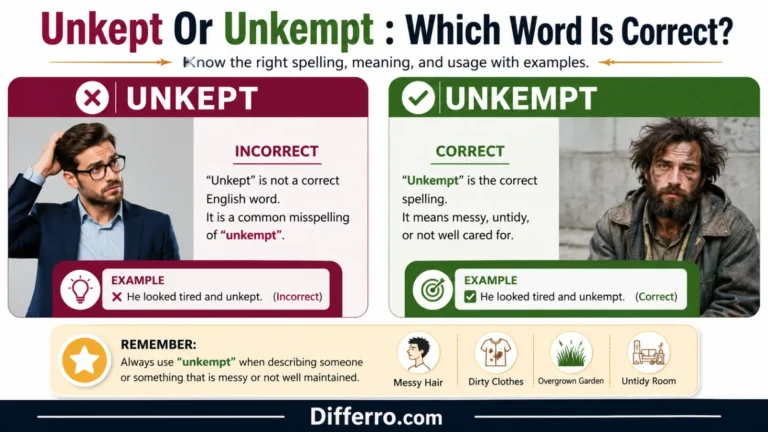
Unkept and unkempt are two words that often cause confusion because they look similar and seem to have related meanings.
Many English learners and writers wonder whether both words are correct or if one is a misspelling of the other.
In modern English, unkempt is the standard and widely accepted word. It is used to describe someone or something that appears messy, untidy, or poorly maintained.
Unkept, while technically a real word, is much less common and is usually used in specific contexts to mean not kept, maintained, or fulfilled.
Because these words are so similar in spelling, they are frequently mixed up in writing and conversation.
Understanding the difference can help you choose the correct term and avoid common grammar mistakes.
In this guide, you’ll learn the meanings, origins, differences, grammar rules, examples, and proper usage of unkept and unkempt in simple English.
⭐ Quick Answer
Unkempt is the correct word when describing a person, appearance, hair, clothing, or place that looks messy or untidy.
Unkept means not kept, maintained, or honored, but it is far less common in everyday English.
Example: His unkempt hair made him look like he had just woken up.
Example:
- Correct: His hair looked unkempt after the storm.
- Incorrect: His hair looked unkept after the storm.
📖 Meaning of Unkept
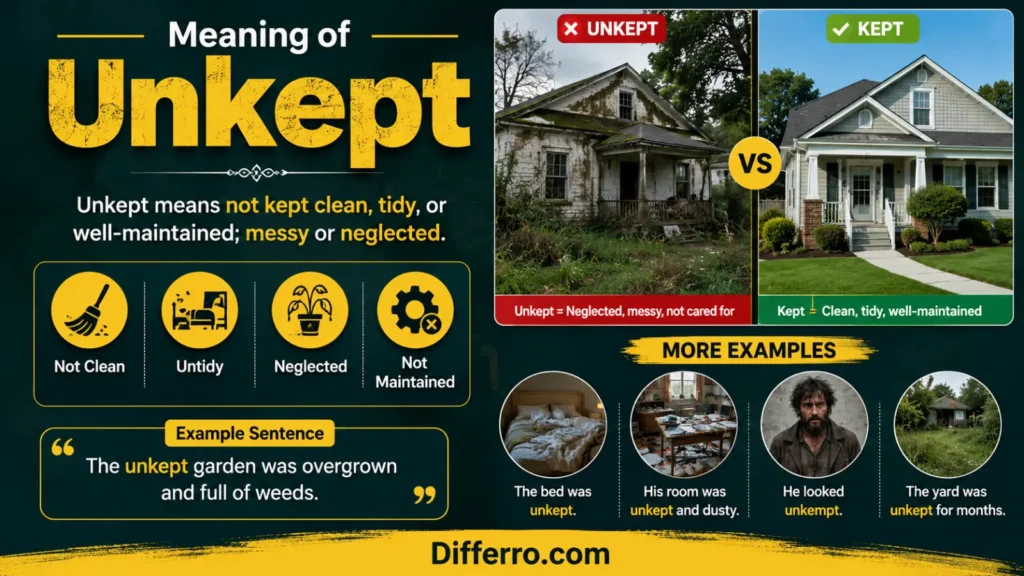
Meaning of Unkept
“Unkept” technically means “not kept” or “not maintained.” However, native speakers rarely use it in daily English.
It may appear in very old texts or uncommon contexts.
Examples
- The promise remained unkept for years.
- Several records were left unkept in storage.
📖 Meaning of Unkempt
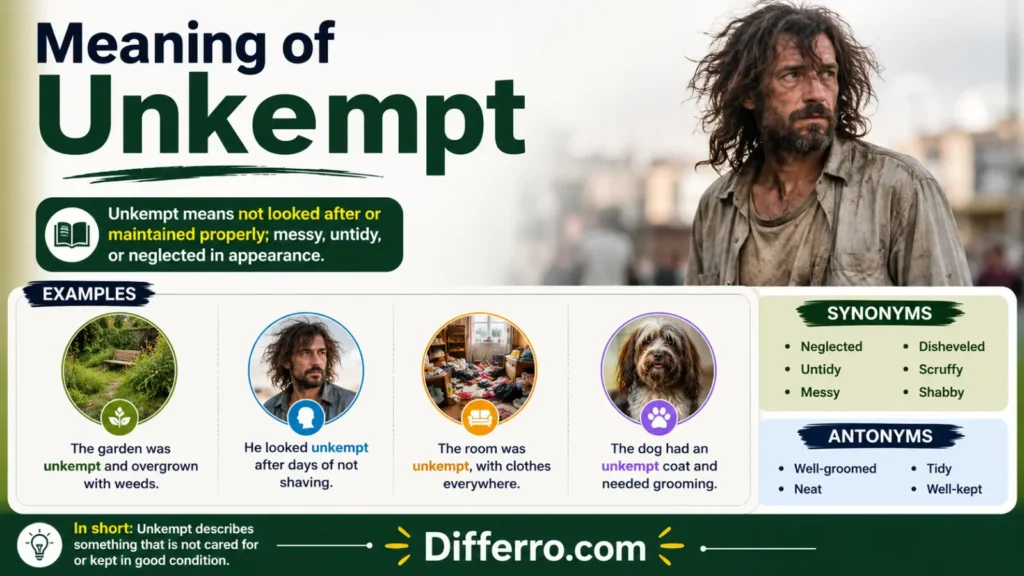
Meaning of Unkempt
“Unkempt” means untidy, messy, or not properly cared for. It is commonly used for hair, clothes, gardens, rooms, or appearance.
Examples
- The child arrived at school with unkempt hair.
- The abandoned house looked unkempt and dirty.
📊 Key Differences Between Unkept and Unkempt
| Feature | Unkept | Unkempt |
|---|---|---|
| Meaning | Not kept or maintained | Messy or untidy |
| Common Usage | Rare | Very common |
| Tone | Awkward or outdated | Natural and standard |
| Grammar Acceptance | Limited | Fully accepted |
| Popularity | Low | High |
🕰️ Origin & History
The word “unkempt” comes from the old English word “kempt,” which meant neat or well-combed. Over time, “kempt” became less common, but “unkempt” stayed popular.
“Unkept” developed later as a logical opposite of “kept.” However, English speakers never widely accepted it for describing appearance.
Similar word examples:
- Known → Unknown
- Tidy → Untidy
- Kept → Unkept (rare usage)
British English vs American English Spelling
Both British and American English prefer the word “unkempt.” There is no major spelling difference between the two forms.
“Unkept” is uncommon in both regions. Dictionaries in the UK and USA mainly recognize “unkempt” as the standard word.
Writers, journalists, and teachers almost always use “unkempt” in formal writing.
🇬🇧 vs 🇺🇸 Comparison Table
| British English | American English |
|---|---|
| Unkempt | Unkempt |
| Commonly used | Commonly used |
| Standard spelling | Standard spelling |
| Unkept is rare | Unkept is rare |
✍️ When to Use Unkept
Use “unkept” only in very limited situations where you literally mean “not kept” or “not maintained.”
Examples
- The agreement remained unkept.
- Several traditions were left unkept.
✍️ When to Use Unkempt
Use “unkempt” when describing messy appearance, untidy hair, dirty surroundings, or poor maintenance.
Examples
- His beard looked unkempt.
- The garden became unkempt after winter.
- She wore unkempt clothes during the trip.
❌ Common Mistakes
| Incorrect Usage | Correct Usage |
|---|---|
| Her hair was unkept. | Her hair was unkempt. |
| He looked very unkept. | He looked very unkempt. |
| The lawn became unkept. | The lawn became unkempt. |
| Their appearance seemed unkept. | Their appearance seemed unkempt. |
🧠 Easy Trick to Remember
Remember this simple trick:
“Unkempt” contains “kempt,” which relates to grooming and appearance.
If you are talking about messy hair, clothes, or places, always choose unkempt.
🏡 Write 5 Examples
1. Unkempt Hair
After camping for three days, his hair looked unkempt and dusty.
2. Unkempt Garden
The unkempt garden was full of weeds and dry leaves.
3. Unkempt Clothing
Her unkempt clothes showed she had worked all day.
4. Rare Use of Unkept
The old building remained unkept for decades.
5. Unkempt Appearance
The actor played a detective with an intentionally unkempt appearance.
⚖️ Final Verdict
“Unkempt” is the correct and preferred word in modern English. It is widely used in schools, books, media, and professional writing.
“Unkept” is rare and sounds unnatural in most situations. Use it only when you literally mean something was not kept or maintained.
For appearance, grooming, or untidy conditions, always choose unkempt.
🌍 Google Trends & Usage Data
In the USA, searches for “unkempt” are much higher because it is the standard dictionary word.
Meanwhile, the UK and Australia also strongly prefer “unkempt” in grammar and writing searches.
In India and Pakistan, many users search “unkept or unkempt” to learn the correct spelling and meaning.
Overall, “unkempt” dominates global search trends because it is accepted in modern English usage.
📈 Comparison Table: Keyword Variations
| Keyword Variation | Search Intent |
|---|---|
| Unkept or unkempt | Spelling confusion |
| Is unkept correct | Grammar learning |
| Unkempt meaning | Definition search |
| Unkept meaning | Vocabulary learning |
| Unkempt examples | Usage examples |
| Correct spelling unkempt | English writing help |
FAQs ,
Is “unkept” correct?
“Unkept” exists but is very rare. Most people should use “unkempt.”
What is the difference between unkept and unkempt?
“Unkempt” means messy or untidy. “Unkept” means not maintained or not kept.
Which word is more common?
“Unkempt” is far more common in modern English.
Is “unkempt” formal English?
Yes. “Unkempt” is accepted in both formal and informal writing.
Why does the confusion exist?
People assume “unkept” should be the opposite of “kept,” which creates confusion.
📝 Conclusion
The confusion between unkept and unkempt is very common in English grammar. While both words exist, only “unkempt” is widely accepted for describing messy or untidy appearance. It appears in books, newspapers, classrooms, and daily conversations.
“Unkept” has limited use and often sounds unnatural in modern writing. Most grammar experts recommend avoiding it unless you specifically mean something was not maintained or preserved.
If you want clear and professional English, use “unkempt” for hair, clothes, gardens, rooms, or personal appearance. Remember the simple trick linking “unkempt” with grooming and neatness. This will help you avoid mistakes and improve your writing confidence.
Discover More Post ,
Occurred Or Occured : Which Spelling Is Correct?
Carat Or Karat : What’s the Real Difference?
Flue Or Flu : Which Word Is Correct?

Sara Taylor is a passionate writer and language enthusiast. She specializes in creating simple and easy-to-understand articles about English grammar, spelling differences, and commonly confused words. Her writing style focuses on helping students, writers, and English learners improve their language skills with confidence. Through informative guides and practical examples, Sara makes complex grammar topics easier for everyday readers.