
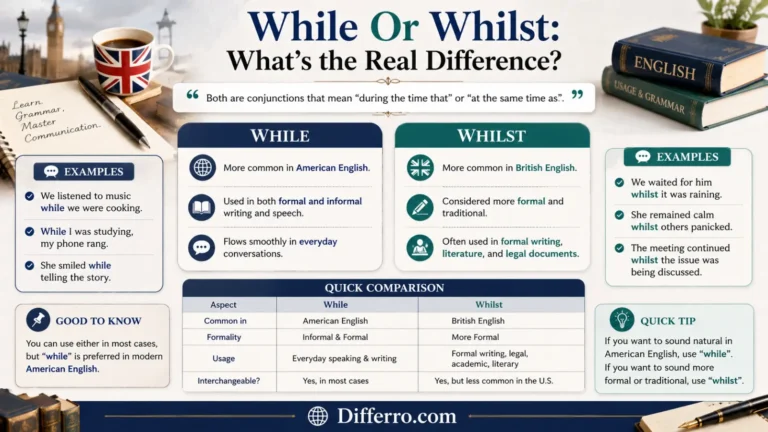
While Or Whilst is a common English grammar confusion, especially for learners and writers. Both words have the same meaning, but they differ in tone, region, and style. Many people wonder whether “while” or “whilst” is correct in formal and informal writing.
The truth is simple. Both words are grammatically correct. However, “while” is more common in modern English, especially in American English. “Whilst” sounds more traditional and appears more often in British English.
Understanding the difference helps you write naturally and avoid awkward wording. It also improves your communication in essays, blogs, emails, and professional content.
In this guide, you will learn the meaning, usage, history, examples, and differences between “while” and “whilst” in very simple language.
⭐ Quick Answer
“While” and “whilst” mean the same thing. Both connect actions happening at the same time.
However, “while” is more common and modern, especially in American English, while “whilst” sounds more formal and British.
Example:
- I listened to music while studying. ✅
- I listened to music whilst studying. ✅
Meaning of While
“While” is a conjunction that means:
- during the same time
- although
- at the same moment
It is the standard and most commonly used form.
Examples:
- She cooked dinner while talking on the phone.
- While I agree with you, I still have concerns.
Meaning of Whilst
“Whilst” has the same meaning as “while.” It is simply an older and more formal variation.
It is mainly used in British English.
Examples:
- He read a book whilst waiting for the train.
- She smiled whilst speaking to the audience.
📊 Key Differences Between While And Whilst
| Feature | While | Whilst |
|---|---|---|
| Meaning | During the same time | During the same time |
| Tone | Modern and natural | Formal and traditional |
| Usage | Common worldwide | Mostly British English |
| Popularity | Very popular | Less common |
| Style | Simple and conversational | Literary and formal |
📜 Origin & History
The word “while” comes from Old English and has existed for centuries.
“Whilst” developed later as a variation of “while” by adding “-st,” similar to older English forms.
In the past, many English words had extra endings:
- Among → Amongst
- Amid → Amidst
- While → Whilst
Today, modern English prefers shorter and simpler words. That is why “while” became more popular globally.
🇬🇧 British English vs 🇺🇸 American English
American English strongly prefers “while.”
British English uses both words, but “whilst” appears more often in formal writing and literature.
In modern communication, even many British writers now choose “while.”
Comparison Table: British vs American English
| English Style | Preferred Word |
|---|---|
| American English | While |
| British English | While / Whilst |
| Australian English | Mostly While |
| Canadian English | While |
| Modern Global English | While |
✍️ When to Use While
Use “while” in:
- Blogs
- Emails
- Academic writing
- Daily conversation
- Professional content
Examples:
- I watched TV while eating dinner.
- She called me while driving home.
- While this idea is good, it needs improvement.
✍️ When to Use Whilst
Use “whilst” when:
- Writing in British style
- Creating formal or literary content
- Wanting an old-fashioned tone
Examples:
- He worked quietly whilst everyone slept.
- She remained calm whilst answering questions.
❌ Common Mistakes
| Incorrect | Correct |
|---|---|
| Whilst is more correct than while. | Both are correct. |
| Americans commonly use whilst. | Americans mostly use while. |
| While is informal only. | While works in all styles. |
| Whilst changes the meaning. | Both words have the same meaning. |
🧠 Easy Trick to Remember
Simple Memory Tip:
- While = Worldwide
- Whilst = British style
If you want safe and natural writing, choose while.
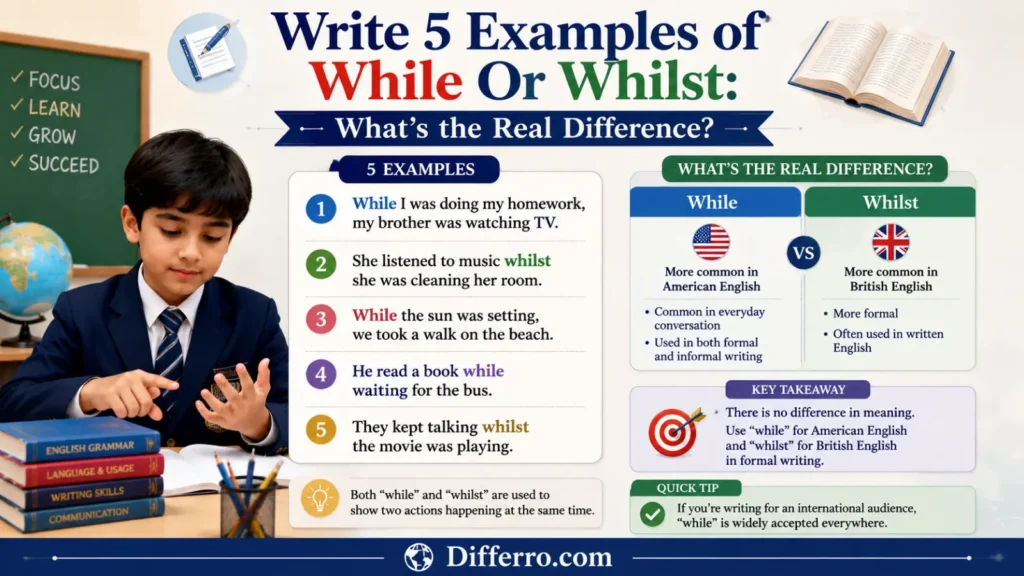
✨ Write 5 Examples
1. At School
I listened carefully while the teacher explained the lesson.
2. At Work
She answered emails whilst attending the online meeting.
3. At Home
My brother cleaned the kitchen while I cooked dinner.
4. Traveling
He slept whilst waiting for his flight.
5. Daily Routine
I drink coffee while reading the news every morning.
🔍 Related Keywords
- While vs Whilst
- Whilst meaning
- While meaning
- Difference between while and whilst
- British vs American English
- Grammar confusion words
- While or whilst correct usage
🌍 Google Trends & Usage Data
“While” is far more popular globally than “whilst.”
The USA, India, and Pakistan strongly prefer “while.”
The UK still uses “whilst” more often than other countries.
Australia also understands both words, but “while” dominates modern usage.
📈 Comparison Table: Keyword Variations
| Country | More Popular Keyword |
|---|---|
| USA | While |
| UK | Whilst / While |
| Australia | While |
| India | While |
| Pakistan | While |
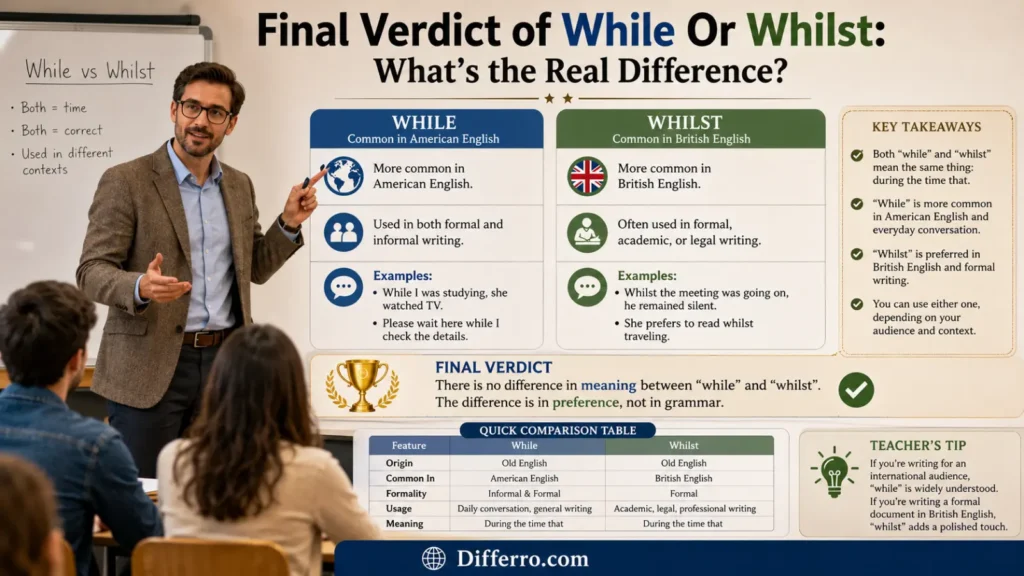
✅ Final Verdict
Both “while” and “whilst” are correct English words. They mean the same thing and work in similar sentences.
However:
- Use while for modern, simple, and global English.
- Use whilst for formal British-style writing.
For most people, while is the better and safer choice.
FAQs ;
1. Is “whilst” correct English?
Yes, “whilst” is completely correct English.
2. What is the difference between while and whilst?
The meaning is the same. The difference is tone and regional preference.
3. Which is more common: while or whilst?
“While” is much more common worldwide.
4. Is whilst more formal?
Yes, “whilst” sounds more formal and traditional.
5. Why does this confusion exist?
Both words share the same meaning, so many learners think one is incorrect.
Conclusion
Understanding While Or Whilst is simple once you know their usage and tone. Both words are grammatically correct and mean the same thing. The real difference comes from style and regional preference.
“While” is modern, natural, and widely used across the world. It fits casual, professional, and academic writing. “Whilst,” on the other hand, sounds more formal and traditional. It appears more often in British English and literary writing.
If you want clear and globally accepted English, use “while.” If you prefer a classic British tone, “whilst” also works correctly.
Choosing the right word depends on your audience, writing style, and personal preference.
Discover More Post ;
Parenthesis Or Parentheses: What’s the Correct Difference?
Peel Or Peal: What’s the Real Difference?
Griefing Or Grieving Meaning: Correct Usage Guide

Sara Taylor is a passionate writer and language enthusiast. She specializes in creating simple and easy-to-understand articles about English grammar, spelling differences, and commonly confused words. Her writing style focuses on helping students, writers, and English learners improve their language skills with confidence. Through informative guides and practical examples, Sara makes complex grammar topics easier for everyday readers.