
FOMO meaning slang is a common search because people often see “FOMO” in texts, social media posts, captions, and online conversations but may not know exactly what it means.
If a friend says, “I have FOMO seeing everyone at the party,” they are not talking about a person or place. They are describing a feeling.
FOMO is especially common in conversations about parties, trips, events, friendships, social media, and missed opportunities. It describes the worry that you are missing something exciting, important, or enjoyable while other people are experiencing it.
The term is informal but widely understood in everyday digital communication. It can describe a serious emotional feeling or be used jokingly.
Quick Answer
FOMO means “fear of missing out.” It describes the feeling that you might be missing an exciting or valuable experience that other people are enjoying.
Example: “Everyone is going to the concert tonight, and I’m getting serious FOMO.”
What Does FOMO Mean in Text?
In texting, FOMO stands for “fear of missing out.”
When someone uses FOMO in a message, they usually mean they feel left out or worry that they are missing something fun, interesting, or important.
For example:
“I wasn’t going to go, but now I have FOMO.”
This means the person is reconsidering their decision because they are worried they will miss a good experience.
FOMO can also be used humorously:
“I already have three desserts, but I have FOMO about the cake.”
Here, the person jokingly says they are afraid of missing out on the cake.
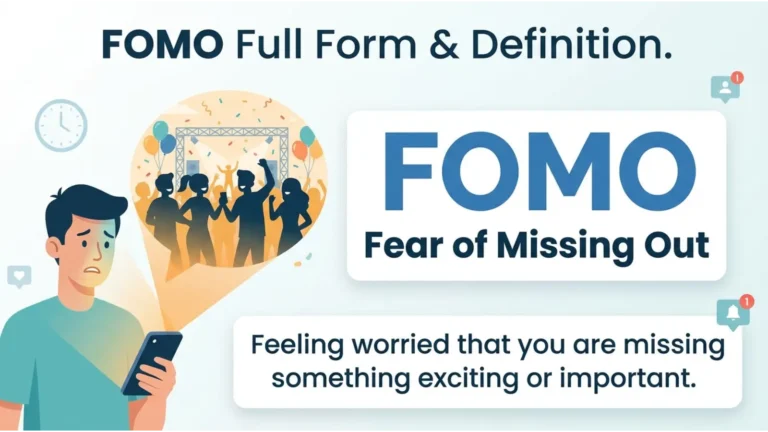
FOMO Full Form and Definition
The FOMO full form is Fear of Missing Out.
It describes an emotional reaction in which someone believes other people are having experiences they should also be part of.
FOMO can happen when you:
- See friends going out without you
- Notice people attending an exciting event
- Watch vacation photos online
- Hear about a party you skipped
- See others buying something popular
- Think you are missing an opportunity
The feeling does not always mean that you genuinely want to participate. Sometimes, seeing other people enjoy something simply creates the feeling that you should be there.
FOMO Meaning Slang in Different Contexts
★FOMO meaning slang can have slightly different meanings depending on the situation.
FOMO in Texting
In texting, FOMO usually means someone is worried about missing an experience.
Example:
“Send me pictures! I already have FOMO 😂”
FOMO on Social Media
Social media is strongly associated with FOMO because people constantly see carefully selected pictures and videos of other people’s lives.
Someone might see friends traveling and say:
“These vacation pics are giving me FOMO.”
FOMO at Parties and Events
If someone skips a party and later sees everyone having fun, they may experience FOMO.
“I should’ve gone to the party. Major FOMO right now.”
FOMO About Purchases
FOMO can also describe buying something because everyone else seems to have it.
“I bought those shoes because of FOMO.”
Is FOMO Rude, Offensive, or Neutral?
FOMO is generally neutral and not offensive.
It is an informal expression rather than an insult or swear word. You can normally use it with friends, classmates, coworkers, and people online.
However, the tone matters.
For example:
“I have FOMO 😭”
sounds casual and emotional.
But:
“You should have come. Everyone had fun without you.”
could sound intentionally exclusionary, even though it does not contain the word FOMO.
FOMO itself is not rude. The surrounding message determines whether the communication feels friendly, teasing, or insensitive.
Where Is FOMO Commonly Used?
You can see FOMO in many forms of digital communication, including:
- Text messages
- Instagram captions
- TikTok comments
- Snapchat conversations
- Facebook posts
- Group chats
- Online forums
- Memes
- Casual conversations
- Marketing and advertising
It is particularly common when people discuss social activities, trends, travel, entertainment, shopping, and online events.
Real-Life Conversation Examples
Friendly Example
A: “We’re going hiking Saturday. Want to come?”
B: “Absolutely. I don’t want FOMO!”
Casual Example
A: “Everyone is watching that new show.”
B: “I need to start it. The FOMO is real.”
Argumentative Example
A: “You always go out without me.”
B: “I didn’t mean to leave you out.”
A: “Well, seeing all the pictures is giving me FOMO.”
Here, FOMO expresses frustration about feeling excluded.
Funny Example
A: “You said you weren’t hungry.”
B: “I wasn’t, but now I have FOMO because your fries look amazing.”
Emotional and Psychological Meaning of FOMO
Beyond slang, FOMO meaning slang describes a real emotional experience.
People may compare their lives with what they see others doing. This can create thoughts such as:
- “Am I missing something?”
- “Should I be there?”
- “What if everyone has fun without me?”
- “What if I miss an important opportunity?”
Social media can make this feeling stronger because users may see many exciting moments from other people’s lives in a short period.
Importantly, social media usually shows selected moments rather than someone’s entire life. A person may appear to be constantly traveling, partying, or succeeding online while experiencing ordinary or difficult moments privately.
Origin and Background of FOMO
The phrase “fear of missing out” existed before social media became popular, but the abbreviation FOMO became especially widespread with the growth of internet culture and social networking.
Today, FOMO is used far beyond friendship and parties. It can describe anxiety about missing:
- A trend
- A business opportunity
- A sale
- A concert
- A trip
- A social gathering
- A new product
- An online event
The term has become a familiar part of modern informal English.
FOMO vs. Similar Slang Terms
FOMO is related to several expressions, but they do not all mean exactly the same thing.
| Term | Meaning | Typical Use |
|---|---|---|
| FOMO | Fear of missing out | Feeling worried about missing something |
| YOLO | You only live once | Encouraging someone to enjoy an opportunity |
| JOMO | Joy of missing out | Feeling happy about staying away from something |
| Left out | Excluded from something | Feeling excluded socially |
| Jealous | Wanting what someone else has | Envy or comparison |
JOMO vs. FOMO
These are almost opposites.
FOMO: “I wish I were there.”
JOMO: “I’m happy I stayed home.”
JOMO stands for “joy of missing out” and describes the positive feeling of not participating.
When Should You Use FOMO?
FOMO works best in casual and informal communication.
You can use it when:
- Talking with friends
- Writing social media captions
- Sending text messages
- Commenting on posts
- Making jokes
- Discussing social events
When to Avoid FOMO
You may want to avoid the abbreviation in:
- Formal academic writing
- Official business documents
- Professional reports
- Legal documents
- Formal correspondence
Instead, write “fear of missing out” when your audience may not understand the abbreviation.
Polite Alternatives to FOMO
FOMO is not offensive, so you generally do not need a replacement.
However, depending on your audience, you can say:
- “I don’t want to miss out.”
- “I’m worried I’ll miss something.”
- “I wish I could be there.”
- “I feel like I’m missing out.”
- “I wish I could join you.”
These alternatives are clearer for formal or professional communication.
Why Do People Use FOMO?
People use FOMO meaning slang because it expresses a complicated feeling in just four letters.
Instead of saying:
“I’m worried that everyone is having an exciting experience without me.”
someone can simply say:
“I have FOMO.”
It is quick, recognizable, and easy to understand in casual conversation.
FOMO can also add humor to an otherwise ordinary situation.
Impact of FOMO on Communication
FOMO can make conversations feel more relatable because it gives people a simple way to describe social anxiety, curiosity, excitement, or regret.
However, repeatedly emphasizing FOMO can sometimes encourage unhealthy comparison.
For example, constantly seeing what others are doing may make someone feel that their own life is less exciting. In communication, it is helpful to remember that people usually share highlights rather than every part of their daily lives.
Is FOMO Safe for Social Media?
Yes. FOMO is a safe and commonly used expression on social media.
It is not inherently offensive, explicit, or inappropriate.
Still, people can use the concept of FOMO in unhealthy ways—for example, deliberately posting content to make others feel excluded.
A simple post such as:
“Concert tonight! FOMO is real!”
is normally harmless.
But intentionally trying to make someone feel left out is a different matter. The issue is the intent behind the communication, not the slang itself.
Common Misunderstandings About FOMO
1. FOMO Does Not Mean Jealousy
FOMO can involve jealousy, but the two words are not identical.
Jealousy usually involves wanting something another person has. FOMO focuses more on the fear of missing an experience or opportunity.
2. FOMO Is Not Always Serious
People frequently use FOMO as a joke.
For example:
“I have FOMO because you ordered pizza without me.”
The person may not genuinely feel anxious.
3. FOMO Is Not Only About Parties
It can involve travel, shopping, entertainment, careers, trends, friendships, and many other situations.
Variations and Types of FOMO
There is no single official list of FOMO “types,” but the feeling can appear in different situations.
Social FOMO
Worrying about missing time with friends or other people.
Event FOMO
Feeling bad about skipping a concert, party, game, or gathering.
Travel FOMO
Seeing someone’s vacation and wishing you were experiencing it too.
Shopping FOMO
Buying something because you are afraid a deal, trend, or opportunity will disappear.
Career FOMO
Worrying that other people are getting opportunities, promotions, or experiences you are missing.
How to Respond When Someone Uses FOMO
Your response depends on the situation.
If they want reassurance:
“Don’t worry! We’ll do something together soon.”
If they’re joking:
“Haha, next time you’re definitely coming!”
If they genuinely feel excluded:
“Sorry you felt left out. We should have invited you.”
If they are considering joining an event:
“If you really want to go, you should come!”
The best response recognizes whether their FOMO is serious or playful.
Regional and Cultural Usage
FOMO is widely recognized in online English and is especially common among internet users and younger generations. Because it is an English acronym, people in non-English-speaking countries may also use it in digital conversations.
Its exact frequency varies by community, age group, platform, and language.
On social media, however, FOMO is often recognizable even when the rest of the conversation is informal or multilingual.
FAQs About FOMO Meaning Slang
What does FOMO stand for?
FOMO stands for “fear of missing out.”
What does FOMO mean in texting?
In texting, FOMO means feeling worried or uncomfortable because you think you are missing an enjoyable, exciting, or important experience.
Is FOMO a bad word?
No. FOMO is not a bad word or offensive slang. It is a neutral, informal abbreviation.
What is an example of FOMO?
“I didn’t go to the concert, and now I have FOMO.”
This means the speaker wishes they had attended and feels they missed something.
What is the opposite of FOMO?
The commonly used opposite is JOMO, meaning “joy of missing out.” It describes being happy or comfortable with skipping an activity.
What does FOMO mean on Instagram or TikTok?
On social media, FOMO usually describes the feeling of missing out after seeing other people enjoying events, trips, trends, products, or experiences.
Conclusion
Understanding fomo meaning slang is simple: FOMO means “fear of missing out.” It describes the feeling that you are missing something exciting, valuable, or enjoyable while other people are experiencing it.
FOMO is common in texts, social media, group chats, captions, and everyday conversations. It is informal, neutral, and generally not offensive.
Remember that context and tone matter. You can use “FOMO” casually with friends or online, while “fear of missing out” is better for formal writing. Whether someone is talking about a party, vacation, concert, trend, or opportunity, FOMO provides a short and familiar way to describe the feeling of not wanting to miss out.

Ali Raza is an M.Phil. scholar and English language expert specializing in English grammar, slang meanings, vocabulary, and everyday expressions. He writes clear, practical, and easy-to-understand content that helps readers master confusing English words, phrases, spelling, and modern slang. His goal is to make English learning simple, useful, and accessible for students, beginners, and everyday readers.
1 thought on “FOMO Meaning Slang: What Does FOMO Mean in Text?”