
Doggy Or Doggie is a common spelling confusion in English. Many people wonder which word is correct and which one sounds better. Both words refer to a dog in a cute or friendly way. However, their usage, popularity, and tone can differ slightly.
You may see “doggy” in children’s books, pet products, and casual conversations. On the other hand, “doggie” also appears in informal writing and playful speech. The confusion exists because both spellings sound the same when spoken.
In this guide, you will learn the meaning, differences, history, and correct usage of both words. You will also see examples, common mistakes, and SEO insights based on real-world trends. By the end, you will know exactly when to use “doggy” or “doggie.”
⭐ Quick Answer
Both “doggy” and “doggie” are correct spellings. They are informal words used to describe a dog in a cute or affectionate way. However, “doggy” is more common in modern English, especially in American usage.
Example:
- “The little doggy loves playing outside.”
- “Her cute doggie sleeps on the couch.”
Meaning of Doggy 🐾
“Doggy” is an informal and affectionate word for a dog. People often use it when talking to children or pets.
Examples:
- “That fluffy doggy is very friendly.”
- “My little doggy follows me everywhere.”
Meaning of Doggie 🐾
“Doggie” has the same meaning as “doggy.” It is also a cute and playful term for a dog.
Examples:
- “The doggie wagged its tail happily.”
- “She adopted a rescued doggie last week.”
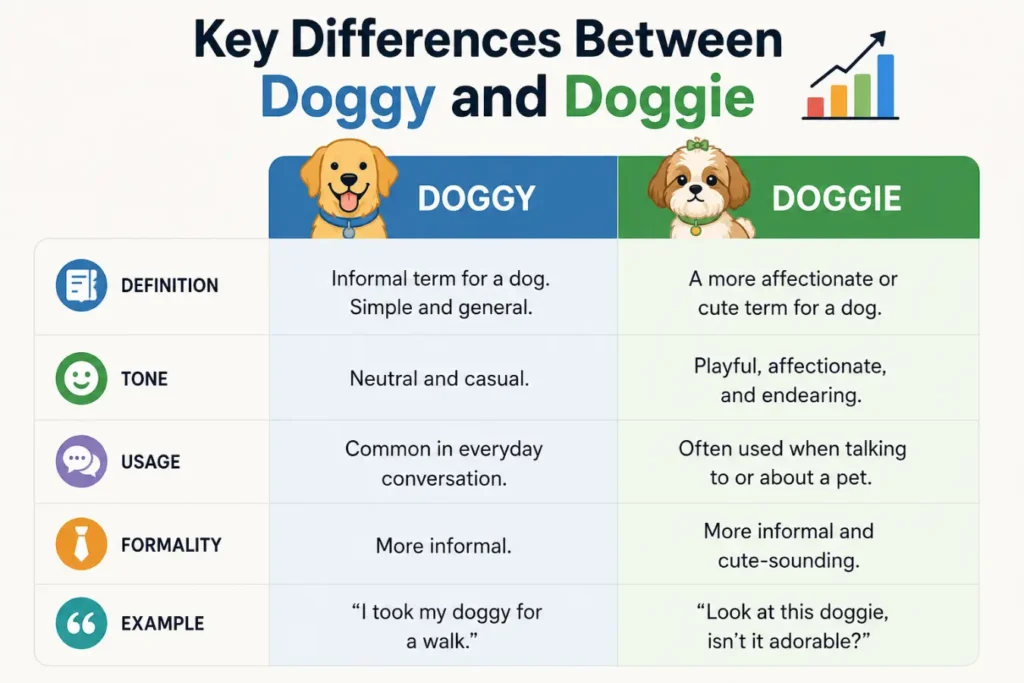
Key Differences Between Doggy and Doggie 📊
| Feature | Doggy | Doggie |
|---|---|---|
| Meaning | Cute term for a dog | Cute term for a dog |
| Tone | Casual and modern | Playful and childlike |
| Usage | More common | Less common |
| Popularity | Higher in search trends | Lower in search trends |
| Spelling Style | Preferred today | Alternative spelling |
Origin & History 📚
The words “doggy” and “doggie” both come from the word “dog.” English speakers added “-y” or “-ie” endings to make the word sound cute or affectionate.
This pattern appears in many English words:
- Kitty
- Birdie
- Piggy
- Bunny
Over time, “doggy” became more popular in books, ads, and online searches. Still, “doggie” remains acceptable in informal English.
British English vs American English Spelling 🌍
British and American English often use different spellings. However, both “doggy” and “doggie” appear in both regions. Americans usually prefer “doggy,” while “doggie” sounds slightly more old-fashioned or playful.
Comparison Table: British vs American English
| Region | Preferred Spelling |
|---|---|
| American English | Doggy |
| British English | Doggy |
| Informal Child Speech | Doggie |
| Older Casual Usage | Doggie |
When to Use Each Word ✍️
Use “Doggy” When:
- Writing modern casual English
- Creating pet-related content
- Speaking informally
- Writing for SEO or online audiences
Examples:
- “Our doggy loves treats.”
- “Take your doggy for a walk daily.”
Use “Doggie” When:
- Talking to small children
- Using playful language
- Writing cute or emotional content
Examples:
- “Look at the sleepy doggie.”
- “The little doggie needs food.”
Common Mistakes ❌
| Incorrect Usage | Correct Usage |
|---|---|
| “Doggy” is wrong | Both are correct |
| Using both in formal writing | Use “dog” in formal writing |
| Thinking pronunciation differs | Both sound the same |
| Using “doggie” in academic writing | Use “dog” instead |
Easy Trick to Remember 🧠
- Doggy = More common online
- Doggie = More playful and cute
If you are unsure, use doggy because it appears more often in modern English.
Write 5 Examples 📝
1. Talking to Kids
“Look at the cute doggy in the park.”
2. Pet Store Advertisement
“We sell healthy snacks for your doggy.”
3. Friendly Conversation
“My neighbor has a fluffy doggie.”
4. Social Media Caption
“This happy doggy loves the beach.”
5. Vet Appointment
“The doggie needs a regular check-up.”
Related Keywords 🔍
- doggy meaning
- doggie meaning
- doggy vs doggie
- doggy spelling
- doggie spelling
- cute words for dog
- doggy or doggie difference
Google Trends & Usage Data 🌎
Search trends show that “doggy” is more popular than “doggie” in most English-speaking countries. The spelling “doggy” appears more often in online searches, blogs, and pet websites.
Countries like the USA, UK, and Australia strongly favor “doggy.” India and Pakistan also show higher usage for “doggy,” mainly because of internet influence and American media.
“Doggie” still appears in children’s content and playful speech, but its search volume is lower overall.
Comparison Table: Keyword Variations
| Country | More Popular Keyword |
|---|---|
| USA | Doggy |
| UK | Doggy |
| Australia | Doggy |
| India | Doggy |
| Pakistan | Doggy |
FAQs
1. Is “doggy” correct?
Yes, “doggy” is completely correct and widely used.
2. What is the difference between doggy and doggie?
Both mean the same thing. “Doggy” is more common today.
3. Which spelling is more popular?
“Doggy” is more popular in search engines and modern writing.
4. Can I use these words formally?
No. In formal writing, use the word “dog.”
5. Why does the confusion exist?
The confusion exists because both spellings sound identical.
Final Verdict ✅
Both doggy and doggie are correct words. They have the same meaning and pronunciation. However, doggy is the better choice for modern writing, SEO content, and everyday use because it is more popular online.
Use doggie when you want a softer or more playful tone, especially with children. If you are unsure which spelling to pick, choose doggy for broader acceptance and stronger search visibility.
Conclusion
The debate around Doggy Or Doggie is mainly about spelling preference, not correctness. Both words describe a dog in a cute and affectionate way. Still, “doggy” has become the more popular choice in modern English, especially online and in American usage.
Understanding the difference helps improve your writing clarity and SEO performance. Use “doggy” for general audiences and web content. Use “doggie” for playful or child-friendly situations. Most importantly, stay consistent within your writing.
Now you can confidently choose the right spelling based on your audience, tone, and purpose.

Sara Taylor is a passionate writer and language enthusiast. She specializes in creating simple and easy-to-understand articles about English grammar, spelling differences, and commonly confused words. Her writing style focuses on helping students, writers, and English learners improve their language skills with confidence. Through informative guides and practical examples, Sara makes complex grammar topics easier for everyday readers.